Biotin (Vitamin B7)
The vitamin most associated with hair growth — and what the evidence actually says.
Biotin, also known as Vitamin B7 or Vitamin H (derived from the German words 'Haar und Haut'), is a water-soluble member of the B-complex family that serves as a critical enzymatic cofactor in mammalian metabolism. Within the physiological landscape of grooming and dermatological health, biotin is the primary catalyst for the synthesis of keratin—the structural fibrous protein that constitutes the fundamental architecture of hair, nails, and the outermost layer of the skin. While it is synthesized by intestinal flora and found in a variety of dietary sources, its reputation as a 'miracle' supplement for hair density and length has elevated it to a cornerstone of modern trichological science. From a biochemical perspective, biotin functions by activating acetyl-CoA carboxylase, an enzyme that facilitates the production of fatty acids. These lipids are essential for maintaining the integrity of the skin barrier and the lubrication of the hair shaft. Despite its widespread commercial popularity, the medical community maintains a nuanced stance: while biotin is undeniably essential for cellular growth and tissue maintenance, its efficacy as a systemic treatment for non-deficient individuals remains a subject of rigorous ongoing debate. For the modern man, understanding the nexus between biotin intake and follicle performance is vital for distinguishing marketing rhetoric from biological reality.
- ›Biotin is formerly known as Vitamin H, representing 'Haar und Haut' (Hair and Skin).
- ›It acts as a coenzyme for carboxylase enzymes responsible for fatty acid synthesis.
- ›The recommended daily intake (RDI) for an adult male is roughly 30 micrograms.
- ›Biotin deficiency is a primary cause of brittle nail syndrome and thinning hair.
- ›High doses of biotin can interfere with the accuracy of cardiac and thyroid blood tests.
The Mechanism of Keratin Production
To understand biotin's utility, one must understand the production of keratin. Keratin is established through the cross-linking of amino acids, a process that requires specific metabolic energy. Biotin serves as a coenzyme for carboxylases, which are enzymes involved in the metabolism of fatty acids, glucose, and amino acids. By facilitating these reactions, biotin ensures that the hair follicle has the requisite chemical resources to build a resilient hair shaft.
Without adequate biotin levels, the keratin infrastructure becomes compromised. This often manifests as 'alopecia' or 'trichorrhexis nodosa'—a condition characterized by weak, brittle hair that breaks easily under minor tension. In the context of grooming, biotin acts as the 'foundational mortar' between the protein 'bricks' of the hair, providing the structural tensile strength needed for thick, manageable growth.
Deficiency vs. Supplementation: The Clinical Gap
Clinical research indicates that true biotin deficiency is exceedingly rare in developed nations, as the human body requires only small amounts (approximately 30 micrograms daily for adults) and many common foods provide ample supply. However, certain factors such as chronic alcohol consumption, smoking, and specific genetic predispositions can deplete systemic levels, leading to thinning hair and scaly dermatitis.
The editorial consensus among dermatologists is that while biotin supplementation works wonders for those with a baseline deficiency, the 'overflow' effect—taking high doses to trigger 'super-growth' in healthy individuals—is less documented. Nevertheless, anecdotal evidence and preliminary studies suggest that consistent supplementation can improve the thickness of the hair shaft, even if it does not technically increase the number of follicles active on the scalp.
Dietary Sources and Bioavailability
For the discerning man looking to optimize his grooming regimen from the inside out, diet is the first line of defense. High concentrations of Vitamin B7 are found in organ meats—specifically beef liver—as well as whole eggs, legumes, nuts, and seeds. It is a critical note of caution that raw egg whites contain avidin, a protein that binds to biotin and prevents its absorption; therefore, cooked eggs are the preferred delivery method.
Bioavailability refers to how much of the nutrient actually reaches the bloodstream. Because biotin is water-soluble, the body does not store large reserves in fatty tissue. This necessitates a consistent daily intake rather than sporadic high-dose loading. Any excess biotin consumed is typically excreted via the renal system, making toxicity rare but also making 'mega-doses' largely performative.
Topical Application vs. Ingestion
The grooming industry has seen an influx of biotin-infused shampoos, conditioners, and beard oils. The authoritative stance on topical biotin is that while it cannot be absorbed through the skin into the bloodstream in significant amounts, it serves an important superficial purpose. Topical biotin can temporarily coat the hair shaft, providing a localized boost in diameter and a perceivable increase in volume.
For long-term follicle health, however, systemic ingestion remains superior. The hair follicle is fed by the bloodstream; therefore, the most effective way to influence the growth phase (anagen) of the hair cycle is through internal nutrition. A dual approach involving a biotin-rich diet and high-quality topical products offers the most comprehensive protection against thinning.
Interference with Medical Diagnostics
A critical, often overlooked aspect of high-dose biotin supplementation is its potential to interfere with clinical laboratory tests. In 2017, the FDA issued a safety communication warning that biotin can cause falsely high or low results in blood tests, including those for troponin (a biomarker for heart attacks) and thyroid-stimulating hormone (TSH).
Men utilizing biotin supplements for beard or hair growth should disclose this usage to medical professionals before undergoing blood work. It is generally recommended to cease supplementation 48 to 72 hours prior to diagnostic testing to ensure the accuracy of the results, highlighting that even 'natural' vitamins possess significant physiological weight.
Biotin and the Beard Growth Cycle
Beard hair moves through three phases: anagen (active growth), catagen (transition) and telogen (rest). Only follicles in anagen are laying down new keratin, and that is the single window where nutrition matters. Because facial follicles hold a comparatively long anagen phase, they draw on amino acids, fatty acids and B-complex cofactors continuously for months at a time — which is why a diet that is merely adequate for general health can still leave a beard looking thin and wiry.
Biotin's role here is indirect but real. It does not lengthen anagen and it does not wake dormant follicles. What it does is keep the enzymatic machinery of keratin assembly supplied, so the fibre that leaves the follicle is built to full diameter rather than a compromised version of it. Men often read the resulting change — coarser, denser-feeling hair — as faster growth, when it is really better-quality growth at the same rate.
This distinction matters when judging a supplement. A product that promises inches per month is selling something biology does not offer. A product that supports the structural integrity of the hair you are already growing is making a claim the evidence can stand behind.
Biotin Versus the Rest of the Nutrient Stack
Biotin gets the marketing budget, but it is one cofactor among several. Protein intake sets the ceiling: keratin is roughly 90 per cent protein, so a diet short on complete protein limits growth no matter how much B7 is present. Iron and ferritin status are strongly associated with diffuse hair shedding, particularly in men who train hard or donate blood regularly. Zinc supports follicular repair, vitamin D receptors sit directly in the follicle, and vitamin C drives the iron absorption that makes the rest usable.
Practically, that means biotin is best treated as insurance inside a broader dietary picture rather than a lever to pull on its own. Eggs, salmon, liver, legumes, nuts, seeds and leafy greens cover biotin and most of its companions at the same time. If a man is eating that way and still seeing brittle, snapping hair, the more likely culprits are mechanical — heat, harsh cleansers, over-washing — or a genuine medical issue worth a physician's attention.
Externally, the same logic applies to grooming products. A beard oil or balm will not deliver systemic vitamins, but it does control moisture loss, cuticle friction and breakage, which is where most visible damage actually originates.
How to Use Biotin Sensibly
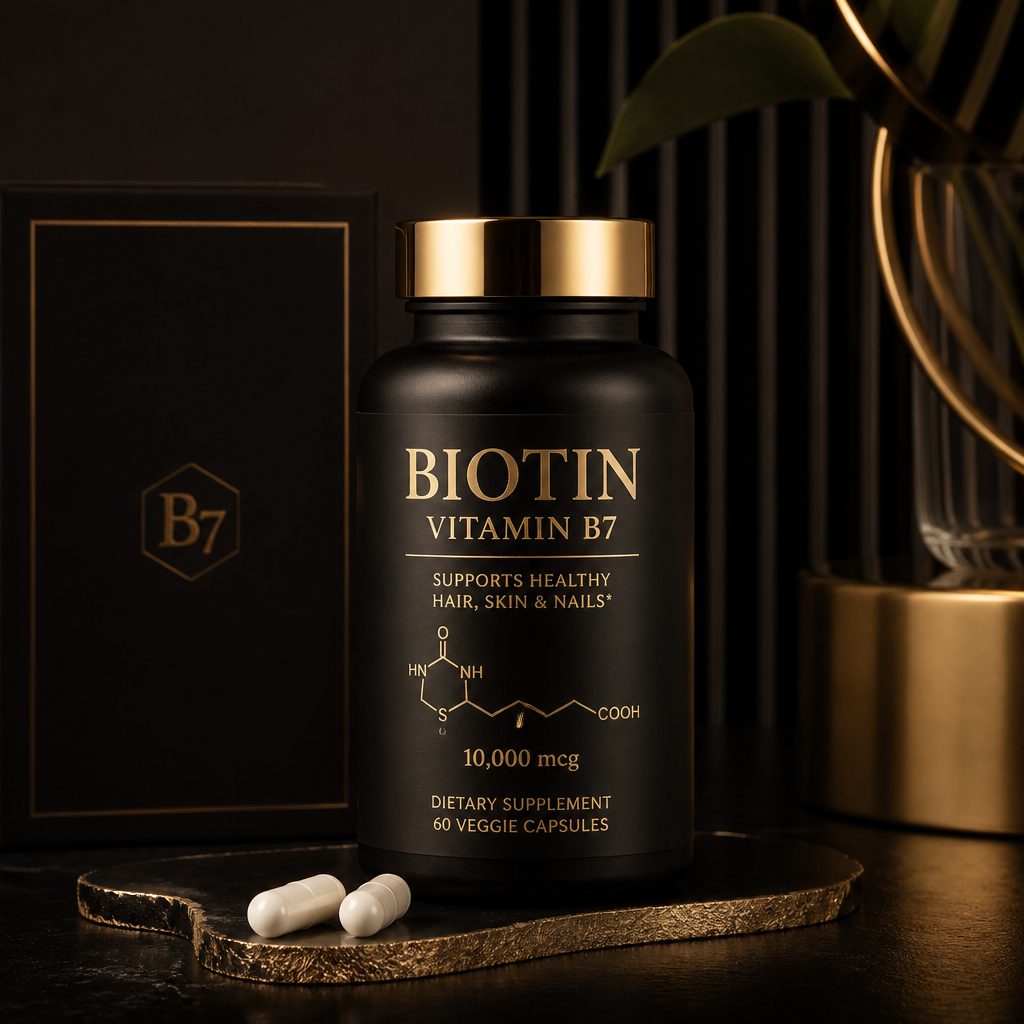
For men without a deficiency, a reasonable approach is a varied diet plus, if desired, a general multivitamin providing biotin in the tens-of-micrograms range rather than a 10,000 microgram mega-dose. Consistency beats magnitude: because B7 is water-soluble and not stored in fat, a steady daily intake serves the follicle better than sporadic loading.
Give any change at least three to four months before judging it. Facial hair grows roughly half an inch per month, so the fibre emerging today was largely built weeks ago — the first genuinely comparable growth is a full season away. Photograph progress in the same light rather than relying on memory.
Two cautions are worth repeating. High-dose biotin can distort thyroid and cardiac blood tests, so disclose supplementation before lab work and pause it two to three days beforehand where a physician agrees. And supplements are not a substitute for treating an underlying cause — patchiness with a clear pattern, sudden shedding or scalp inflammation belong in a dermatologist's office, not a vitamin aisle.
FAQ
Does biotin actually grow a thicker beard?+
It reliably helps only if you are deficient. In men with normal levels, biotin supports the quality and diameter of the hair you already grow rather than adding new follicles or speeding growth.
How long before biotin shows a difference?+
Plan on three to four months. Facial hair emerging today was built weeks ago, so a fair comparison needs a full growth season.
Is topical biotin in beard oil useful?+
It cannot enter the bloodstream in meaningful amounts, but it can coat the hair shaft for a temporary boost in body. Systemic intake matters more for follicle health.
Can you take too much biotin?+
Toxicity is rare because excess is excreted, but high doses can skew thyroid and cardiac blood tests — tell your doctor before lab work.