Sweet Orange Essential Oil
The brightest top note in grooming — non-phototoxic, unlike most citrus, and the lift in a warm scent.
Sweet orange oil is cold-pressed from the peel of Citrus sinensis and it is the friendliest citrus in the formulator's kit. Where bergamot brings phototoxicity concerns and lime brings sharpness, sweet orange brings uncomplicated brightness — a warm, round, immediately recognisable top note that lifts a heavy base without fighting it. It is also, unusually among expressed citrus oils, not considered phototoxic at normal use levels, which makes it the safest way to put real citrus into a leave-on facial product worn in daylight.
- ›Typically 90-95% d-limonene, which drives both the scent and the oil's oxidation behaviour.
- ›Non-phototoxic at standard use levels, unlike expressed bergamot, lime, and lemon.
- ›A top note with short longevity — it lifts a blend in the first hour and then hands off to the heart.
- ›Oxidizes relatively quickly; oxidized limonene is a known contact sensitizer, so freshness matters.
- ›Cold-pressed from peel, making it one of the cheapest and most widely available essential oils.
Limonene: The Whole Story of This Oil
Sweet orange oil is overwhelmingly d-limonene, a monoterpene that is also the dominant constituent of most other citrus peels. Limonene is what your nose reads as 'orange', and it is also a well-documented solvent and skin penetration enhancer, which is why citrus oils can slightly increase the absorption of other ingredients in a formula.
The important caveat is oxidation. Limonene reacts with atmospheric oxygen to form hydroperoxides, and those oxidation products are recognised contact sensitizers. A fresh bottle of citrus-scented beard oil is a very different proposition from a two-year-old one that has been opened daily.
Formulators counter this with tocopherol ([vitamin E](/encyclopedia/vitamin-e)) as an antioxidant and with dark glass packaging. As a user, the practical rule is to finish a citrus-forward oil within about a year of opening and to keep it out of a sunny bathroom window.
Why It Is Not Phototoxic
Phototoxicity in citrus oils is caused by furocoumarins — bergapten in bergamot being the classic example — which absorb UV and cause an exaggerated burn reaction on treated skin. Sweet orange peel contains only trace levels of these compounds, and expressed sweet orange oil is generally regarded as non-phototoxic in standard fragrance safety assessments.
This matters for a product you rub into your face and then wear outdoors. Bergamot, lemon, lime, and bitter orange all need either strict concentration limits or a furocoumarin-free grade to be used safely in leave-on daytime products.
It is why sweet orange is the default citrus in well-formulated beard oils, and why an oil advertising a bright citrus profile without specifying a bergapten-free bergamot is worth a second look.
Blending and Longevity
Sweet orange is a top note with a short life — thirty to ninety minutes of prominence before it recedes. Used alone in a beard oil, the scent disappears well before lunch and men conclude the product is weak. Used correctly, it is the opening of a structure that hands off to a heart and base with real staying power.
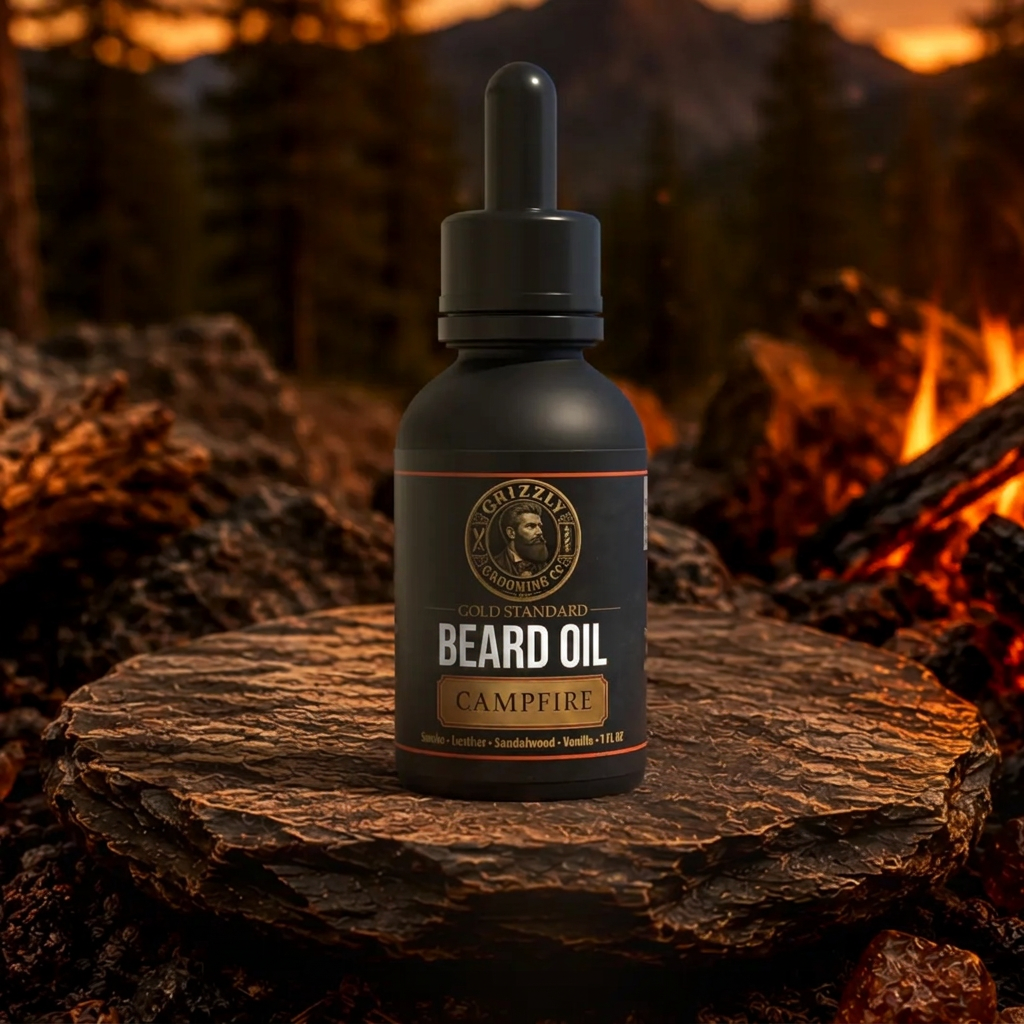
It pairs naturally with warm woods and spices: [cedarwood](/encyclopedia/cedarwood-essential-oil), [frankincense](/encyclopedia/frankincense-essential-oil), clove, and vanilla-adjacent bases. That combination — bright citrus over warm smoke and wood — is the backbone of the Campfire profile.
It also works as a corrective. A base-heavy blend that reads as flat or too dense can be lifted with a small percentage of sweet orange without changing its character, which is one of the more common uses of the oil in professional formulation. Read more in [how to choose a signature scent](/base-camp/how-to-choose-a-signature-scent).
FAQ
Is sweet orange essential oil safe on the face?+
Yes, at cosmetic dilutions. Unlike expressed bergamot, lemon, and lime, sweet orange is not considered phototoxic at standard use levels, which makes it the safest citrus for a leave-on daytime facial product.
Why does citrus scent fade so fast in beard oil?+
Citrus oils are top notes with high volatility — they are designed by nature to evaporate. A well-built blend uses citrus for the opening and woods or resins for the heart and base so the scent has somewhere to go.
Can orange oil irritate skin?+
Fresh oil at proper dilution rarely does. Oxidized limonene, however, is a recognised contact sensitizer, so use citrus-forward products within about a year of opening and store them away from heat and light.
Does orange oil have any benefit beyond scent?+
It has mild antimicrobial and antioxidant activity, and limonene acts as a penetration enhancer for other ingredients. Its primary role in grooming, though, is aromatic.
Sources
- Food and Chemical Toxicology — RIFM safety assessment of orange oil
- Contact Dermatitis — oxidized limonene as a contact allergen