Styling A Thin Beard: 5 Techniques That Add Visual Density
- ›Direction of brushing decides visible density more than any product — always brush down and outward.
- ›Beard balm with matte finish reads as fuller than glossy oil-only styling.
- ›Slightly shorter on the sides than the chin creates the illusion of a fuller silhouette.
- ›Beard-tinting products (temporary) can genuinely help patches disappear at a distance — used correctly.
You have the beard you have — genetics and time decide the real density. What you can control is how full it looks, which is a different problem. Five techniques cover 90% of what a thin beard can do visually.
1. Brush direction
Most men brush their beard down and slightly inward — this pulls hair together, which highlights every gap. Brush down and outward instead: from the center outward on both sides, so hair fans across the face rather than pointing at the chin. This one change makes patchy areas overlap and disappear at conversation distance.
2. Matte over shine
Glossy beards read thinner because shine highlights every individual hair and the gaps between them. A matte-finish balm coats the hair, dulls the shine slightly, and makes the beard appear as a coherent mass instead of individual strands. Skip pure-oil styling on thin beards; oil + light balm is better.
3. Shorter sides, longer chin
A uniform-length beard on a patchy face emphasizes the patches. Trim the cheek area slightly shorter than the chin — the shorter, denser cheek area contrasts with the fuller chin length and pulls the eye downward to where the density is highest. Ratio: cheeks about 70% the length of the chin.
4. Beard filler / tinting
Temporary beard fillers (fiber products or tinted balms) fill the skin gaps between hairs with pigment that matches the beard color. Applied lightly, they close the visual gap without looking obvious. Applied heavily, they look painted on. Start with half what you think you need.
5. Neckline strategy
A crisp, high neckline (just above the Adam's apple) frames the beard and makes it look intentional even if the density is uneven. A soft or non-existent neckline lets the beard bleed into the neck and read as unkempt regardless of density. This is free — it takes 90 seconds of trimming twice a month.
What not to do
Do not grow a thin beard longer hoping it fills in — length exaggerates thin patches. Do not use heavy balm to plaster hair over gaps — it reads as forced. Do not compare your side-lit bathroom mirror view to what other people actually see; front-lit photos from a foot away tell the truth.
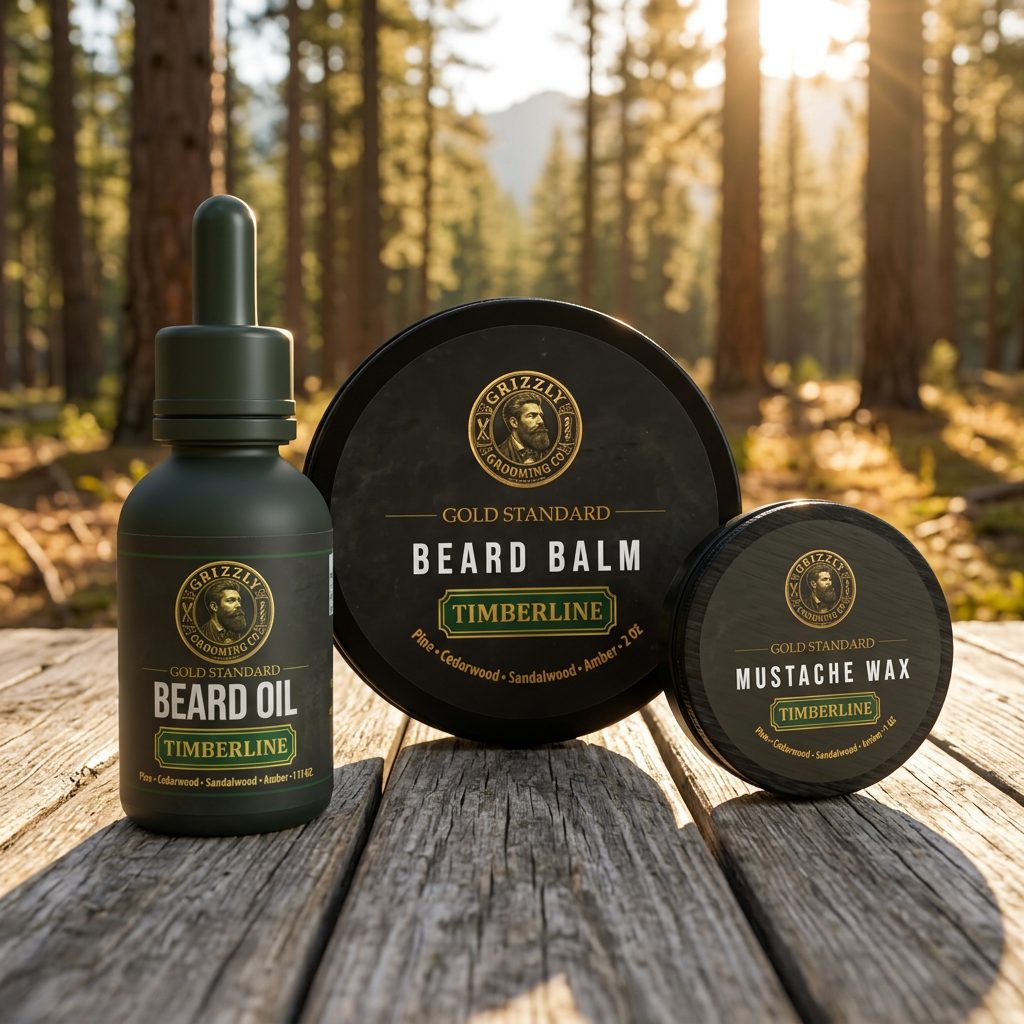
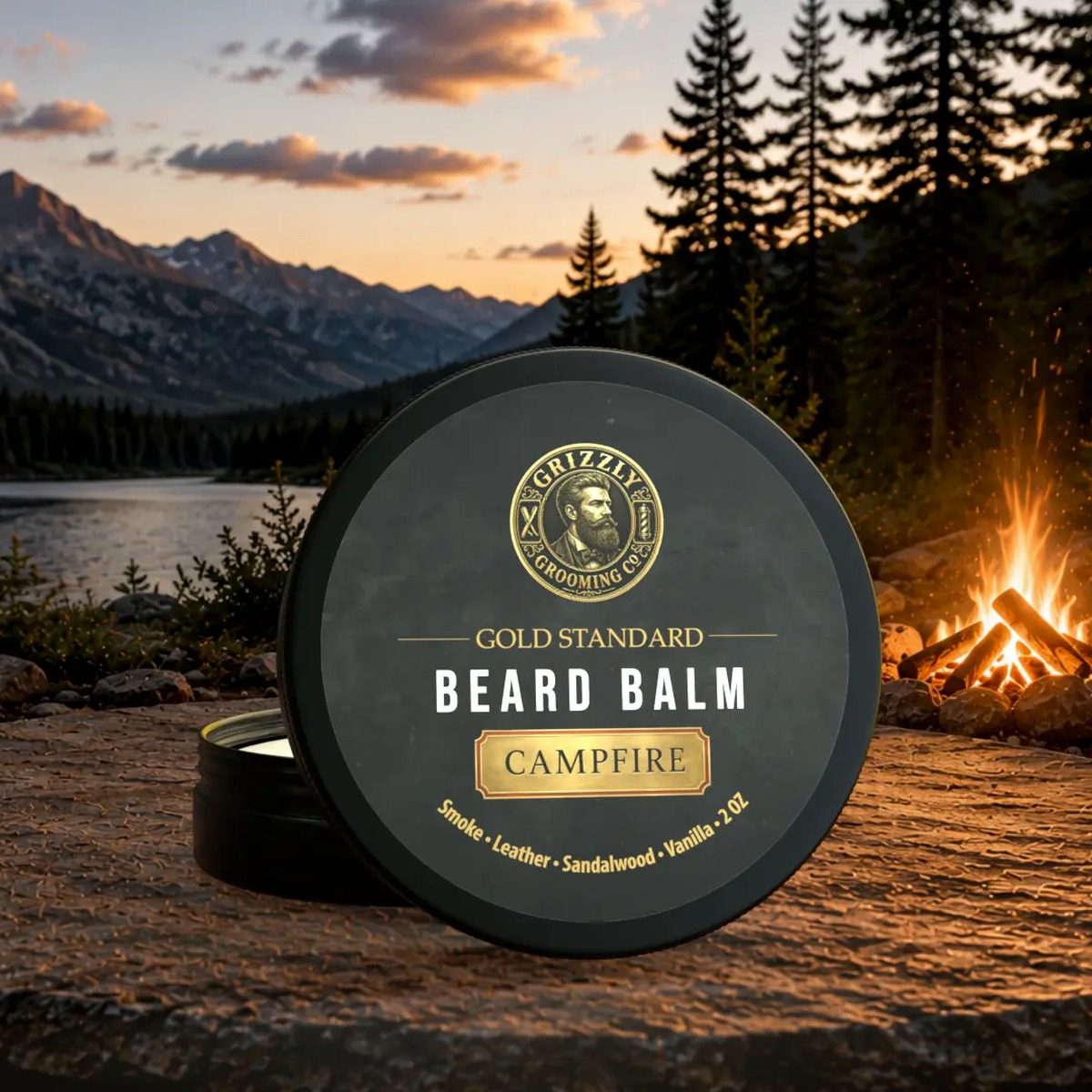
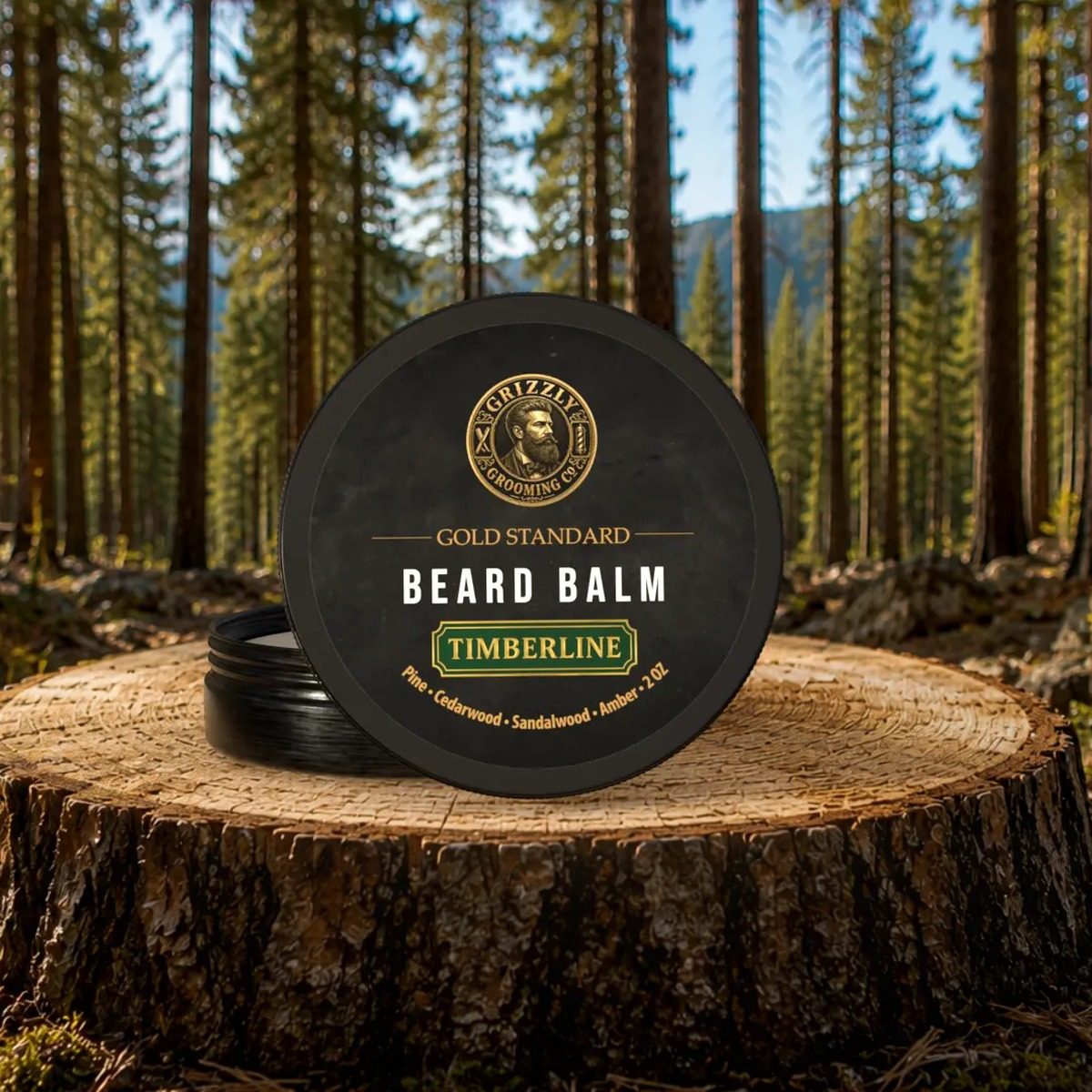
Grizzly Beard Balm — matte finish, medium hold, the styling foundation that visually thickens a thin beard without shine.
Thin versus patchy: they need different plans
Thin means the hairs are present but fine in diameter, so light passes through the beard and it reads sparse. Patchy means whole areas have few or no follicles. Thin beards respond very well to styling and care, because you are working with hair that exists; patchy beards respond to shape selection, because you are routing the eye around gaps.
Most men are some of both. Diagnose in bright, direct light: if you can see skin evenly through the whole beard, that is thinness. If you can see defined bare zones with dense hair around them, that is patchiness.
Technique six: dry with a directional lift
Volume in a thin beard comes mostly from how the hair sits, not how much of it there is. Dry with a blow dryer on cool or low while brushing outward and slightly upward from the jaw, then let it settle. Lifting the hair away from the skin at the root is worth more visual density than any product.
Finish with a light balm to hold the lifted shape. Heavy products defeat the purpose by pulling the hair flat against the face, which is the single most common styling error in thin beards.
Technique seven: use colour contrast to your advantage
A thin beard looks sparser against pale skin because the contrast between hair and skin is high wherever there is a gap. Two things reduce that: keeping the beard slightly longer so hair overlaps, and — for men with grey or light hair — allowing the natural colour rather than trimming to a length where scalp shows through.
- ›Grow to the length where hairs lie across one another, usually 1.5–3 inches.
- ›Keep the cheek line lower and softer; a high, sharp line exposes thin upper growth.
- ›Let the moustache carry weight — it is usually the densest area and anchors the look.
- ›Square the bottom of the beard to add width at the jaw.
- ›Skip fades and tapers, which thin out already-thin edges.
Technique eight: build the routine that thickens each hair
You cannot add follicles, but you can add diameter and improve how each hair reflects light. Consistent conditioning plumps the shaft slightly, oil keeps the cuticle flat so hair reflects rather than scatters light, and reduced breakage means more hairs reach full length instead of snapping mid-shaft. Together these produce a genuine, visible difference over three months.
Sleep, protein intake, iron and vitamin D status all matter here too. Deficiencies show up in hair before they show up anywhere else, and correcting a real deficiency is one of the few interventions that reliably improves density.
Choosing a style that flatters thin growth
| Growth pattern | Style that works | Avoid |
|---|---|---|
| Thin cheeks, strong chin | Goatee, van dyke, extended goatee | Full beard with high cheek line |
| Thin overall, even | Short boxed beard at 1–1.5 in | Long beard, which exaggerates gaps |
| Thin moustache | Full beard with a trimmed stache | Standalone moustache styles |
| Thin under the jaw | Chin-forward beard, squared bottom | Ducktail, which needs volume below the jaw |
| Thin and grey | Slightly longer, natural colour, sharp neckline | Very short cuts that show scalp contrast |
When to consider minoxidil, and what to expect
Topical minoxidil is the one over-the-counter option with real evidence for facial hair density. It is not a quick fix: results take four to six months, shedding in the early weeks is normal, and the effect requires ongoing use — stop and gains recede over the following months. Skin irritation is common with the alcohol-based solution and less so with the foam.
Talk to a doctor before starting, particularly if you have low blood pressure or a heart condition. It is a real drug, not a grooming product, and treating it that way is the right approach.
Choosing a part or lack of one for thin beard hair
Some men part their beard hair down the center out of habit carried over from head hair, and on a thin beard this is one of the most visually thinning choices possible, since a part exposes a strip of skin exactly where you least want attention drawn. Brushing outward with no defined part keeps hair distributed across the widest possible area instead.
If your beard naturally wants to part in the middle due to growth direction, a light balm applied specifically along that centerline helps train the hairs to fall slightly outward instead, closing the visual gap over a couple of weeks of consistent brushing.
Camera and lighting adjustments for thin beards
Overhead lighting, common in offices and many bathrooms, casts shadows downward that expose gaps in a thin beard more than side or front lighting does. If you are judging your beard's fullness under a bathroom vanity light with bulbs mounted above the mirror, you are seeing the least flattering version of it.
For photos or video calls, a light source at or slightly below eye level fills in those shadows and makes the same beard read noticeably fuller. This is not a trick that changes the beard — it is correcting for a lighting setup that was already distorting your own assessment of it.
Diet and hydration effects specific to thin hair
Hair shaft diameter responds to overall protein intake and hydration status more than most grooming advice acknowledges, and a thin beard on a body running a calorie or protein deficit will look measurably thinner than the same genetics would produce under adequate nutrition. This is not a grooming fix, but it is a real variable worth ruling out.
Consistent water intake also affects how plump the hair shaft appears day to day, particularly noticeable in dry climates. Neither of these replaces the styling techniques already covered, but both set a ceiling on how much styling alone can achieve.
Frequently Asked Questions
Do beard growth products actually work on thin beards?+
Minoxidil has real evidence — 60–80% of users see improvement in 6–12 months. Supplements only help if you're deficient in specific nutrients. Everything else (derma rollers alone, castor oil, etc.) has weak evidence. See our beard transplant alternatives article for the full breakdown.
Is a shorter beard better if my beard is thin?+
Often yes. A dense stubble (5–10mm) looks fuller than a patchy 4-inch beard on the same face. If the ugly phase never gets past patchy, dropping to sculpted stubble is usually a better look than pushing for length that isn't working.
Does beard oil make my beard look thicker?+
Slightly — it darkens the hair and skin visually, which reduces the contrast between hair and gaps. The effect is real but small. Balm has a bigger visual impact than oil for thin beards.
Will my beard fill in more with age?+
For most men, beard density peaks around age 30–35. If you're under 25 and your beard is thin, give it time — patchy 22-year-old beards often fill in significantly over the next decade. After 35, expect the beard you have to be roughly the beard you keep.
Can a thin beard ever look full?+
Often yes. Directional drying, the right length, a lower cheek line, and consistent conditioning make a substantial visual difference without changing follicle count.
Does trimming make a beard thicker?+
No. Trimming does not change hair diameter or growth rate, but removing split ends does make the beard look tidier and reduces the wispy look at the edges.
What length is best for a thin beard?+
Usually one and a half to three inches — long enough for hairs to overlap and cover skin, short enough that gaps do not open up under the weight.
Does minoxidil work for beards?+
It has real evidence, but takes four to six months, needs continued use to maintain, and can irritate skin. Speak to a doctor before starting.
Should I part my thin beard down the middle?+
No. A center part exposes a strip of skin exactly where you do not want attention. Brush outward with no defined part to keep hair distributed across the widest area.
Why does my beard look thinner in the bathroom mirror than in photos?+
Overhead vanity lighting casts shadows downward that expose gaps more than side or eye-level lighting does. Light at or below eye level makes the same beard read fuller.
Can diet affect how thin my beard looks?+
Yes, to a degree. Low protein intake or dehydration can make hair shafts appear thinner than your genetics would otherwise produce, though it will not change actual follicle density.
"The step-by-step here made it stupid simple. Ordered the bundle, four weeks in the compliments haven't stopped."
Join The Grizzly Brotherhood
Scent guides, grooming tips, and early access to new drops. No discount bait — just the good stuff.
Unsubscribe anytime · No spam
Get Gold Standard Beard Balm
- Everything in this article, one click.
- Built for a complete daily ritual.
- 30-day money-back guarantee.
Related Guides
Morning, evening, and weekly — in the right order.
Nine-oil breakdown, what to avoid on a label, and how to judge a formula.
Butter-forward vs wax-forward, hold levels, and the layering test.
The wash, condition, and oil sequence that changes coarse hair.
Neckline, cheekline, and the cleanup that keeps length.
What actually moves the needle across a full growth cycle.
Every oil we use, why it's in there, and how we compare.
Assemble a kit around your beard length and skin type.
Sources & Research
- International Journal of Molecular Sciences — Anti-Inflammatory and Skin Barrier Repair Effects of Topical Application of Some Plant Oils
- Indian Journal of Dermatology — Moisturizers: The Slippery Road
- American Academy of Dermatology — Face Washing 101
- American Academy of Dermatology — Dermatologists' Tips for Relieving Dry Skin
- Grizzly Grooming Co. formulation notes and batch testing records