Beard Butter At Night vs Morning: When It Actually Works Best
- ›Nighttime is the default — butter conditions overnight while friction is lowest.
- ›Morning butter is right for very dry climates, long beards, and hat-heavy days.
- ›Two applications a day only makes sense past four inches of length.
- ›Butter replaces balm on the days you use it — do not stack them.
- ›A satin pillowcase turns nighttime butter into a genuinely different beard by morning.
Beard butter is the most misunderstood product in the beard-care lineup. It looks like balm, feels heavier than oil, and gets used at the wrong time by most guys who buy it. The short answer: butter is a conditioning product, not a styling product, and the best time to apply it is the time you are least likely to touch your beard afterward. For most men, that is right before bed.
Why nighttime is the default
Butter needs uninterrupted contact time to actually condition the hair — that means eight hours of your beard doing nothing while the shea and cocoa butter base softens the cuticle and the carrier oils reach the tips. Apply it in the morning and it works against a full day of hats, meals, coffee cups, and the twenty times a day you idly touch your face. Apply it at night and it works with you.
The nighttime application is small: about half your normal morning oil dose of butter, warmed fully between the palms, worked skin-out through a lightly damp beard. Combine it with a satin or silk pillowcase and the difference by morning is one of those before-and-after moments that convinces new customers of the whole lineup at once.
When morning butter is the right call
Three scenarios flip the default. First, genuinely dry climates — anything under 30% relative humidity for weeks at a time. Second, long beards past four inches, where the tips dry out faster than a single evening application can keep up with. Third, days you will be under a hat for hours (fishing, hunting, construction, ski days), where the butter acts as a friction barrier as much as a conditioner.
In those cases, apply a small dose in the morning after oil and use it in place of balm, not on top of it. Butter and balm never share a ritual — pick one for the day.
The both-morning-and-night case
Twice-daily butter only makes sense for beards past four inches in winter, or long beards in high-desert climates. Below that length, twice-daily butter is over-conditioning and leaves the beard limp instead of resilient. Start with nights only, add mornings after a month if the tips still feel dry.
Why butter replaces balm on butter days
Butter is roughly 70% conditioning ingredients and 30% light shape control. Balm is the inverse — mostly hold, with a smaller conditioning layer. They occupy the same slot in the ritual. Stacking them pills, flakes, and looks worse than either one alone. Pick which job you need today (soft-and-natural versus shaped-and-held) and apply the matching product.
The satin pillowcase multiplier
The single biggest upgrade you can make to a nightly butter ritual is a satin or silk pillowcase. Cotton is abrasive against beard hair — it wicks moisture out and creates friction that undoes half the conditioning benefit you just applied. Satin cuts that friction to near zero and holds none of the butter itself, which is why the results feel disproportionate to the cost.
How much butter to use at night
A pea-sized amount for short beards, dime-sized for medium, nickel-sized for full-and-long. Warm it fully between the palms for 15 seconds — same warm-palm method as balm — then work into a lightly damp (not wet) beard from skin outward. Comb through with a wide-tooth comb and leave it alone until morning.
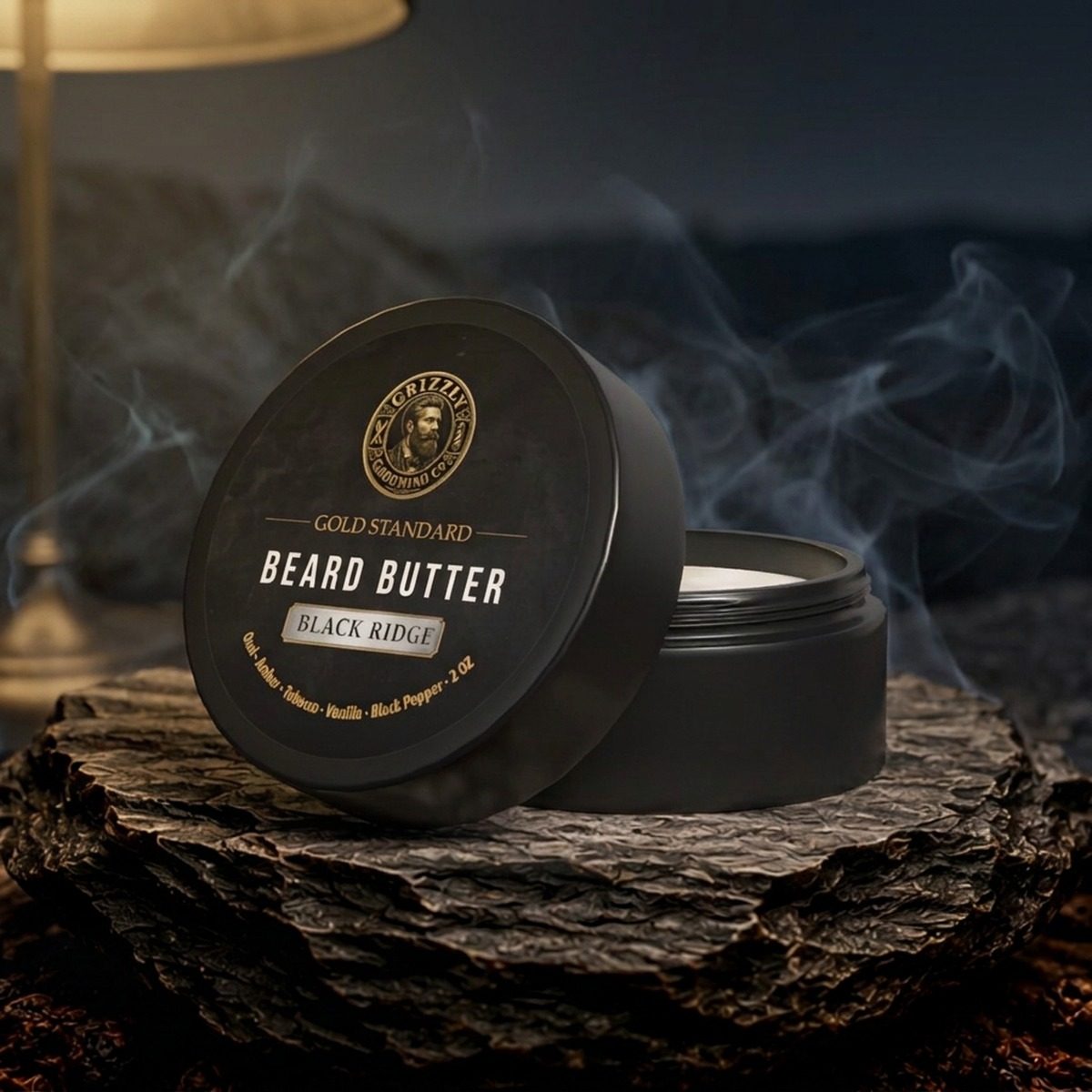
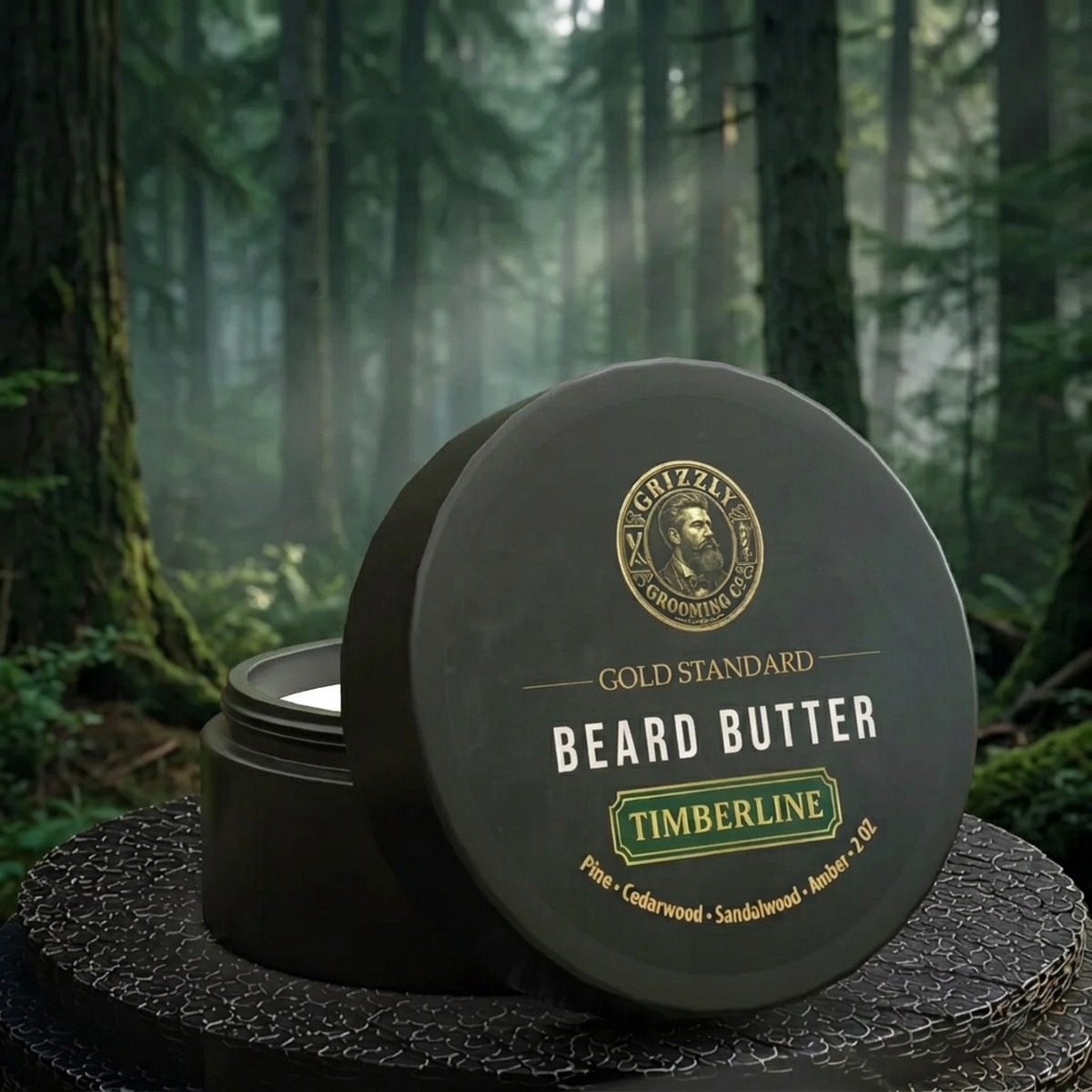
Gold Standard Beard Butter — deep-conditioning shea + cocoa base, sized for the nightly application above.
Try butter at night for two weeks. The morning-after beard is why we hear this product called 'the sleeper hit' more than any other in the lineup.
Butter in different climates
In dry, cold, or high-altitude air, a nightly butter application is close to essential past three inches — the overnight hours are when skin and hair lose the most water, and the butter acts as a barrier during exactly that window.
In humid heat, nightly butter is often too much: combined with sweat it can leave the beard heavy and the skin under the jaw occluded. Switch to twice a week as a treatment, and lean on lighter oil daily instead.
How much butter is too much
The over-application signature is a beard that looks slightly damp hours later, transfers onto a pillowcase, and feels weighed down at the roots. That is a dosing problem rather than a product problem.
Work in quarter-scoop steps. A medium beard needs roughly half a fingertip; a long beard a full fingertip split across both sides. Emulsify fully in the palms first — unmelted butter is the other common cause of a heavy, patchy result.
Beard butter timing around workouts
Applying beard butter before a sweaty workout is generally a waste — sweat and heat break down the product faster than normal wear, and it can drip or feel uncomfortable mixing with sweat on the face. Save the application for after a post-workout shower instead, when the beard is clean and can actually hold the conditioning benefit through the rest of the day or overnight.
For men who work out in the evening, this naturally lines up well with a nighttime application anyway, since a post-workout shower typically happens a few hours before bed. Morning workout schedules are trickier — apply a light morning dose after the workout shower rather than before heading to the gym.
Butter timing for beards with active dandruff or flaking
An actively flaking beard benefits from a nighttime application specifically because the longer, undisturbed contact time gives the heavier butter formula more opportunity to soften flakes before the next morning's wash removes them. Morning-only application on a flaking beard often just adds product on top of flakes without the soak time needed to actually loosen them.
Combining a nighttime butter routine with a slightly more frequent wash schedule during an active flaking period — rather than washing less to avoid stripping the butter — clears the cycle faster than either change alone. Return to your normal wash cadence once flaking resolves.
How relationship and living situation affects timing choice
A shared bed or pillow is a real practical factor in the morning-versus-night decision that's rarely discussed. Nighttime butter can transfer to a partner's pillow or skin, which matters more with a heavier scent or a partner sensitive to fragrance. Some couples solve this with an unscented or lightly scented butter for night use and save a stronger scent for the morning application instead.
If pillow transfer is a persistent issue even with a lighter scent, a satin pillowcase reduces both the transfer and the friction that causes breakage, solving two problems with one low-cost change rather than abandoning the nighttime routine.
Butter Timing Around Facial Hair Removal or Barber Visits
Skin that has just been trimmed, edged, or shaped at a barber is more sensitive than usual for the first several hours, and a heavy butter application right afterward can sting or clog freshly opened follicles along the trim line. Wait until evening on the day of a trim and stick to oil in the meantime if you need something.
The night after a shape-up is actually one of the better times for a butter application, since the freshly defined edges benefit from the conditioning and the beard has settled from the trim by then. This is a good habit to pair permanently with barber visits — trim in the morning, butter that same night, oil the days between.
What Happens If You Forget a Night
Missing one night of butter on a routine that normally includes it is not a setback worth worrying about — the beard simply reverts to whatever its baseline moisture level was before you started, which for most men is still perfectly wearable. The conditioning benefit is cumulative over weeks, not something reset by a single skipped night.
Where it does matter is stringing together several missed nights during travel or a busy stretch, especially for beards past four inches that depend on the routine to keep tips manageable. If you know a trip is coming, pack a travel-sized tin rather than assuming you will manage without it — reintroducing butter after a week off takes a session or two to catch back up.
Butter for Beards Recovering From Over-Processing
A beard that has been recently bleached, dyed, or heavily heat-styled behaves differently than a normal beard and often needs butter more frequently than the guidance above suggests, at least temporarily. Chemically processed hair loses moisture faster at the cuticle level, and nightly butter for the first two to three weeks after processing helps rebuild what the treatment stripped.
Once the hair feels back to its normal texture — usually three to four weeks post-treatment — scale back to the standard nighttime schedule. Continuing an intensive schedule indefinitely on hair that has already recovered just leads to over-conditioning and a limp, weighed-down beard.
Frequently Asked Questions
Should I use beard butter every night?+
In dry or cold climates, nightly works well past three inches. In humid heat, twice a week as a treatment is usually enough.
How much beard butter should I use at night?+
About half a fingertip for a medium beard and a full fingertip for a long one, fully melted in the palms before applying.
Can I use beard butter every night?+
Yes — nightly is the intended cadence for most beards past stubble. Butter is conditioning, not styling, so daily use does not over-hold or crunch the beard.
Do I still need beard oil if I use butter?+
Yes. Butter conditions the hair; oil hydrates the skin underneath. They do different jobs. The ritual is oil first (always), then butter on top when butter is the day's choice.
Beard butter vs beard balm — which do I actually need?+
Most bearded men keep both. Butter for softness and comfort, balm for shape and hold. Use butter on nights and low-key days, balm on days you need the beard to hold a specific line.
Will beard butter make my beard limp?+
Only if over-dosed. A pea-to-nickel-sized dose is enough — extra product weighs the beard down without adding conditioning benefit.
Do I need a satin pillowcase for it to work?+
Not required, but it roughly doubles the visible benefit. Cotton pillowcases wick out both the moisture and the butter itself, which is why hair-care and beard-care communities converge on satin so quickly.
Should I apply beard butter before or after a workout?+
After, once you've showered. Sweat and heat break the product down quickly if applied beforehand. If you work out in the evening this naturally fits a nighttime routine; morning workout schedules should apply a light dose after the post-workout shower.
Is nighttime butter better for an actively flaking beard?+
Yes, generally. The longer undisturbed contact time overnight gives butter more chance to soften flakes before the next wash removes them. Pairing this with slightly more frequent washing during an active flaking period clears it up faster.
Does sharing a bed affect whether I should use butter at night?+
It can, if scent transfer to a partner's pillow or skin is a concern. An unscented or lightly scented butter at night, with a stronger scent saved for morning, along with a satin pillowcase, addresses both transfer and breakage.
Should I apply beard butter the same day I get a trim or shape-up at the barber?+
Wait until evening rather than applying right after a trim. Freshly cut and edged skin is more sensitive for a few hours, and a heavy butter application can sting or clog newly opened follicles. That same evening is actually a good time for butter once the skin has settled.
What happens if I forget to apply beard butter one night?+
Nothing significant. One missed night just returns the beard to its normal baseline moisture, and the conditioning benefit of a butter routine is cumulative rather than reset by a single skip. Multiple missed nights in a row during travel matter more, especially for beards past four inches.
Does a recently bleached or dyed beard need more frequent butter?+
Yes, temporarily. Chemically processed hair loses moisture faster than untreated hair, so nightly butter for two to three weeks after a treatment helps rebuild what was stripped. Scale back to the normal schedule once the beard's texture feels back to normal, usually three to four weeks later.
"Best grooming purchase I've made all year. The scent alone is worth it — everything else is a bonus."

Join The Grizzly Brotherhood
Scent guides, grooming tips, and early access to new drops. No discount bait — just the good stuff.
Unsubscribe anytime · No spam
Get Gold Standard Beard Butter
- Everything in this article, one click.
- Built for a complete daily ritual.
- 30-day money-back guarantee.
Related Guides
Butter-forward vs wax-forward, hold levels, and the layering test.
The full comparison across hold, conditioning, and finish.
The wash, condition, and oil sequence that changes coarse hair.
What each carrier oil does once it hits skin and hair.
Assemble a kit around your beard length and skin type.
Sources & Research
- International Journal of Molecular Sciences — Anti-Inflammatory and Skin Barrier Repair Effects of Topical Application of Some Plant Oils
- Indian Journal of Dermatology — Moisturizers: The Slippery Road
- American Academy of Dermatology — Face Washing 101
- American Academy of Dermatology — Dermatologists' Tips for Relieving Dry Skin
- Grizzly Grooming Co. formulation notes and batch testing records