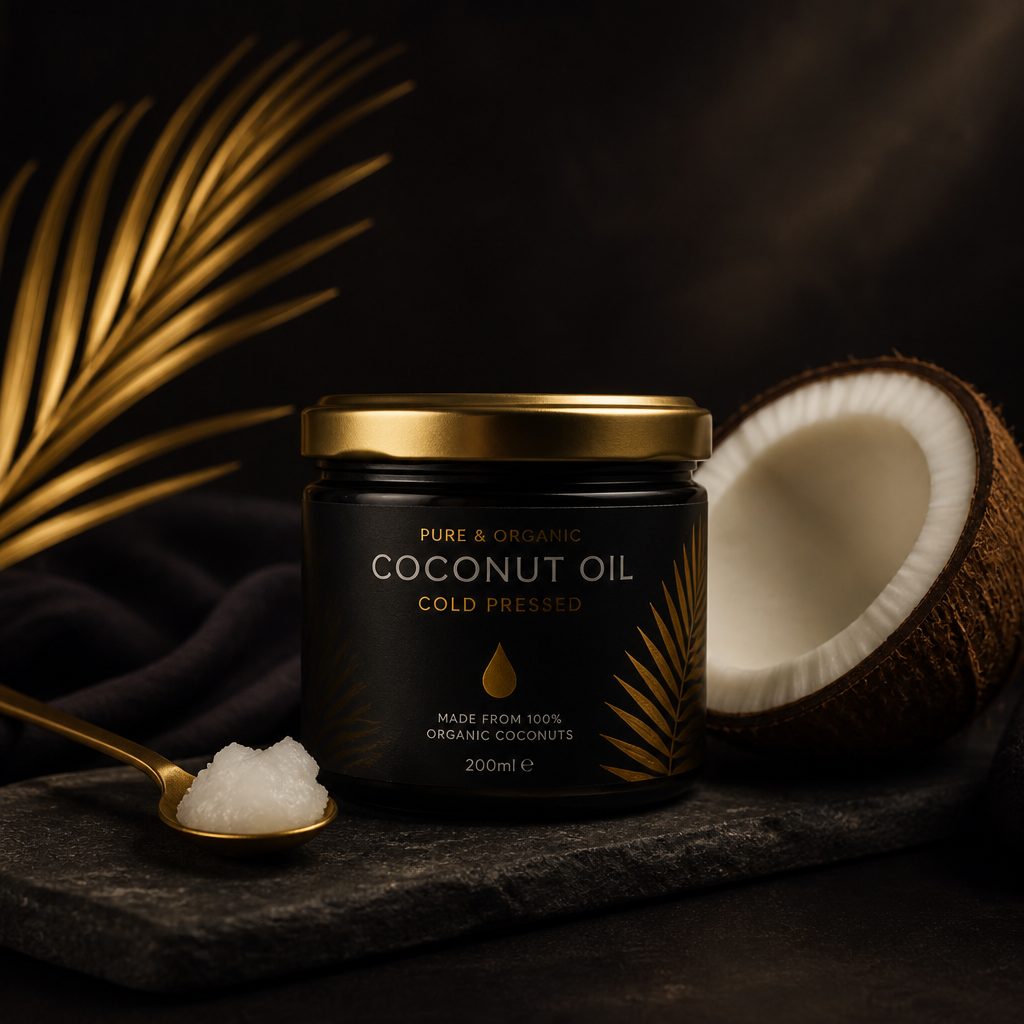
Coconut oil, derived from the kernels of the Cocos nucifera palm, represents a foundational pillar in the pantheon of male grooming and dermatological care. Distinguishable by its semi-solid state at room temperature and a high concentration of medium-chain fatty acids (MCFAs), it is more than a mere lubricant. Unlike many topical oils that sit superficially atop the dermis or hair cuticle, coconut oil possesses a unique molecular weight and straight-linear structure that allows for deep interstitial penetration. As a carrier oil, it serves as a robust delivery vehicle for essential oils, though its intrinsic antimicrobial and moisturizing properties elevate it to a primary active ingredient in high-performance beard balms, traditional pomades, and restorative skin salves.
- ›Contains approximately 50% lauric acid, the highest concentration of any natural oil.
- ›Proven to reduce protein loss in hair when used as a pre-shampoo or leave-in treatment.
- ›Possesses natural antifungal and antibacterial properties that combat beard dandruff.
- ›Fractionated coconut oil (FCO) provides a non-clogging, liquid alternative for facial use.
- ›Acts as an occlusive agent, creating a barrier that prevents moisture evaporation.
The Molecular Advantage of Lauric Acid
The defining characteristic of coconut oil is its staggering lauric acid content, which typically accounts for nearly 50% of its fatty acid profile. In the context of grooming, lauric acid acts as a powerful antimicrobial agent, neutralizing the surface pathogens and fungi that contribute to irritation and folliculitis beneath a beard or on the scalp.
Crucially, the molecular structure of lauric acid allows it to bypass the hair's protective cuticle layer. When applied to the hair shaft, it binds to the internal proteins, effectively reducing protein loss during grooming cycles. This is particularly vital for men with coarse or damaged facial hair, as it restores structural integrity from the inside out, rather than merely masking dryness with a temporary shine.
Role in Beard and Skin Maintenance
In beard care, coconut oil functions as a dual-action agent. Externally, it provides a protective occlusive barrier that locks in moisture, shielding the hair from environmental stressors such as UV radiation and oxidative pollutants. Internally, it improves the elasticity of the hair fiber, preventing the brittleness that leads to split ends and breakage.
For the underlying skin, coconut oil addresses the chronic issue of 'beardruff' or seborrheic dermatitis. By bolstering the skin’s natural lipid barrier, it prevents trans-epidermal water loss (TEWL). This hydration is critical during the growth phase of a beard, where the skin often struggles to keep up with the moisture demands of the burgeoning hair follicles.
Refining the Choice: Virgin vs. Fractionated
The utility of coconut oil in a grooming ritual is largely dictated by its processing method. Unrefined, or Virgin Coconut Oil (VCO), retains its full aromatic profile and a dense concentration of phytonutrients. However, its solid state and potential for comedogenicity (pore-clogging) make it better suited for targeted hair treatments rather than universal facial application.
Conversely, Fractionated Coconut Oil (FCO) has undergone a process to remove long-chain fatty acids, resulting in a liquid that remains fluid even at low temperatures. FCO is the preferred choice for premium beard oils and lightweight moisturizers. It offers a near-infinite shelf life, rapid absorption, and a non-greasy finish while maintaining the essential medium-chain triglycerides required for effective grooming.
Antimicrobial and Anti-Inflammatory Efficacy
Beyond hydration, coconut oil is an understated therapeutic tool. The conversion of lauric acid into monolaurin upon contact with the skin provides a biological defense against Staphylococcus aureus and other common skin bacteria. This makes it an ideal post-shave application to soothe micro-abrasions and prevent razor burn.
The anti-inflammatory properties of the oil’s antioxidants help to reduce redness and puffiness. For men with sensitive skin, this natural approach offers a chemical-free alternative to synthetic steroids or harsh alcohols found in commercial aftershaves, promoting a calm, neutral skin tone and improved texture over long-term use.
Strategic Application and Systemic Benefits
To maximize the benefits of coconut oil, application should be focused on damp hair or skin. Water serves as the initial hydrator, while the oil acts as the sealant. In a beard care context, this means applying a coconut-based balm or oil immediately following a shower to trap moisture within the cortex of the hair.
While highly effective, users should be mindful of their specific skin type. Those with excessively oily or acne-prone skin should opt for lighter formulations or wash the oil away after a deep-conditioning period. When used correctly, coconut oil remains one of the most versatile and efficient tools in the modern man's grooming arsenal, bridging the gap between ancient botanical tradition and contemporary dermatological science.
History & Origin
Coconut oil has been central to Southeast Asian and Pacific Islander grooming traditions for over 4,000 years. Ayurvedic medicine treats it as a foundational hair-and-scalp tonic; Polynesian cultures used it as sun protection, wound salve, and daily body oil. Modern lipid science has since confirmed its ability to penetrate the hair cortex — one of the very few oils that actually can.
Uses & Benefits
- ›Penetrates the hair cortex to reduce protein loss
- ›Softens and detangles coarse beards
- ›Adds shine and slip to beard balm formulations
- ›Provides mild antimicrobial support to the beard skin biome
- ›Works as a natural pre-shave conditioner
Safety & Sourcing
Fractionated coconut oil is non-comedogenic and safe for daily beard use. Whole (virgin) coconut oil rates higher on the comedogenic scale (~4) and can trigger breakouts on acne-prone facial skin — reserve it for hair and body. Choose premium, unrefined for maximum lauric acid content.
FAQ
Fractionated vs. virgin coconut oil?+
Fractionated is liquid at room temp, non-comedogenic, and ideal for beard oils. Virgin is solid, more comedogenic, but higher in lauric acid — better for beard butters and balms.
Will coconut oil clog my pores?+
Virgin coconut can, on acne-prone skin. Fractionated coconut does not. Always check the label before applying to the face.
Found in Our Products
Related Comparisons
Sources
- Rele, A. S., & Mohile, R. B. (2003). Effect of mineral oil, sunflower oil, and coconut oil on prevention of hair damage. J Cosmet Sci.
- Nevin, K. G., & Rajamohan, T. (2010). Effect of topical application of virgin coconut oil on skin components. Skin Pharmacology and Physiology.