Argan Oil
Moroccan liquid gold — high in vitamin E and exceptionally lightweight.
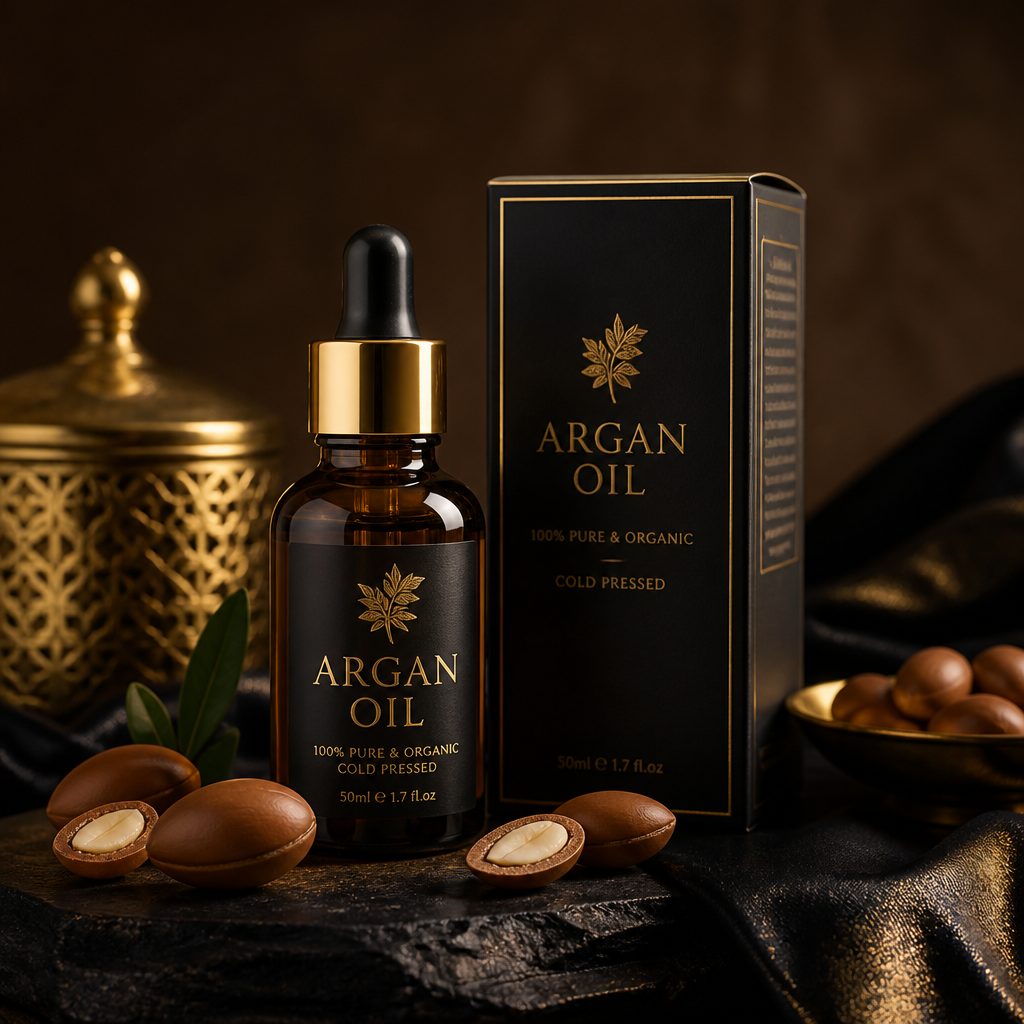
Argan oil, colloquially known as 'Moroccan liquid gold,' is a rare botanical lipid extracted from the kernels of the Argania spinosa tree, native exclusively to the UNESCO-protected biosphere in southwestern Morocco. Within the pantheon of grooming carrier oils, argan occupies a prestigious tier due to its complex molecular structure, which balances high-density nutrient delivery with an exceptionally low-comedogenic profile. Unlike heavier sebum-mimicking oils, argan is prized for its 'dry oil' properties, absorbing almost instantaneously into the follicular shaft and dermal layers without leaving a greasy residue. It serves as a cornerstone ingredient in premium beard balms and rejuvenating face serums, acting as both a potent emollient and a protective barrier against environmental oxidation. For the modern man, it represents the pinnacle of structural hair health and skin elasticity.
- ›Native exclusively to a specific region in Morocco.
- ›Boasts a comedogenic rating of 0, meaning it will not clog pores.
- ›Contains twice as much Vitamin E as olive oil.
- ›Rich in squalene, a natural premium compound that mimics skin lipids.
- ›Known as a 'dry oil' due to its near-instant absorption rate.
Chemical Composition and Efficacy
The physiological benefits of argan oil are rooted in its extraordinary concentration of Tocopherols (Vitamin E) and essential fatty acids, specifically Oleic and Linoleic acids. While most carrier oils provide simple moisture, argan offers a bioactive payload of antioxidants and triterpene alcohols that actively combat oxidative stress. Its Vitamin E content is nearly double that of olive oil, providing a robust defense against UV-induced cellular damage and particulate pollution.
Furthermore, the presence of squalene in its natural state allows argan oil to integrate seamlessly with the skin's lipid barrier. This biochemical compatibility ensures that moisture is trapped within the epidermis while maintaining the porosity necessary for skin to breathe. For the beard, this means high-level hydration that strengthens the protein structure of the hair, significantly reducing the occurrence of split ends and brittle texture.
The Dry Oil Phenomenon
In professional grooming circles, argan is categorized as a 'dry' carrier oil. This terminology refers to the oil's high linoleic acid content, which allows for rapid penetration of the cuticle and skin. Where thicker oils like castor or coconut sit atop the surface to create a heavy seal, argan disappears into the target area within minutes. This makes it an ideal choice for daytime grooming rituals where a high-shine, non-greasy finish is the objective.
This rapid absorption is particularly beneficial for those with oily or acne-prone skin. Because it does not clog pores (boasting a comedogenic rating of zero), argan oil can regulate natural sebum production. By delivering a controlled dose of healthy lipids, it signals to the sebaceous glands to slow down production, effectively balancing the skin's natural oil levels over long-term use.
Application in Beard and Hair Care
When applied to facial hair, argan oil acts as a powerful detangler and softener. The oil coats the hair shaft, smoothing down the microscopic scales of the cuticle. This action results in a visible increase in light reflection—giving the beard a healthy, natural luster—and a significant reduction in 'beardruff' or dry skin flaking. Because it is so lightweight, it can be used daily without the risk of product buildup that can lead to irritation.
Beyond surface aesthetics, argan oil penetrates the hair cortex to improve elasticity. This is vital for men growing longer beards, as it prevents the mechanical breakage that often occurs during combing or styling. It essentially functions as a leave-in conditioner that fortifies the hair from the inside out, making it an indispensable tool for maintaining structural integrity in harsh climates.
Sourcing and Authenticity
The extraction of argan oil is a labor-intensive process traditionally performed by Berber women. The fruit of the argan tree is dried, the pulp removed, and the hard inner nut cracked by hand to reveal the oil-rich kernels. For cosmetic use, these kernels are cold-pressed to preserve the integrity of the heat-sensitive vitamins and antioxidants. This differentiates it from culinary argan oil, where the kernels are roasted, resulting in a nutty scent but a lower nutrient profile.
Discerning the quality of argan oil is crucial for grooming efficacy. Genuine, high-grade argan should have a faint, nutty aroma that dissipates quickly upon application and a smooth, golden hue. Sediment or a harsh chemical smell often indicates poor processing or dilution with inferior filler oils like sunflower or canola. At Grizzly Grooming Co., we prioritize cold-pressed, unrefined Moroccan argan to ensure the bio-actives remains potent.
Therapeutic Benefits for the Skin
Argan oil is more than a moisturizer; it is a corrective treatment for the underlying skin. The ferulic acid and polyphenols found in the oil help to soothe inflammation and redness, making it an excellent post-shave application. It calms razor burn by accelerating the recovery of the skin's moisture barrier and reducing the microbial activity that leads to folliculitis.
As an anti-aging agent, the saponins in argan oil work to reactivate skin cells' ability to regenerate. Regular application can minimize the appearance of fine lines and maintain the tightness of the jawline by supporting the skin's elastin fibers. It is a comprehensive dermatological solution housed within a single, natural ingredient.
History & Origin
For centuries, the Berber people of southwestern Morocco have hand-harvested argan kernels from the Argania spinosa tree, cold-pressing them into the amber oil now known as 'Moroccan liquid gold.' Historically reserved for royalty and used as both a culinary staple and a skin treatment, argan oil entered global grooming markets in the late 20th century after dermatological research validated what Berber women had known for generations: it is one of the most bioactive, restorative lipids on earth. UNESCO now protects the entire argan biosphere reserve, making authentic argan oil one of the most tightly sourced ingredients in luxury grooming.
Uses & Benefits
- ›Softens coarse beard hair without weighing it down
- ›Reduces beardruff and calms post-shave razor burn
- ›Absorbs quickly, making it ideal for daytime beard oil formulas
- ›Fortifies split ends and strengthens the cuticle on longer beards
- ›Balances sebum production for combination and oily skin
Safety & Sourcing
Argan oil is non-comedogenic (rating 0) and safe for daily use on skin, beard, and scalp. It is generally well tolerated even by sensitive skin, though anyone with a tree-nut allergy should patch-test first, as argan is a nut-derived oil. Choose cold-pressed, unrefined cosmetic-grade argan — culinary argan is roasted and lacks the same bioactive potency.
FAQ
Is argan oil good for beards?+
Yes. Its lightweight, fast-absorbing profile softens coarse hair, reduces flaking, and adds natural shine without a greasy residue — one of the reasons it's a core carrier in our beard oil and beard balm.
How is argan oil different from jojoba oil?+
Jojoba mimics human sebum and sits closer to the skin surface. Argan penetrates faster and delivers more Vitamin E and antioxidants — the two complement each other, which is why premium beard oils use both.
Can argan oil cause acne?+
No. With a comedogenic rating of 0, it does not clog pores. It can actually help regulate over-active sebum production over time.
Found in Our Products
Related Comparisons
Sources
- Charrouf, Z. & Guillaume, D. (2008). Argan oil: Occurrence, composition and impact on human health. European Journal of Lipid Science and Technology.
- Lin, T. K., Zhong, L., & Santiago, J. L. (2018). Anti-inflammatory and skin barrier repair effects of topical application of some plant oils. International Journal of Molecular Sciences.