
How to Fix Beard Split Ends (And Stop Them Coming Back)
Split ends are the most misunderstood beard problem, because the entire product industry implies they can be repaired. They cannot. A split end is a hair shaft that has physically frayed after its protective cuticle failed, and nothing you apply glues it back together. What products can do is prevent the next split and temporarily smooth the appearance of existing ones. What scissors do is remove them before they travel up the shaft and cost you real length. Here is the honest version of the process.
- ›Split ends are mechanical damage — they cannot be repaired, only cut off.
- ›Trim the very tips every three to four weeks with sharp beard scissors.
- ›Most splits come from dry combing, rough towel drying, and heat.
- ›Oil the ends specifically; they are the oldest and driest hair on your face.
- ›A split left alone travels upward and eventually costs more length than a trim.
What a split end actually is
Each beard hair is a protein shaft wrapped in overlapping cuticle scales, like shingles on a roof. Those scales protect the cortex inside. When they are worn away by friction, heat, or repeated wet-dry cycling, the cortex is exposed, and the fibres begin to separate. That separation is the split.
Because the ends of your beard are the oldest hair — a four-inch beard has ends that have survived a year of showers, towels, combs, weather, and pillowcases — they are always the most damaged part. This is why splits appear at the tips and not the roots, and why length itself is a risk factor.
Why you cannot repair one
Hair is not living tissue. Once it leaves the follicle it has no metabolism and no repair mechanism. Products marketed as split-end menders contain silicones, cationic conditioners, or protein fragments that coat and temporarily bind the frayed fibres. They genuinely improve appearance and reduce further catching, which has value, but the effect washes out.
Treat those products as cosmetic management, not treatment. The only permanent answer is removal, and removal is cheap and quick if you do it on a schedule.
How to trim split ends properly
Work dry, in good light, on a fully combed beard. Wet hair stretches and then contracts, so trimming wet leads to uneven results. Use beard scissors that are actually sharp — dull blades crush the shaft and create the next generation of splits at the cut point.
Comb a small section downward, then look at where the frayed tips sit. Take one to three millimetres, cutting straight across or at a very slight angle, and move to the next section. Resist the temptation to chase every visible split in one session; a light pass every three to four weeks does more for length than an aggressive session twice a year. Some men prefer the twist-and-snip method: twist a small section and snip the fibres that pop out along the twist.
Stop dry combing
The largest single cause of new splits is combing or brushing a dry, tangled beard from the root down. The comb hits a tangle, drags it through, and either snaps the hair or strips cuticle from the length above.
Change the order. Apply a little oil first, or comb while the beard is slightly damp. Start at the tips and work upward in short strokes, holding the beard above where you are combing so tension is not transmitted to the root. Wide-tooth combs for detangling, fine-tooth or brush for finishing. This single change stops most new split formation.
Fix towel drying and heat
Rubbing a beard dry with a terry towel lifts the cuticle on thousands of hairs at once. Pat and squeeze instead, or use a microfibre towel, which is far gentler. Then let it air dry, or use a blow dryer on cool with a diffuser if you need to shape.
Heat matters more than most men expect. Hot water in the shower, high-heat drying, and heat styling all accelerate cuticle damage. Finish your rinse with cool water — it helps the cuticle lie flat and reduces the frizz that leads to catching and splitting.
Condition the ends deliberately
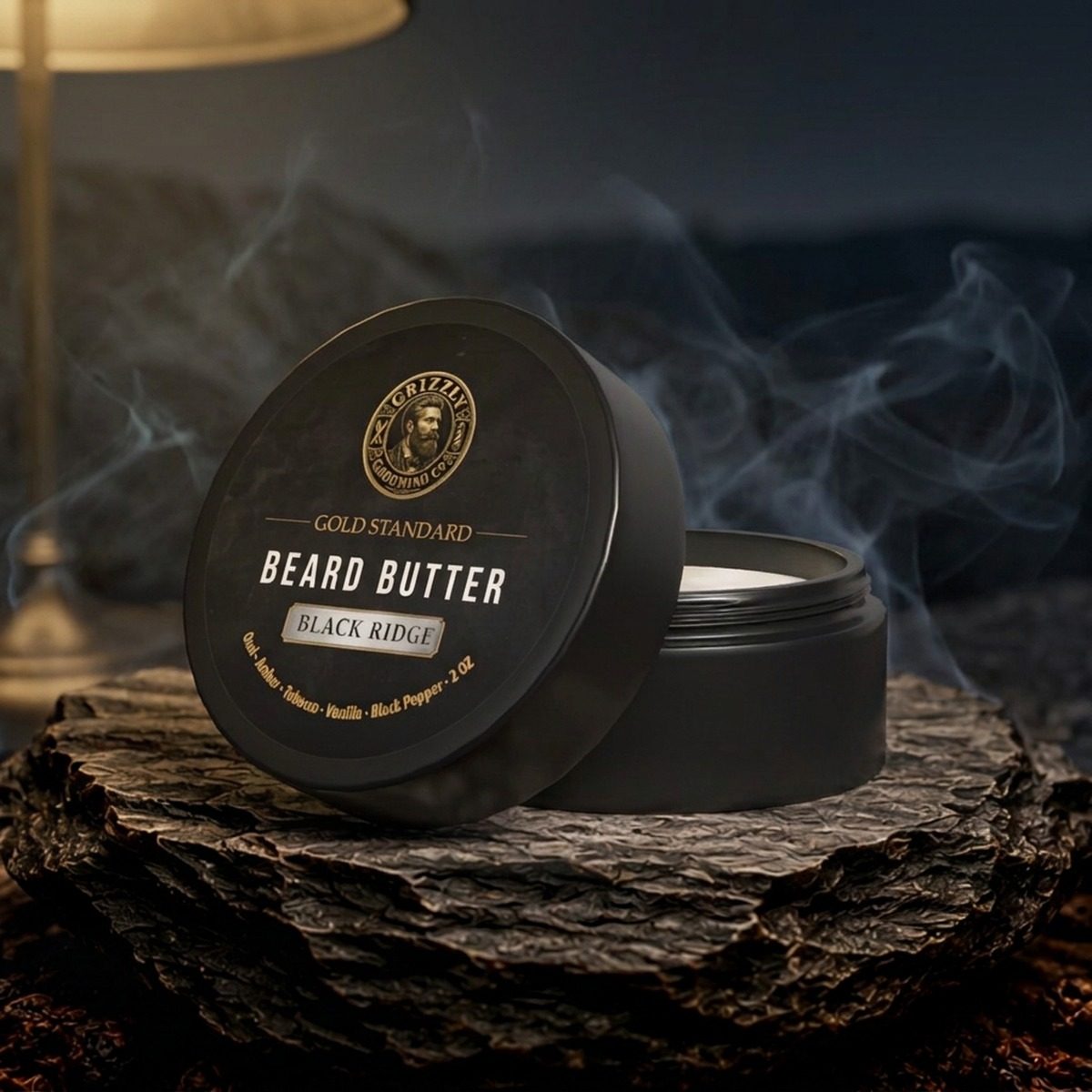
Most men apply oil at the roots and let whatever remains travel down. The ends, which need it most, get least. Reverse the emphasis for the last part of your routine: after working oil into the skin, add one or two extra drops specifically to the bottom inch of the beard, then a small amount of butter on the ends only.
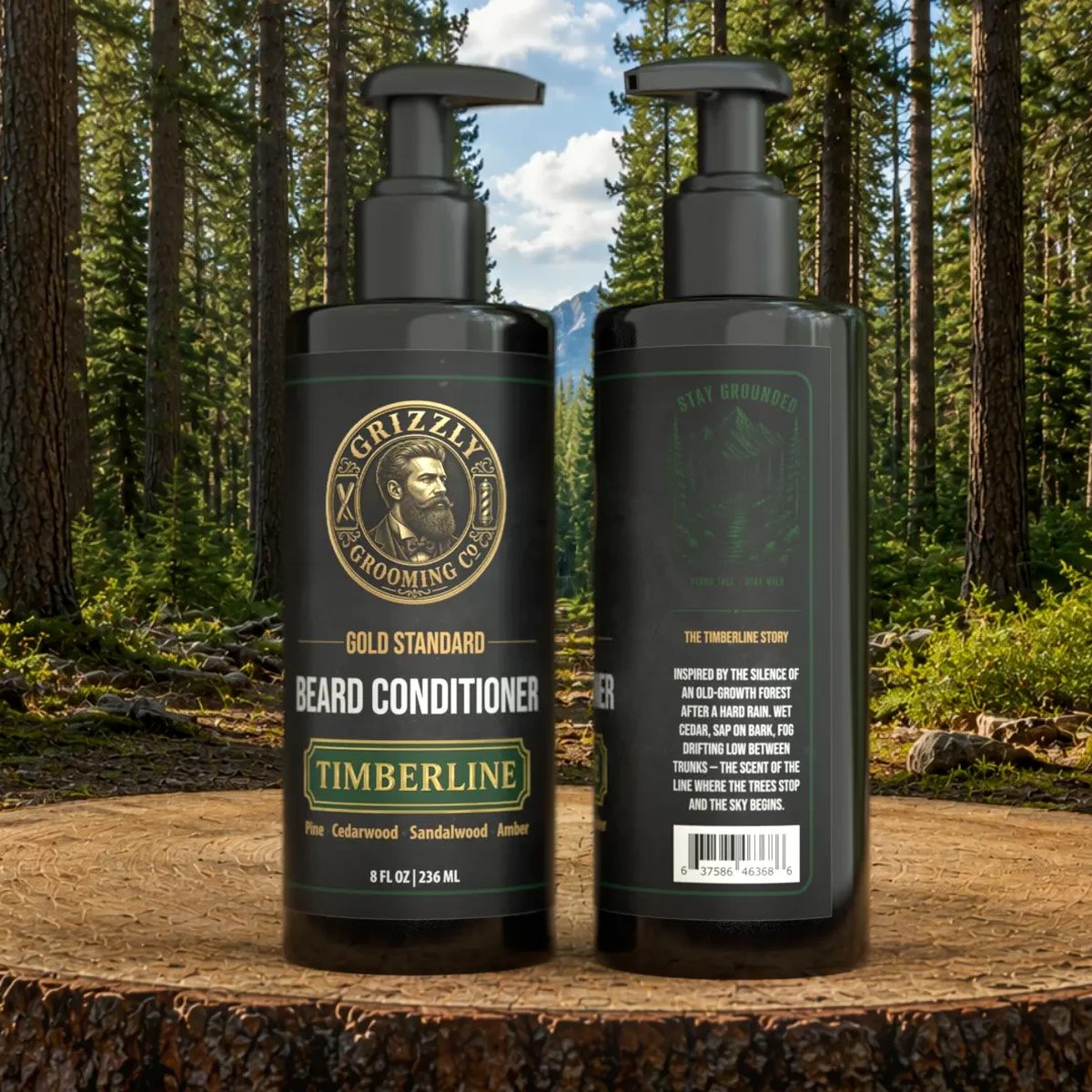
A weekly deep treatment helps at longer lengths. Apply a beard conditioner or a generous layer of butter, leave it for five to ten minutes, comb through gently, then rinse. Ends that stay pliable do not fray.
Sleep and friction
Eight hours of a beard grinding against a cotton pillowcase is a nightly abrasion cycle. Switch to satin or silk, which has far lower friction and does not wick oil out of the hair. At longer lengths a beard bag, or a loose braid, keeps the ends from being crushed and tangled overnight.
Daytime friction counts too: scarves, high collars, chin straps, and headphone bands all rub the same spot repeatedly. If you notice splits concentrated in one area, look for the mechanical cause before you look for a product.
A prevention schedule
Daily: damp application of oil, detangle from the tips upward, cool rinse, pat dry. Weekly: deep conditioning treatment with attention to the last inch, plus a slow inspection comb-through. Every three to four weeks: light tip trim with sharp scissors.
Quarterly: replace or sharpen your scissors, and check whether your comb has developed rough edges or seams that snag — cheap moulded plastic combs are a common hidden cause of damage. Sanded wood or seamless combs are worth the small upgrade.
How to spot splits before they spread
Splits are easiest to remove when they are new, and new splits are nearly invisible in a mirror. The reliable method is a light test: hold a small section of beard up against a bright, plain background — a window or a white wall — and look at the outline of the tips. Healthy ends form a fairly even silhouette; split ends show as fine, pale forks and stray fibres that break the line.
The second test is tactile. Slide two fingers down a section from mid-length to tip. A shaft that goes from smooth to catchy in the last inch has cuticle loss, and splits are either present or imminent. Run both tests at your weekly inspection, not daily; hair does not change fast enough for daily checking to tell you anything except that you are worrying.
Split types and what each one tells you
Trichologists distinguish several patterns, and each points to a different cause. A simple Y-split — one clean fork at the tip — is ordinary wear from combing and towel friction, and it is the most benign. A tree or feather split, with multiple branches along the last centimetre, indicates advanced cuticle loss and usually means a heat or chemical source.
A knot or bead split, where the shaft thins and swells before breaking, points to mechanical stress: tight tangles, aggressive brushing, or friction from a chin strap or collar. Mid-shaft splits, occurring well above the tip, are the most serious sign and usually mean bleach, dye, or heat styling. If you are seeing mid-shaft breakage, a tip trim alone will not solve it — the whole length needs a recovery programme.
Products that genuinely help, and what they do
No product repairs a split, but several reduce the rate at which new ones form, which is where the money should go. Cationic conditioners lower combing force, which is the single largest mechanical stressor. Panthenol improves elasticity so the shaft bends instead of snapping. Hydrolysed proteins temporarily fill cuticle gaps and reduce catching. Light silicones and fatty alcohols smooth the surface and make the outline look cleaner.
Understand these as friction management rather than treatment. Applied consistently, they meaningfully extend the interval between trims and slow the loss of length. Marketed as menders, they are misleading; used as prevention, they are among the most effective things in the routine.
The length trade-off nobody explains
Men resist tip trims because they are trying to grow length, and the resistance is understandable but mathematically backwards. Beard hair grows around half an inch a month. A light trim removes one to three millimetres — well under a fifth of one month's growth. An untreated split, by contrast, travels upward and eventually forces a cut of a centimetre or more, and it damages neighbouring hairs by catching on them along the way.
So the choice is not between trimming and keeping length. It is between losing two millimetres on schedule or losing ten unpredictably. Every barber who works with long beards recommends the same thing for the same reason: routine tip maintenance is the fastest path to real length.
Frequently Asked Questions
Can any product actually repair split ends?
No. Products can bind and smooth the frayed fibres temporarily, which reduces catching and improves appearance, but the split itself is permanent. Cutting is the only fix.
How often should I trim beard split ends?
Every three to four weeks, taking only one to three millimetres. This preserves length overall, because an untreated split travels up the shaft and eventually forces a bigger cut.
Does trimming split ends make a beard grow faster?
No — growth happens at the follicle. But it does help you retain length, which is what most men actually mean when they say their beard has stopped growing.
Are split ends caused by hard water?
Hard water contributes. Mineral deposits leave the hair rougher and drier, which makes cuticle damage more likely. A clarifying wash every week or two helps if you have hard water.
Should I use beard scissors or a trimmer for split ends?
Scissors. A trimmer cuts a blunt line across the whole beard and cannot target individual frayed tips. Sharp scissors, used dry on a combed beard, give the control you need.
Can I see split ends without a mirror trick?
Hold a section against a bright plain background and look at the outline of the tips. Forks and stray fibres show clearly there and are almost invisible in an ordinary bathroom mirror.
What does a mid-shaft split mean?
Usually heat or chemical damage rather than ordinary wear. A tip trim will not fix it — the whole length needs a conditioning and protein programme, plus removing the heat or chemical source.
Build your ritual in 60 seconds.
Answer four questions and get a custom regimen built around your beard and routine.
Start The Ritual Builder