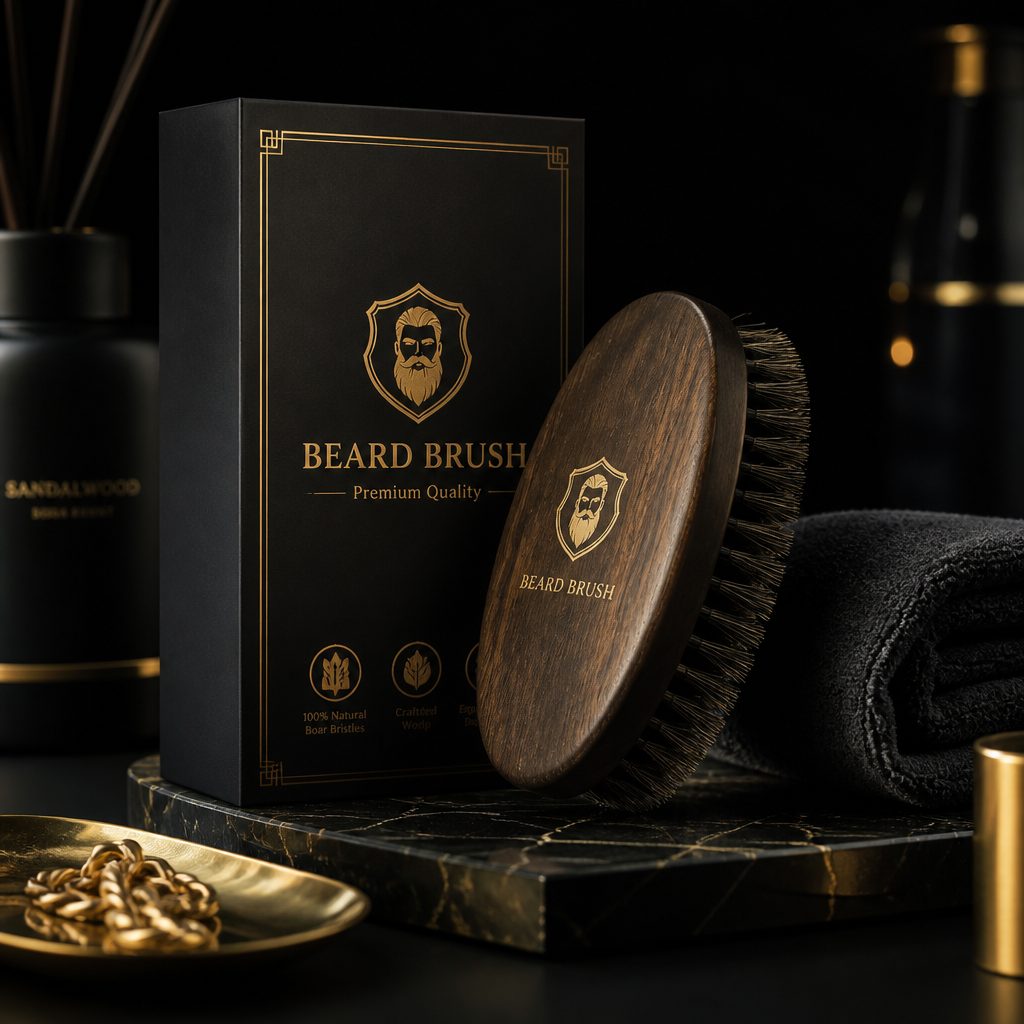
The beard brush is an indispensable grooming implement engineered specifically to manage the unique density and texture of facial hair. Unlike standard hairbrushes, a dedicated beard brush is primarily distinguished by its use of natural fibers—most notably boar bristle—which possess the structural integrity required to penetrate coarse whiskers and reach the underlying epidermis. This dual-purpose tool serves not only as a styling device for alignment and volume but also as a biological maintenance system. By stimulating the follicles and distributing sebum, the skin’s natural lipid, the brush ensures the beard remains hydrated, resilient, and structurally sound.
- ›Natural boar bristles are porcine-derived and mimic the structure of human hair.
- ›First-cut bristles are the firmest and best suited for long, thick beards.
- ›Brushing redistributes natural sebum oils that the skin cannot move on its own.
- ›Manual exfoliation from brushing prevents 'beardruff' and ingrown hairs.
- ›Daily brushing 'trains' facial hair to grow in a uniform downward direction.
The Anatomy of Professional Bristles
In the sphere of high-end grooming, the 'boar bristle' stands as the industry gold standard. These bristles are harvested in varying stiffness levels, often categorized as 'first cut' (stiffest) and 'second cut' (softer). The microscopic scales covering each natural bristle are capable of trapping oil and sebum, acting as a transport mechanism that carries moisture from the root of the hair to the parched, split ends that characterize neglected growth.
Synthetic alternatives, while prevalent, often lack this porous architecture. Nylon bristles can be excessively rigid, leading to micro-tears in the hair cuticle, or too smooth to effectively distribute viscous beard oils and balms. A professional-grade brush typically features a handle carved from hardwoods like walnut, pearwood, or military-style acetate, providing the ergonomic leverage necessary to maneuver through thick, multi-month growth.
Sebum Distribution and Follicular Health
The primary physiological benefit of regular brushing is the redistribution of sebum. The sebaceous glands at the base of each follicle produce a finite amount of oil, which is often insufficient to coat the length of a beard exceeding two inches. Without manual intervention, the tips of the beard become brittle, leading to breakage and 'beardruff' (seborrheic dermatitis).
By utilizing a firm-bristled brush, the user mechanically forces these oils along the hair shaft. This process creates a natural protective barrier against environmental pollutants and oxidative stress. Furthermore, the act of brushing increases localized blood flow to the skin, which can theoretically improve the delivery of nutrients to the hair bulb, fostering a healthier growth cycle over time.
Exfoliation and the Prevention of Ingrowns
Beard hair provides a haven for dead skin cells to accumulate, often trapped beneath the density of the mane. If left unmanaged, this accumulation clogs pores and leads to painful ingrown hairs (pseudofolliculitis barbae). The beard brush acts as a mechanical exfoliant, sweeping away cellular debris and keeping the 'soil' of the beard healthy.
The stiff bristles work to lift hairs that are beginning to curl back into the skin, guiding them to grow outward. This is particularly crucial for men with curly or kinky hair types, where the risk of inflammation is significantly higher. Regular brushing ensures the skin can breathe, reducing the itchiness often associated with the early and middle stages of beard growth.
Styling, Volume, and Training
Beyond health, the beard brush is a psychological tool of discipline for the hair. Facial hair does not naturally grow in a uniform direction; it often develops in chaotic swirls and cowlicks. Consistent brushing 'trains' the hair follicles to lie in a specific direction over time, which contributes to a more manicured, professional silhouette.
When used in conjunction with a blow dryer, the brush provides the tension required to straighten wavy patches and add significant volume to thin areas. This structural manipulation is essential for shaping the beard into a cohesive unit rather than a collection of disparate whiskers, allowing for the precise architectural grooming that defines the modern gentleman.
Maintenance of the Tool
To maintain the efficacy of a boar bristle brush, it must be cleaned regularly. Over time, the bristles will become saturated with a mixture of old oil, product buildup, and skin cells. A monthly wash using a mild shampoo or specialized brush cleaner is recommended to prevent the transfer of bacteria back onto the face.
After washing, the brush should be dried with the bristles facing downward. This prevents moisture from seeping into the wooden handle, which can cause warping or the loosening of the bristle adhesive. Proper maintenance ensures that a high-quality beard brush can remain a functional part of a man’s kit for several decades.