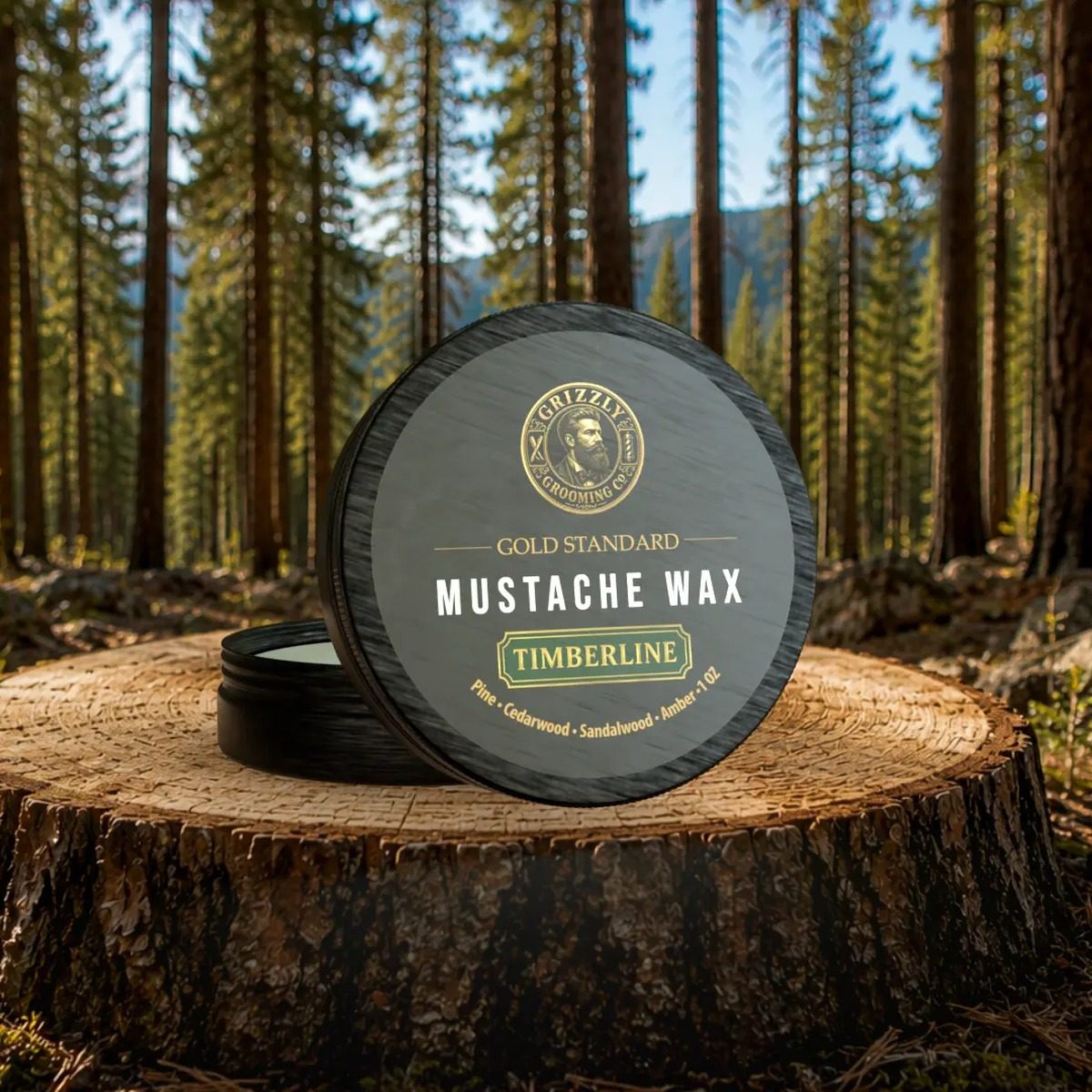
Mustache Training: How To Get A Mustache To Actually Stay Where You Want It
- ›Train mustache hairs the same direction daily — they follow tension over time.
- ›Warm a rice-grain of wax between thumbs, work into dry mustache from base to tip.
- ›Comb the shape in, hold the tip a few seconds, repeat every morning.
- ›Visible training results in 4–8 weeks; a strong stay-in-place shape in 3–4 months.
A mustache stays where you point it because you have pointed it there enough times, not because the wax is stronger. Wax buys you a day. Repetition over weeks buys you a shape.
Why training works
Each hair on your face grows in a direction dictated by the follicle, but the direction the hair rests in — the sweep — is trainable. Combing and holding a hair in a new position every day, day after day, causes the hair shaft to hold that shape between combings. The follicle does not change. The behavior of the hair does.
The daily training ritual
Mustache should be dry, not damp. Scoop a rice-grain amount of wax onto your thumbnail, warm it by rubbing between both thumbs for ten seconds until it turns from waxy to tacky, then work it into the mustache starting at the base near the lip and stroking out to the tips. Comb the mustache into the shape you want — down and out for a natural sweep, up and out at the corners for a handlebar direction. Hold the tips between finger and thumb for five to ten seconds. That is one training rep. Do it every morning.
How much wax is right
Beginners overshoot on wax and get a stiff, shiny, gluey mustache. The right amount is less than you think — a rice grain for a moderate mustache, a small pea for a large handlebar. If the mustache feels crunchy or looks wet, that is too much.
How long training takes
Four to eight weeks of daily training produces visible directional change. Three to four months produces a mustache that holds shape on its own for most of the day with just a comb-through. Skip weeks and the training resets partially — the hairs revert to their untrained sweep within days.
The one tool that helps most
A fine-tooth mustache comb, carried in your pocket. The comb is what actually installs the direction. Wax without a comb is glue without a template — it holds the shape you gave it, but if that shape is uneven and lumpy, that is what stays.
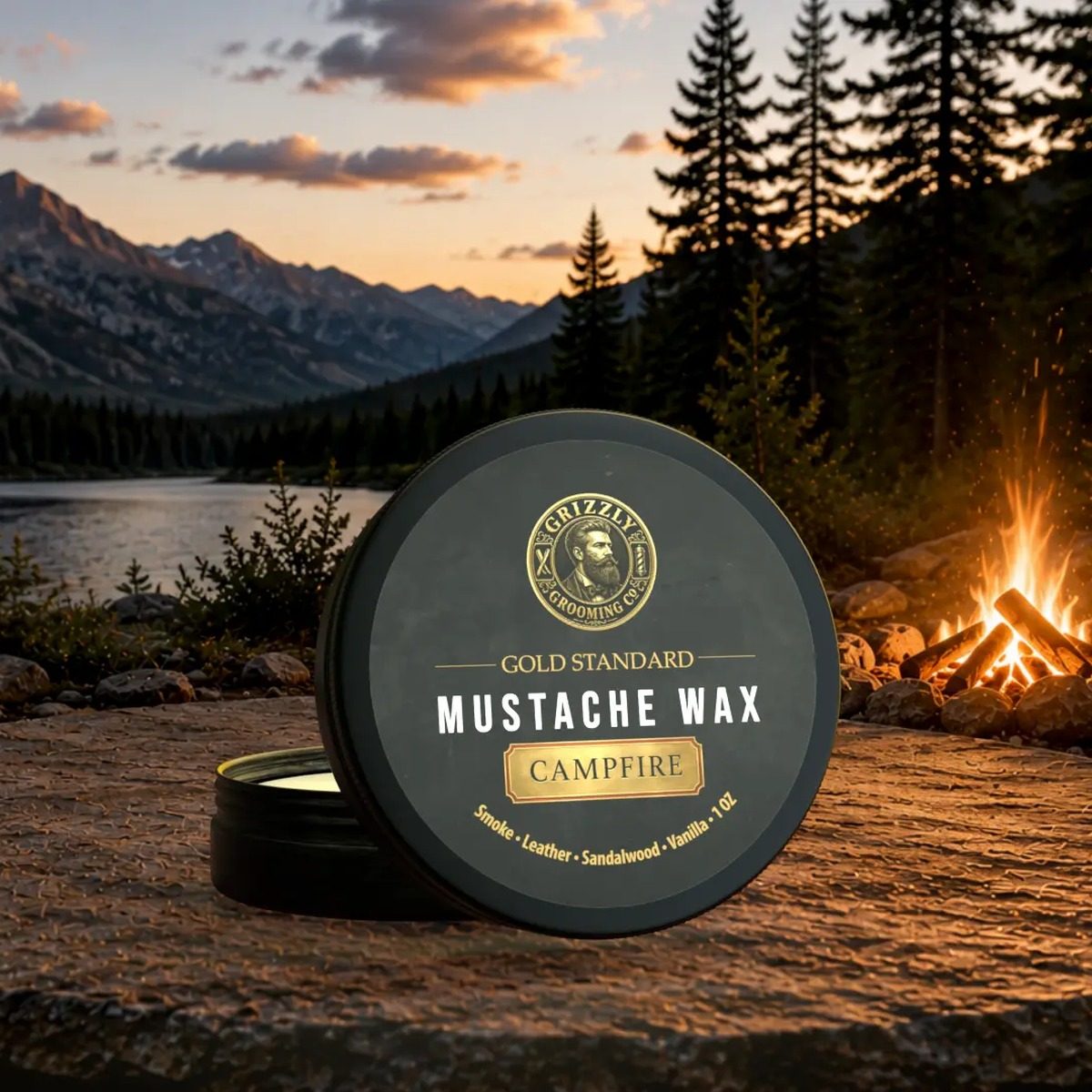
Gold Standard Mustache Wax — stiff enough to train, natural enough to reshape mid-day without residue.
Seasonal Considerations for Mustache Training
Environmental factors play a significant role in how well your mustache wax performs and, by extension, how effectively your training progresses. In dry, arid climates, wax tends to dry out faster, requiring more frequent application or a slightly heavier hand to maintain hold throughout the day. Conversely, high humidity can cause some waxes to soften prematurely, leading to a loss of shape. Understanding your local climate and how it interacts with your chosen wax allows for proactive adjustments, ensuring consistent training conditions regardless of the weather. This attention to detail elevates your training from a daily chore to a finely tuned ritual.
Cold weather presents its own set of challenges and opportunities. Lower temperatures make waxes firmer, often requiring more extensive warming between your thumbs before application. While this might add a few extra seconds to your morning routine, the increased rigidity can offer a stronger hold once applied, which is beneficial for stubborn hairs or intricate handlebar styles. However, protect your mustache from harsh winds, which can dislodge hairs and undo hours of training. A scarf or collar provides an effective barrier, preserving your meticulously crafted shape against nature's elements.
During warmer months, the heat can cause your wax to become more pliable, sometimes to the point of losing its grip. If you find your mustache losing shape by midday, consider storing your wax in a cooler location or switching to a firmer formulation designed for higher temperatures. Excessive sweating can also dilute the wax's effectiveness; carry your pocket comb for quick touch-ups and re-shaping as needed. Adapting your product and routine to the season is not a compromise but an optimization, ensuring your training remains uninterrupted and your mustache stays precisely where it belongs.
Troubleshooting Common Training Plateaus
Even with consistent effort, you might encounter periods where your mustache seems resistant to further training. This plateau often stems from subtle inconsistencies in your daily routine. Review your wax application technique: are you truly starting at the base and working outwards, ensuring even coverage? Are you warming the wax sufficiently for proper adhesion but not overheating it? A common error is applying wax only to the surface, leaving the underlying hairs untrained. Ensure every hair, from root to tip, receives sufficient attention and product to anchor it in the desired direction.
Another common hurdle is inconsistent holding time or pressure. After combing your mustache into shape, holding the tips for a solid five to ten seconds is crucial. This pressure allows the wax to set the hairs in their new position, providing the tension necessary for long-term training. Rushing this step, or skipping it altogether, significantly diminishes the wax's effectiveness as a training aid. If your mustache springs back immediately, you likely need to increase the holding duration or firm up your grip. Persistence in these small details yields significant training dividends.
Consider the tools you are using. A worn-out or poorly designed comb can hinder effective training. Fine-tooth mustache combs are designed to grip and align individual hairs precisely. If your comb has broken teeth or lacks the necessary rigidity, it might be gliding over hairs rather than guiding them. Invest in a quality comb and ensure it is clean; product buildup can reduce its effectiveness. Sometimes, a slight adjustment to the type of wax – perhaps a firmer hold for particularly coarse hairs – can also break through a training plateau, providing the extra leverage needed to guide stubborn sections into place.
The Science of Hair Memory and Follicle Behavior
While we often speak of 'training' hair, it's more accurate to describe it as conditioning the keratin structure to adopt a preferred resting position. Each hair shaft is composed primarily of keratin, a protein that can be temporarily molded and held by external forces. When you apply wax and comb, you are physically re-orienting the hydrogen bonds within the keratin. The wax acts as a temporary adhesive, holding these bonds in their new configuration. Over weeks and months, this consistent re-orientation encourages the hair to 'remember' this new shape, reducing its natural tendency to revert to its previous growth pattern.
It's important to understand that the follicle itself, the root from which the hair grows, is not directly affected by this training. The follicle dictates the inherent curl, thickness, and primary growth direction of the hair. No amount of wax or combing will alter the genetic blueprint of your facial hair. However, the hair shaft emerging from the follicle is pliable. Think of it like bending a branch: the root remains fixed, but the branch itself can be guided and held in a new direction. Your training efforts are focused entirely on this pliable, external portion of the hair.
The effectiveness of mustache training relies on the principle of cumulative tension. Each day, you apply mechanical tension and hold to the hairs. This consistent application gradually weakens the hair's natural inclination to revert, making it more amenable to its new direction. The longer and more consistently you apply this tension, the more pronounced and lasting the change in the hair's resting sweep. This process isn't about brute force but about disciplined repetition, leveraging the wax to maintain the desired tension between your daily training sessions.
Maintaining Health for Optimal Training Results
The health of your mustache hairs directly impacts their ability to hold a trained shape. Dry, brittle hairs are more prone to breakage and less likely to retain the set provided by wax. Ensure you are using a quality beard wash and conditioner specifically designed for facial hair, as these products are formulated to moisturize and strengthen without stripping natural oils. Washing 2-3 times a week is generally sufficient; over-washing can lead to dryness. Hydrated, supple hairs are more resilient and respond better to daily manipulation and styling.
Nutrition also plays a foundational role in hair health. A balanced diet rich in proteins, vitamins (especially Biotin, Vitamin E, and Vitamin D), and minerals (like Zinc and Iron) provides the building blocks for strong, healthy hair growth. While a healthy diet won't change your mustache's growth pattern, it ensures that the hairs you are training are robust and less susceptible to damage. Consider a high-quality men's multivitamin if you suspect dietary deficiencies, but prioritize whole foods for optimal impact on overall hair vitality.
Protection from environmental damage is equally crucial. Exposure to harsh sun, chlorine from swimming pools, and pollutants can weaken hair shafts, making them more difficult to train and prone to split ends. Use beard balms or oils with natural UV protectants if you spend significant time outdoors. Rinse your mustache thoroughly after swimming to remove chemicals. A healthy mustache is a trainable mustache; prioritize its well-being, and you will find your daily training efforts yield more impressive and lasting results.
Advanced Training for Complex Styles
Once your mustache has a solid foundation of basic training, you can begin to explore more intricate styles like the full handlebar or even a distinct natural curl. For these advanced looks, patience and incremental adjustments are key. Instead of trying to force a dramatic curl overnight, gradually increase the outward and upward sweep over several weeks. Use slightly more wax on the very tips, curling them gently around a fingertip or a specialized mustache twirling tool, holding for a solid ten to fifteen seconds to really set the shape. This slow progression allows the hairs to adapt without stress.
For a symmetrical handlebar, pay meticulous attention to both sides of your mustache daily. Many men unconsciously favor one side during styling, leading to an uneven appearance. Consciously alternate which side you start with and measure the curl's diameter or the tip's extension against a mirror. If one side consistently falls flat, it may require slightly more wax or a longer holding time. Precision and a keen eye for balance are paramount when aiming for these sophisticated shapes, transforming a simple sweep into a statement.
Consider using a small amount of a slightly stronger hold wax specifically on the very tips for maximum rigidity in advanced styles. Apply this extra wax after your initial full mustache application, focusing solely on the sections you want to sculpt into a tight curl or extended point. This 'double-waxing' technique provides the additional structural integrity needed without making the entire mustache feel overly stiff. Remember, the goal is always to achieve the desired shape with the minimum effective amount of product, maintaining a natural feel and appearance.
The Role of Consistency Beyond Daily Waxing
While daily wax application and combing are the cornerstones of mustache training, other aspects of your routine contribute significantly to its success. Regular trimming is essential, even when growing for length. Snipping off split ends and maintaining a clean baseline encourages healthy growth and prevents unruly strays from undermining your training efforts. A good pair of mustache scissors, kept sharp and clean, allows for precise, micro-adjustments without sacrificing overall length. Trim only when the mustache is completely dry to gauge its true shape and length accurately.
Beyond daily styling, be mindful of habits that can disrupt your training. Frequently touching or tugging at your mustache throughout the day, whether consciously or unconsciously, can undo the work of your morning ritual. Similarly, sleeping positions can flatten or bend trained hairs. Consider sleeping on your back or using a satin pillowcase to minimize friction and prevent your mustache from getting crushed overnight. Small, consistent efforts to protect your mustache outside of styling hours reinforce the training you've already invested.
Even your choice of food and drink can impact your mustache's trained shape. Hot beverages or messy meals can inadvertently dislodge hairs or dissolve wax, particularly around the center. Develop mindful eating and drinking habits; sip from a straw for drinks, and take smaller bites for food. After eating, a quick check in a mirror and a pass with your pocket comb can re-establish any lost shape. These seemingly minor considerations collectively contribute to the long-term integrity and success of your mustache training regimen, ensuring your efforts are consistently rewarded.
Understanding Wax Formulations and Their Impact
Mustache waxes are not all created equal; their formulations directly influence their holding power and suitability for training. Many premium waxes contain a blend of beeswax, carrier oils like jojoba or argan, and essential oils. Beeswax provides the primary hold and structure, with higher concentrations resulting in a firmer wax. Carrier oils add conditioning benefits and influence the wax's pliability and texture upon warming. Understanding these components helps you select a wax that aligns with your specific mustache type and desired level of hold for training.
Soft waxes, which typically have a lower beeswax content, offer a lighter hold and more natural finish. These are suitable for subtle training of shorter mustaches or for men who prefer a very flexible style. Medium-hold waxes strike a balance, providing enough grip for directional training while still allowing for some reshaping throughout the day. These are excellent for most training purposes, offering versatility. Hard waxes, with their higher beeswax content, deliver maximum hold for stubborn hairs or elaborate handlebar styles that require rigid definition.
Experimentation with different wax types is often necessary to find your ideal training partner. If your mustache is particularly coarse or resistant, a harder wax might provide the necessary leverage. For finer hairs, a medium wax may suffice without feeling heavy or stiff. Pay attention to how the wax warms, applies, and holds throughout your day. Some waxes also feature different scents; choose one that complements your other grooming products without overwhelming. The right wax is a powerful ally in achieving your desired mustache shape through consistent training.
The Long-Term Rewards of Dedicated Training
The dedication invested in daily mustache training yields significant long-term rewards beyond just a styled look. A well-trained mustache gains a character and presence that an untamed one simply cannot. The consistent effort translates into a disciplined appearance, showcasing your commitment to your personal grooming. Over months, your mustache develops its own 'memory,' requiring less product and effort to maintain its shape, allowing you to enjoy the benefits of your hard work with greater ease and confidence in its consistent presentation throughout the day.
Beyond aesthetics, the training ritual itself can become a valuable part of your daily routine. It's a moment of focus, a small act of self-care that sets a positive tone for your day. The process of warming the wax, meticulously combing each hair, and shaping it to perfection fosters patience and attention to detail. This mindful engagement with your grooming contributes not only to a distinguished appearance but also to a sense of personal discipline, extending benefits far beyond the mirror into other aspects of your daily life.
Ultimately, a fully trained mustache becomes an extension of your personal style and identity. It reflects dedication and an appreciation for classic masculine refinement. The ability of your mustache to hold its shape naturally, or with minimal touch-ups, is a testament to the cumulative effect of consistent effort. This enduring shape, achieved through disciplined training, allows you to project an air of composure and distinction, a silent statement of a man who pays attention to the details that matter.
Frequently Asked Questions
How long does it take to train a mustache?+
Visible shape change in 4–8 weeks with daily training. A mustache that stays put on its own takes 3–4 months of consistent daily wax and comb work.
Do I need to grow it long first?+
For a handlebar, yes — hairs need enough length to sweep up and hold. For a general shape, you can start training as soon as the mustache reaches the top lip.
Can I train my mustache without wax?+
You can comb and shape without wax, but wax multiplies training speed 3–4x. The wax holds the hair in the new position long enough between combings to actually condition the sweep.
How do I remove mustache wax at night?+
Warm water and a bit of beard wash breaks it down. Do not scrub — massage in circles, rinse, and comb through while damp.
Can I train a mustache that has a natural curl?+
Absolutely. While a natural curl presents a challenge, consistent daily training with wax and a fine-tooth comb can guide the hairs into a new, straighter sweep or a more controlled curl. It may take longer—expect 6-12 weeks for visible change and 4-6 months for a set shape—but the keratin structure will respond to consistent tension. Be patient and firm with your daily shaping.
What if my mustache feels stiff or crunchy after applying wax?+
If your mustache feels stiff, crunchy, or looks unnaturally shiny, it's a clear sign you've used too much wax. The goal is a firm but natural feel. Reduce the amount of wax significantly; try half a rice grain instead of a full one. Warm it thoroughly, apply from the base to tip, and comb through to distribute evenly. Less is often more for effective training without rigidity.
How often should I trim my mustache while training it?+
Trim your mustache sparingly while training, focusing only on stray hairs or split ends. Aim for a trim every 3-4 weeks to maintain overall health and shape, but avoid aggressive cutting, especially if growing for length. Trim when completely dry to accurately gauge length and shape, and always use sharp mustache-specific scissors for precision.
Does brushing help with mustache training as much as combing?+
While brushing can help distribute natural oils and keep your mustache tidy, a fine-tooth comb is superior for training. The comb's rigid, narrow teeth provide targeted tension to individual hairs, guiding them into the desired direction with precision. Brushes are great for general grooming, but combs are the essential tool for purposeful directional training and setting.
Can certain foods or drinks affect my mustache training?+
Yes, hot beverages and messy foods can impact your trained mustache. Heat and moisture from drinks can soften or dissolve wax, causing hairs to lose their shape. Similarly, food particles can dislodge hairs or smear wax. Be mindful when eating and drinking; use a straw for liquids and carry your pocket comb for quick post-meal touch-ups to maintain integrity.
Is there a specific time of day best for training my mustache?+
The best time for mustache training is typically in the morning, immediately after showering (once your mustache is completely dry). This establishes the shape for the day and allows the wax to set for hours. Consistent morning application ensures the hairs are held in the desired position for the longest possible duration, maximizing training effectiveness over time.
How do I prevent my mustache from getting squashed while I sleep?+
To prevent your mustache from getting squashed overnight, try sleeping on your back. If that's not possible, consider using a silk or satin pillowcase, which reduces friction compared to cotton. This minimizes tugging and crushing, helping preserve the trained shape. Avoid sleeping face down if you're serious about maintaining your mustache's integrity and training progress.
"Bought the kit after reading this. First product line that actually did what it said. I'm on subscribe now, never going back."
Join The Grizzly Brotherhood
Scent guides, grooming tips, and early access to new drops. No discount bait — just the good stuff.
Unsubscribe anytime · No spam
Get Gold Standard Mustache Wax
- Everything in this article, one click.
- Built for a complete daily ritual.
- 30-day money-back guarantee.
Related Guides
Morning, evening, and weekly — in the right order.
Nine-oil breakdown, what to avoid on a label, and how to judge a formula.
Butter-forward vs wax-forward, hold levels, and the layering test.
The wash, condition, and oil sequence that changes coarse hair.
Neckline, cheekline, and the cleanup that keeps length.
What actually moves the needle across a full growth cycle.
Every oil we use, why it's in there, and how we compare.
Assemble a kit around your beard length and skin type.
Sources & Research
- International Journal of Molecular Sciences — Anti-Inflammatory and Skin Barrier Repair Effects of Topical Application of Some Plant Oils
- Indian Journal of Dermatology — Moisturizers: The Slippery Road
- American Academy of Dermatology — Face Washing 101
- American Academy of Dermatology — Dermatologists' Tips for Relieving Dry Skin
- Grizzly Grooming Co. formulation notes and batch testing records