How To Trim Your Own Beard At Home (And Not Wreck It)
- ›Trim dry, not wet — wet hair looks longer than it is.
- ›Start with a longer guard than you think. Take passes, not chunks.
- ›Bulk first, then edges, then details. Never the other order.
Learning to trim your own beard saves you $600 a year and gives you full control. It also gives you full ability to ruin your face on a Tuesday night. Do it in the right order.
Get the right tools
A clipper with multiple guards, a small trimmer for edges, a comb, and a hand mirror. That's it. Skip the beard-shaping stencils.
The order of operations
1) Comb the beard down. 2) Trim length with a guard one size longer than your target. 3) Reassess. 4) If needed, drop to your target guard. 5) Define the neckline. 6) Define the cheek line if needed. 7) Detail the mustache.
Guard sizes translated
- ›#1 = 1/8 inch — very short.
- ›#3 = 3/8 inch — short, still a beard.
- ›#5 = 5/8 inch — medium beard, most common trim length.
- ›#7 = 7/8 inch — longer, closer to full beard.
If you cut too short
Do not try to 'even it out' by matching the other side. Even it out by growing everything back. Meanwhile: oil, balm, brush, hide behind a scarf.
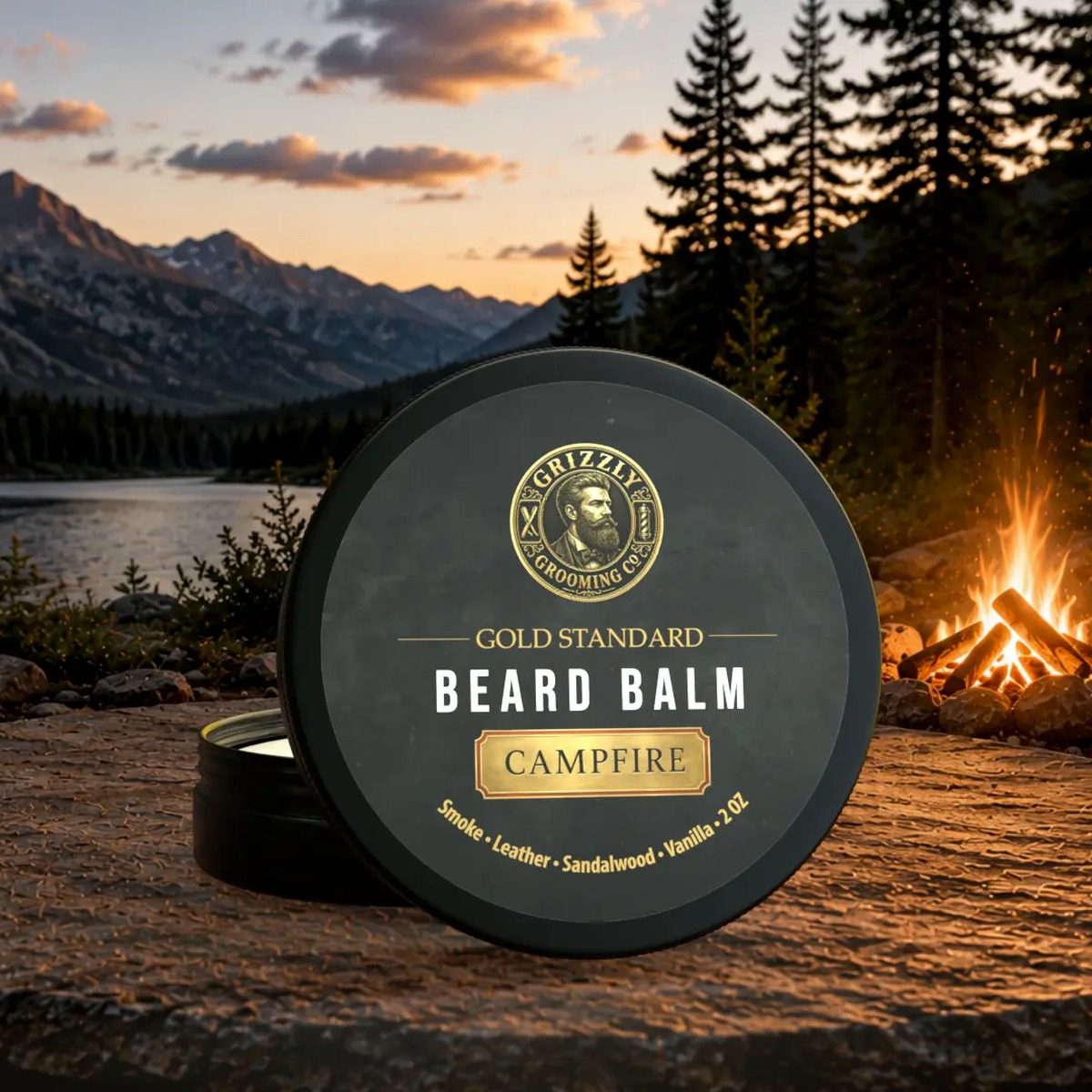
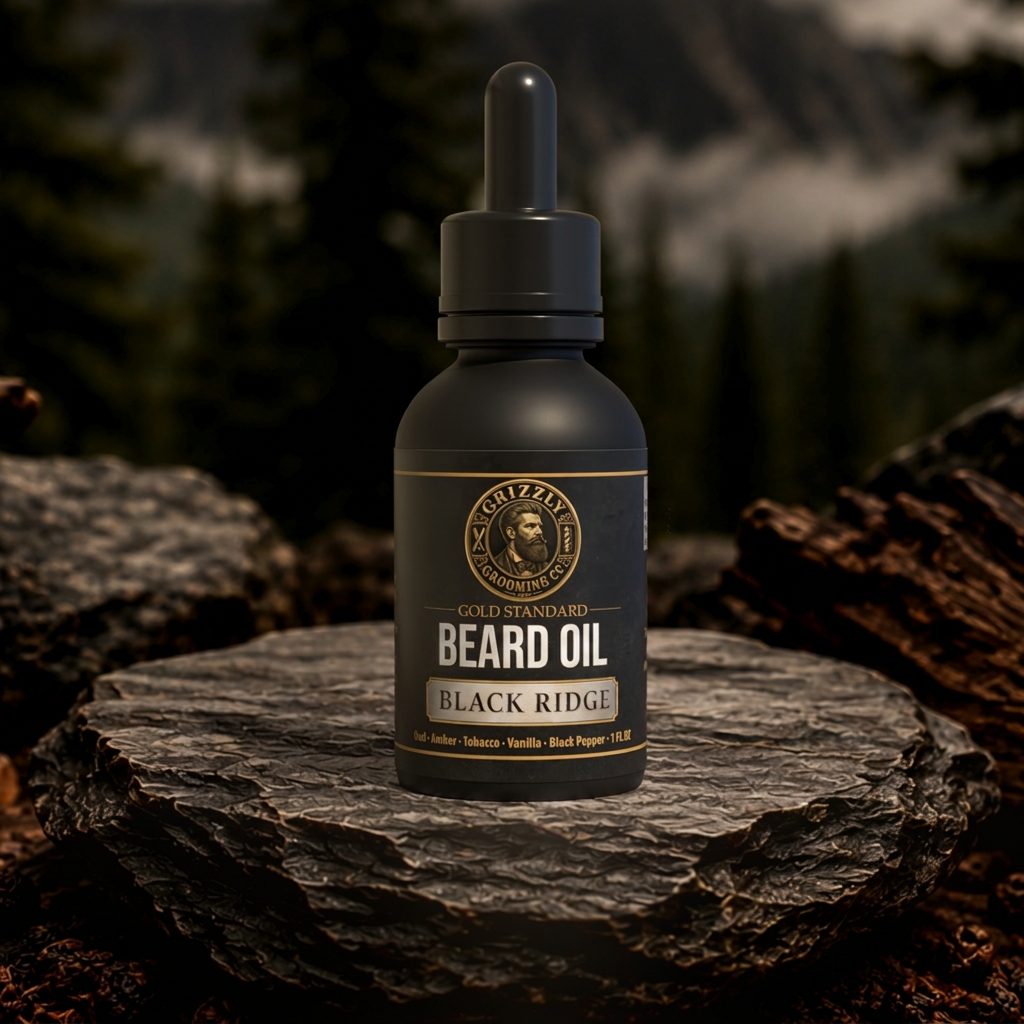
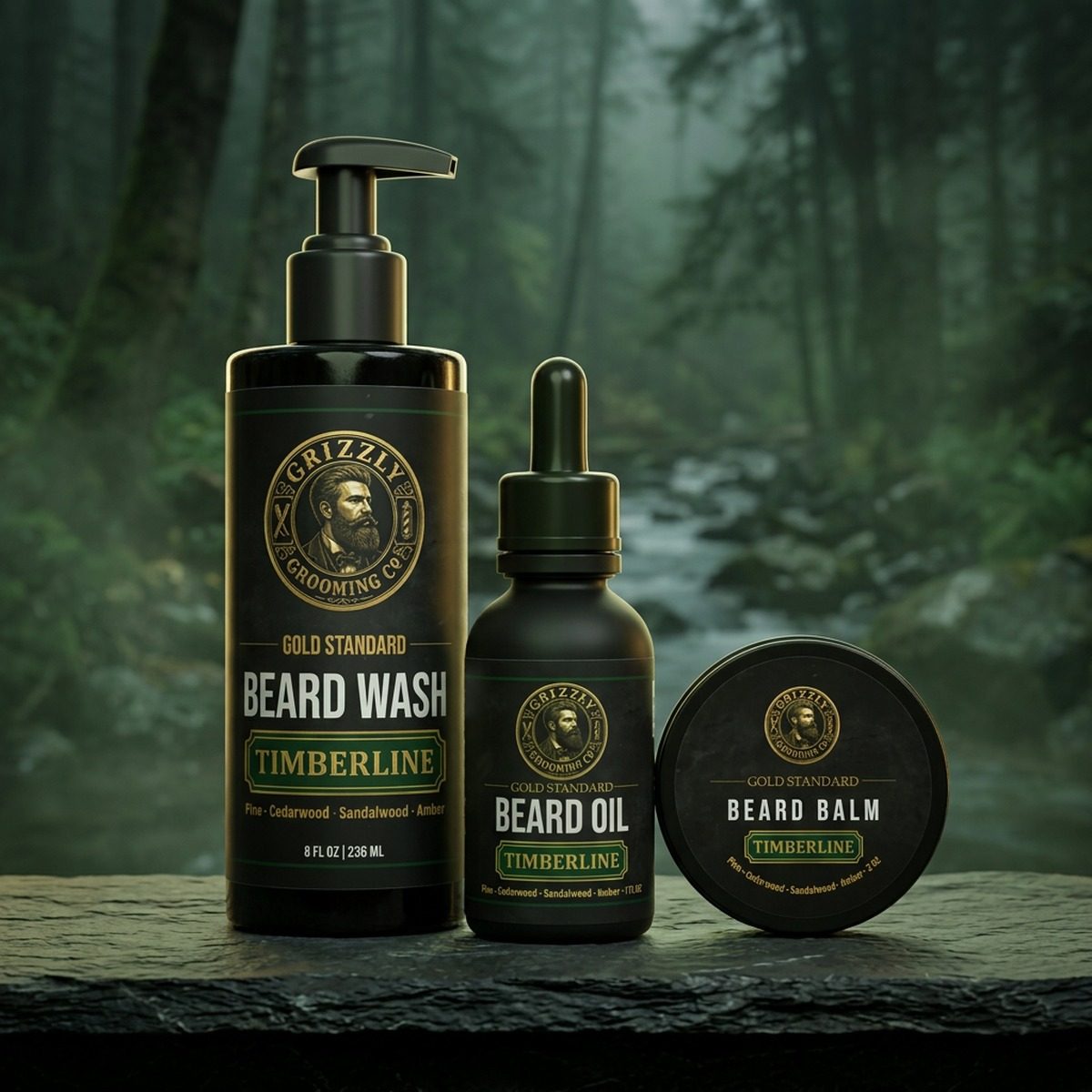
Gold Standard Beard Oil — post-trim conditioning that keeps every hair healthy while it grows out.
Wet or dry: which one and why
Trim dry for anything involving length. Wet hair stretches under its own weight and springs up shorter as it dries, which is the mechanism behind almost every accidental over-trim. Dry-trimming shows you the real length while you cut.
The exception is the finishing shave below the neckline, which should be done on skin softened by a warm shower. Cut the shape dry, then wet-shave the boundary.
Blending the sideburns and jaw
The most obvious mark of a home trim is a visible step between the sideburn and the beard. Fix it by going one guard shorter at the temples and blending downward with the clipper held flat against the face, moving in short upward flicks rather than long passes.
The jaw corner is the second tell. Round it slightly rather than leaving a hard right angle — a squared corner reads as unfinished on most faces, and it is where uneven length shows first in photographs.
Checking symmetry the right way
Everyone takes more off their dominant-hand side. The fix is procedural: alternate sides every three or four passes, never finish one side before starting the other, and check in the mirror from three feet back rather than six inches.
A second mirror held to the side, or a phone photo from straight on, catches asymmetry that a face-on mirror hides. Take the photo before you decide you are done, not after.
Trimming tools worth owning
Three things cover everything: a clipper with adjustable guards from 1 to 12 mm, a pair of four-inch grooming scissors for stray hairs, and a sawcut wooden comb. A dedicated detail trimmer is useful for the neckline but not essential.
Clean the blades after every use and oil them monthly. A dragging blade is the difference between a cut and a pull, and pulled hair is breakage. Scissors should be reserved for the beard only — kitchen scissors are dull enough to fray the ends.
Guard sizes and how much you actually remove
Guard numbers are not consistent across brands, so learn your clipper in millimetres. A number 4 on one machine is 13 mm and on another 12 mm, which is a visible difference over a whole beard.
Always start two guards longer than your target and step down. You can take another pass in thirty seconds; you cannot put length back for a month. This one rule prevents the majority of home-trim disasters.
Recovering from a bad trim
If you have gone too short in one area, do not level the rest of the beard to match — that compounds a local mistake into a global one. Leave it, keep the beard conditioned so it looks healthy while it recovers, and let the growth close the gap over four to six weeks.
If the shape is genuinely wrecked, a barber can usually rescue it with a shorter but coherent style rather than a bad long one. That is worth the visit.
Choosing a guard length by face shape, not just preference
A #3 or #5 works on most faces, but the right choice also depends on jaw structure: a strong, wide jaw can carry a shorter guard because the bone structure does the shaping work for you, while a narrower or weaker jaw usually looks better with slightly more length to add definition. This is a starting point to adjust from, not a rule to follow blindly.
If you are unsure, trim one guard longer than you think you want the first few times you do this at home. It is far easier to go shorter next week than to wait a month for a too-short trim to grow back, and starting long lets you learn your own face's response before committing to a shorter target.
Trimming around scars, moles, and skin conditions
A raised mole or a visible scar under a beard needs deliberate care with clippers, since a guard passed straight over either can nick the skin in a way a razor rarely would at the same setting. Slow down, use scissors instead of clippers in that specific spot, and trim by eye rather than running the clipper through on autopilot.
If you have a patch of skin affected by eczema or psoriasis under the beard, keep hair slightly longer over that area rather than trimming it to match the rest, since very short hair exposes irritated skin more directly to friction and product. A dermatologist can advise on length if a specific condition is actively flaring.
Fixing an uneven trim without starting over
A slightly uneven trim does not always require growing the whole beard back out. If one side is marginally shorter, you can often correct it by matching the guard length exactly and doing one careful, single pass on the longer side rather than repeatedly re-trimming both sides, which is how small unevenness turns into a much shorter beard overall.
For unevenness at the neckline or cheek line specifically, correcting with a detail trimmer at a slow, deliberate pace usually fixes it within the same session. Reserve the full regrow-it-out approach for trims that are dramatically uneven or where you have already over-corrected more than once.
Lighting setup that prevents most trimming mistakes
Bathroom lighting is often positioned overhead or to one side, which casts shadows under the jaw and along the neckline that hide asymmetry until you step into different light later in the day. Most self-trim regrets trace back to lighting that made the beard look more even than it actually was.
Position a secondary light source — even a phone flashlight propped up — at roughly chin height and slightly off to each side while you check your work. This flattens the shadows that overhead bathroom lighting creates and shows you the true line before you put the trimmer away.
Trimming with a beard that has cowlicks or a directional grain
Hair that grows in more than one direction, common along the jawline and where the neck meets the cheek, can look uneven immediately after a trim even though the cut itself was level, simply because the hair falls differently once released from a guard. This confuses a lot of first-time self-trimmers into re-cutting a line that was actually fine.
Comb the beard in its natural resting direction, not straight down, before your final visual check. If a patch still looks off after that, wait a day — some apparent unevenness settles out as the cut hair relaxes into its normal fall pattern.
How often to replace or clean trimmer attachments
Guard attachments accumulate trapped hair and skin oil that dulls the cutting action over time, even on trimmers with self-sharpening blades, which changes how a given guard number performs compared to when it was new. A guard that used to leave a clean 3/8 inch might leave visibly patchy results a year later if it's never been cleaned properly.
Brush guards out after every use and do a deeper clean with the small brush and a drop of clipper oil monthly. If a guard leaves uneven results even after cleaning, that's the sign to replace it rather than the blade underneath.
Building a realistic self-trim schedule
Trimming too frequently out of anxiety about looking unkempt actually makes self-trim mistakes more likely, since you're cutting fresh growth that hasn't had time to reveal its true shape and settle. Most beards under six inches only need a full trim every two to three weeks, with neckline touch-ups more often.
Reserve the full guard-length trim for that two-to-three-week interval and handle neckline maintenance separately, weekly if needed. Trying to maintain a perfect edge daily leads to over-trimming and is the single most common cause of a beard that never seems to gain length.
Frequently Asked Questions
How do I avoid cutting my beard too short?+
Start two guards longer than your target and step down, and learn your clipper's actual millimetre lengths rather than relying on guard numbers.
What should I do after a bad beard trim?+
Do not level the rest to match. Keep the beard conditioned and let four to six weeks of growth close the gap, or see a barber for a shorter coherent shape.
Should I trim my beard wet or dry?+
Dry for anything involving length, since wet hair stretches and springs up shorter. Wet only for shaving the neckline boundary after a warm shower.
How do I keep both sides of my beard even?+
Alternate sides every three or four passes instead of finishing one side first, and check with a photo taken straight on rather than in a close-up mirror.
What tools do I need to trim my own beard?+
An adjustable clipper, four-inch grooming scissors for strays, and a sawcut wooden comb. Clean and oil the blades so they cut rather than pull.
Wet or dry beard for trimming?+
Dry. Wet hair looks 20% longer than dry hair and you'll cut too much.
How often should I trim?+
Bulk every 3–4 weeks. Neckline every 7–10 days.
Scissors or clippers?+
Clippers for bulk length. Scissors for stray hairs, mustache, and detail work.
What guard length should I use for my face shape?+
A #3 or #5 suits most faces, but a strong, wide jaw can carry a shorter guard while a narrower jaw usually looks better with slightly more length. When unsure, start one guard longer than your target.
How do I trim around a mole or scar on my jaw?+
Slow down and use scissors instead of running a clipper guard directly over it, since a guard can catch and nick raised skin at settings a razor would pass over safely.
Can I fix a slightly uneven trim without regrowing my whole beard?+
Often, yes. Match the guard exactly and make one careful pass on the longer side rather than repeatedly re-trimming both, which is what turns small unevenness into a much shorter beard overall.
Why does my beard look uneven after a trim even when I was careful?+
Overhead bathroom lighting hides shadows and asymmetry. Check your work under a side light at chin height before finishing, since that flattens the shadows that hide unevenness.
Should I re-trim if my beard looks uneven right after cutting?+
Wait a day first if the hair has a directional grain or cowlick. Freshly cut hair sometimes falls unevenly before settling into its normal pattern, and re-cutting too soon often makes a fine trim worse.
How often should I clean or replace trimmer guards?+
Brush guards after every use and deep clean monthly with a drop of clipper oil. If a guard gives patchy results even after cleaning, replace it — worn guards change the effective cutting length over time.
"Best grooming purchase I've made all year. The scent alone is worth it — everything else is a bonus."
Join The Grizzly Brotherhood
Scent guides, grooming tips, and early access to new drops. No discount bait — just the good stuff.
Unsubscribe anytime · No spam
Get Gold Standard Complete Beard Kit
- Everything in this article, one click.
- Built for a complete daily ritual.
- 30-day money-back guarantee.
Related Guides
Morning, evening, and weekly — in the right order.
Nine-oil breakdown, what to avoid on a label, and how to judge a formula.
Butter-forward vs wax-forward, hold levels, and the layering test.
The wash, condition, and oil sequence that changes coarse hair.
Neckline, cheekline, and the cleanup that keeps length.
What actually moves the needle across a full growth cycle.
Every oil we use, why it's in there, and how we compare.
Assemble a kit around your beard length and skin type.
Sources & Research
- International Journal of Molecular Sciences — Anti-Inflammatory and Skin Barrier Repair Effects of Topical Application of Some Plant Oils
- Indian Journal of Dermatology — Moisturizers: The Slippery Road
- American Academy of Dermatology — Face Washing 101
- American Academy of Dermatology — Dermatologists' Tips for Relieving Dry Skin
- Grizzly Grooming Co. formulation notes and batch testing records