How Long Beard Oil Takes To Absorb (And Why Yours Feels Greasy)
- ›A correctly dosed beard oil absorbs in 60–90 seconds on a damp beard.
- ›Dry beard, cold room, and heavy carrier oils all double that time.
- ›Greasy at the ten-minute mark = over-dosed. Greasy at the one-hour mark = wrong carrier.
- ›The 60-second test: press a tissue to the beard after a minute. Slight shine = right. Wet mark = too much.
- ›Argan + jojoba absorbs faster than coconut- or castor-forward blends.
If your beard still feels wet an hour after your morning oil, you already know something is off. The question is what. Ninety percent of the time the answer is one of three things — dose, timing, or carrier — and every one of them is a five-minute fix.
The normal absorption window
A correctly dosed beard oil, applied to a damp beard in a room that is not freezing, absorbs into the hair and top layer of skin in 60 to 90 seconds. At the two-minute mark it should feel conditioned, not slick. By the ten-minute mark the beard should look low-sheen, not wet. That is the target you are calibrating against.
Why damp beard cuts absorption time in half
Hair is more porous when it is damp — the cuticle is lifted, and the carrier oil moves into the strand instead of coating it. The same three drops absorb roughly twice as fast into a damp beard as into a bone-dry one. Timing your application right after a wash or a warm rinse is the single easiest way to speed absorption without changing product.
The 60-second tissue test
Apply your normal dose, wait 60 seconds, then press a clean tissue lightly to the surface of the beard. A slight, matte shine on the tissue is exactly right. A visible wet mark or oil ring means you are over-dosed by roughly 30–50% — cut two drops tomorrow. No mark at all and dry-feeling hair means you are under-dosed or applied to a dry beard.
Why heavy carriers stay greasy
Not all base oils absorb at the same rate. Argan and jojoba mimic your skin's natural sebum molecularly, which is why they sink in fast. Coconut and castor sit on top of the strand longer — they can be great supporting ingredients at 10–20%, but as the majority of the formula they extend absorption to 15–20 minutes and often never fully soak in on longer beards.
If your beard is still shining at the one-hour mark and you have already ruled out dosing, the carrier is the reason. Switch to a jojoba-argan primary base and the absorption window collapses back to the normal range.
Why cold rooms slow everything down
Absorption is faster when the oil is warm — closer to body temperature the moment it hits the hair. Cold bathroom counters, cold hands, and cold water rinses all push absorption time up by 30–60 seconds. Warm the drops between your palms for a full three-count before you touch the beard, and rinse with lukewarm rather than cool water.
The greasy-at-lunch problem
If the beard looks fine at breakfast and greasy by lunch, that is not an absorption problem — that is your skin producing more oil under a heavier layer than it needed to. Skin over-produces sebum when a ritual over-hydrates. The fix is cutting the morning dose by one-third and adding a small evening application, which spreads the same total across the day without triggering the sebum response.
The rule that solves 90% of grease complaints
Half the dose, twice a day, on damp beard hair. That single line fixes almost every greasy-beard complaint we hear, regardless of length or climate.
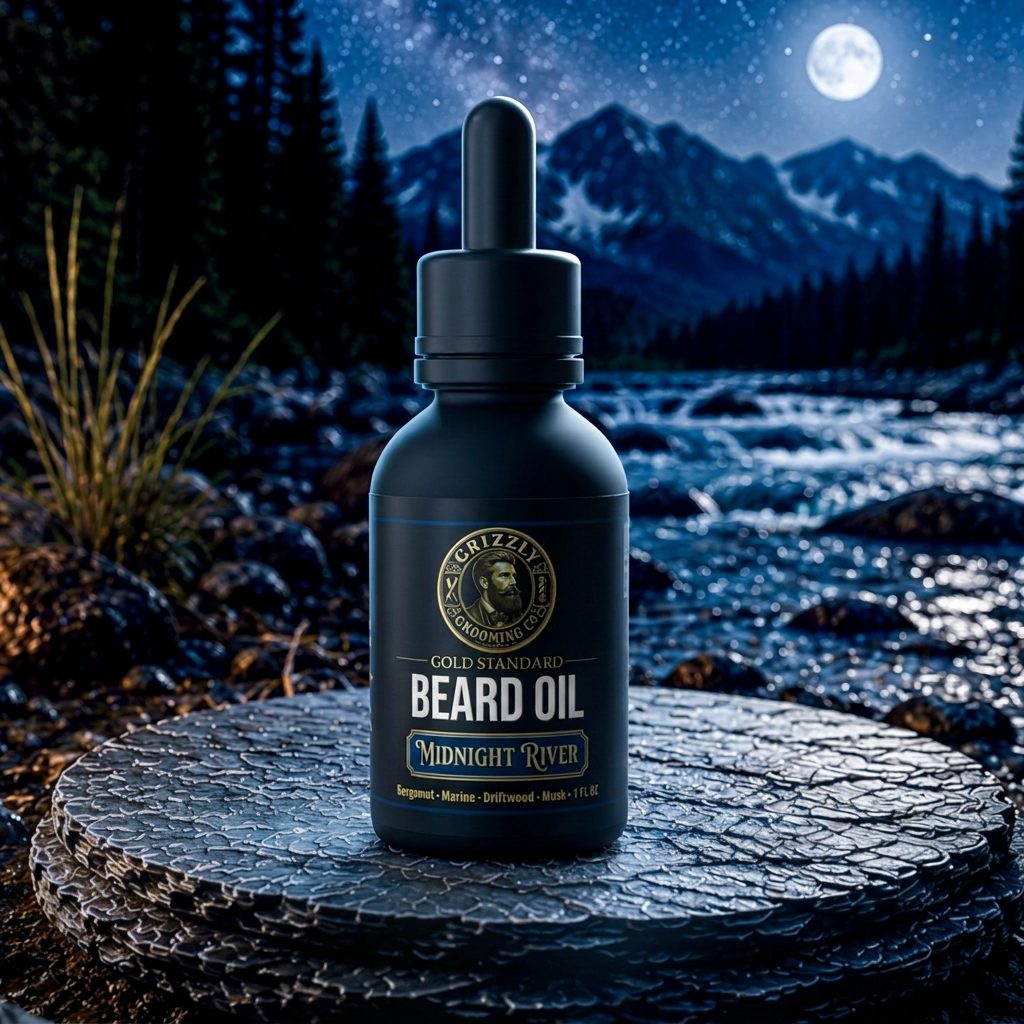
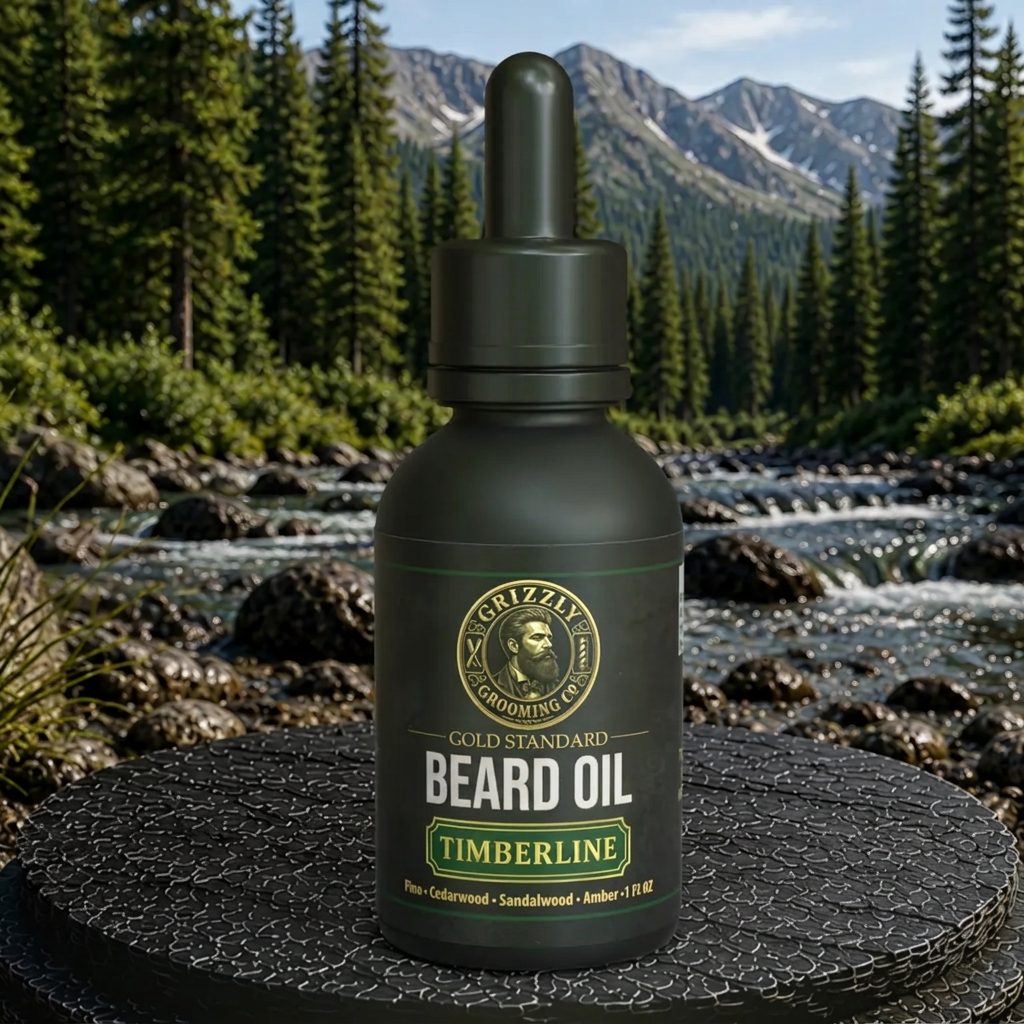
Gold Standard Beard Oil — jojoba + argan base with a 60–90 second absorption window on damp hair.
Run the tissue test tomorrow morning. It tells you within a week where you should actually be dosing.
Skin type and absorption speed
Oily skin absorbs less because the surface already has sebum on it, so the same dose that vanishes on dry skin sits and shines on oily skin. That is a dosing difference, not a product failure — drop one or two drops and the timeline normalizes.
Dry and mature skin absorb faster and often need a heavier carrier to stay conditioned through the day. Matching carrier weight to skin type — grapeseed and hemp for oily, argan and jojoba for dry — resolves most complaints about oil sitting on the surface.
Layering timing with balm and butter
Give oil sixty to ninety seconds before applying anything on top. Balm applied immediately traps un-absorbed oil against the hair and the combination reads as grease for hours.
The practical sequence is oil on damp skin, comb through, dress or brush your teeth, then balm on the length only. That natural pause is enough, and it is why the order of a morning routine matters as much as the products in it.
Why beard length changes the absorption math
A short beard absorbs oil almost entirely at the skin level, since there is little hair mass to hold onto excess product, so absorption time and dosing are closely linked there. A long beard splits the same drops between skin and several inches of hair shaft, which means the skin can feel perfectly absorbed while the mid-length and ends still look slightly oily for longer.
If you have a long beard and judge absorption only by touching the skin, you are missing half the picture. Check the ends separately about two minutes in — if they still look glossy while the skin feels fine, that is normal for length rather than a sign of over-application.
How often you wash changes how oil behaves
Beards washed daily absorb oil faster because there is less residual product and sebum buildup competing for space on the hair shaft. Beards washed only once or twice a week accumulate a light film between washes that slows how quickly new oil sinks in, especially by the fourth or fifth day after a wash.
This is not a reason to wash more often, since over-washing causes its own problems. It is a reason to expect slightly slower absorption late in your wash cycle and to avoid assuming your oil formula changed when actually your wash schedule did.
Traveling and absorption changes on planes
Cabin air is drier than almost any ground-level climate, and it paradoxically speeds up absorption of your usual dose because the hair and skin are already pulling in moisture from anywhere they can get it. A dose that felt slightly heavy at home can feel exactly right, or even light, mid-flight.
This effect reverses within a few hours of landing in a humid destination, so do not assume your usual dose is now permanently wrong. Give your skin forty-eight hours in the new climate before adjusting your regular amount.
Skin Type and How It Changes Absorption Speed
Naturally oily skin absorbs added oil more slowly because the surface is already saturated with its own sebum, and men with oily skin often mistake this for over-dosing when it is really just their skin's baseline behavior. The fix is not a smaller dose necessarily — it is patience, since oily skin can take the full 90 seconds or slightly longer even at a correct dose.
Dry skin does the opposite: it absorbs quickly and can feel done in 30 to 45 seconds, then feels tight and thirsty again within a couple of hours. If that describes your skin, a slightly higher dose applied once, rather than the same dose applied twice as often, usually gives more even coverage across the day.
How Beard Length Changes the Absorption Math
A short beard has less hair surface area competing for the same oil, so a dose sized for a three-inch beard applied to stubble absorbs almost instantly and can look greasy simply from being over-dosed relative to the amount of hair present. Scale the dose down for shorter beards rather than using a flat amount regardless of length.
A long beard has the opposite problem — the same dose spreads thin trying to cover far more surface area, and the ends specifically may never get enough oil to absorb visibly at all, feeling dry even while the roots feel correctly conditioned. Past three inches, apply the dose in two passes: one at the roots, a second specifically worked into the last third of the length.
When Absorption Time Signals a Formula Problem, Not a User Error
If you have correctly dosed, applied to a damp beard, warmed the oil, and are still seeing absorption times well outside the normal 60 to 90 second window across multiple bottles or batches, the issue may be the formulation itself rather than technique. Heavily fragranced oils sometimes carry fragrance oils that behave differently than pure carrier oils and slow absorption independent of the base.
This is worth ruling out before concluding you have a skin or technique problem: try a single, simple carrier oil with no added fragrance for a week as a control. If absorption normalizes immediately, the previous product's formulation, not your routine, was the variable.
Frequently Asked Questions
Why does beard oil sit on my skin instead of absorbing?+
Usually too much product for oily skin, or a heavy carrier like castor high in the formula. Reduce the dose and choose a lighter carrier.
How long should I wait between oil and balm?+
About 60 seconds — long enough for the oil to move into the hair, short enough that the balm still layers cleanly. If the beard still looks visibly wet, wait another 30 seconds.
Is a shiny beard a bad thing?+
Low sheen is healthy — it means the cuticle is smooth. Mirror-wet shine at hour one means the dose was too heavy or the carrier is too dense.
Does beard oil ever fully absorb into the skin?+
The top layer of skin absorbs a portion within minutes. The rest stays on the hair as a conditioning film that wears off through the day. That film is the point — not a defect.
Why does my beard feel greasy but the skin underneath still feels dry?+
Classic sign of a heavy carrier oil coating the hair without penetrating. Switch to a jojoba-forward oil and the same dose will condition the skin instead of just the strand surface.
Can I just use less oil to stop the grease?+
First try the same dose on a damper beard — that alone fixes most cases. If it is still greasy, then cut the dose by two drops and reassess after three days.
Why does my beard feel absorbed at the skin but still look oily at the ends?+
Longer beards split the same dose between skin and several inches of hair. The skin absorbing fully does not mean the ends have finished absorbing — check them separately about two minutes in.
Does how often I wash my beard affect absorption speed?+
Yes. Beards washed daily absorb new oil faster since there is less buildup competing for space. Absorption naturally slows a little by day four or five after a wash, which is normal rather than a formula problem.
Should I use less beard oil when flying?+
Not necessarily. Dry cabin air speeds absorption of your usual dose, so it may feel lighter than normal mid-flight. Wait forty-eight hours after landing in a new climate before adjusting your regular amount.
Why does my beard oil seem to take much longer to absorb than the usual 60-90 seconds?+
Oily skin absorbs added oil more slowly because the surface is already saturated with natural sebum, which can look like over-dosing but is really just normal for that skin type. Patience, not a smaller dose, is usually the right fix — oily skin can take slightly longer than the standard window even when correctly dosed.
Should I apply beard oil differently depending on how long my beard is?+
Yes. Shorter beards need a smaller dose since there's less hair surface area, or the oil looks greasy from being relatively over-dosed. Beards past three inches often need two passes — one at the roots, one worked specifically into the last third of the length — since a single dose spreads too thin to reach the ends.
Could my beard oil itself be the problem rather than how I'm applying it?+
Possibly. Heavily fragranced oils sometimes absorb differently than pure carrier oils due to the fragrance ingredients themselves. If correct dosing, timing, and warming still produce slow absorption across multiple bottles, try a simple unfragranced carrier oil for a week as a control to isolate the variable.
"Bought the kit after reading this. First product line that actually did what it said. I'm on subscribe now, never going back."
Join The Grizzly Brotherhood
Scent guides, grooming tips, and early access to new drops. No discount bait — just the good stuff.
Unsubscribe anytime · No spam
Get Gold Standard Beard Oil
- Everything in this article, one click.
- Built for a complete daily ritual.
- 30-day money-back guarantee.
Related Guides
What each carrier oil does once it hits skin and hair.
Cadence and dose by beard length and climate.
Which one your beard needs, and why most men eventually need both.
Flaking, tightness, and the oils that repair the barrier underneath.
How scent families wear on a beard through the day.
Every oil we use, why it's in there, and how we compare.
The wash, condition, and oil sequence that changes coarse hair.
Assemble a kit around your beard length and skin type.
Sources & Research
- International Journal of Molecular Sciences — Anti-Inflammatory and Skin Barrier Repair Effects of Topical Application of Some Plant Oils
- Indian Journal of Dermatology — Moisturizers: The Slippery Road
- American Academy of Dermatology — Face Washing 101
- American Academy of Dermatology — Dermatologists' Tips for Relieving Dry Skin
- Grizzly Grooming Co. formulation notes and batch testing records