The Ten Mistakes Almost Every First-Year Beard Owner Makes
- ›Trimming too early, quitting during the itch phase, and copying someone else's shape top the list.
- ›Over-oiling, over-washing, and skipping the neckline are the daily-ritual culprits.
- ›Chasing 'growth hacks' distracts from the fundamentals that actually work.
- ›Almost every mistake is fixable — beards forgive when you correct the pattern.
Every man growing a first beard makes some of these. Making a few is fine. Making all ten is why some men never get a beard that works for them. Here they are so you can skip the trial phase.
1. Trimming during the awkward phase
Weeks 4–7 are ugly. Cutting to 'clean it up' resets the growth timeline and prevents you from ever finding out what your beard would have looked like. Do not trim until at least week 9. Own the awkward phase; it ends.
2. Quitting during the itch phase
Weeks 2–4 itch. If you interpret that as 'my skin can't handle a beard,' you shave and never try again. The itch is temporary and fixable — proper wash and oil starting week 2 handles most of it. Push through.
3. Copying a beard from a photo
Your face isn't the guy in the photo. His density isn't yours. His growth pattern isn't yours. Trying to force his exact shape onto your face produces frustration. Style around YOUR beard — the shape that emerges naturally is usually closer to your ideal than the one in the reference photo.
4. Skipping the neckline
An untended neckline is the single biggest 'this guy doesn't care' signal a beard can send. The neckline should sit two fingers above the Adam's apple, curved gently from ear to ear. Reset it every 5–7 days. Nothing else you do matters if this is a mess.
5. Over-oiling
More oil ≠ better beard. Excess oil sits on the hair looking greasy, clogs pores underneath, and can actually cause breakouts. Dose to beard length — no more. If your beard looks wet at 2pm, you're using too much.
6. Over-washing
Beard wash 2–3x per week, not daily. Daily washing strips the natural oils that keep hair soft and skin healthy. Daily washing is one of the top causes of 'my beard is dry no matter what I do.'
7. Chasing growth hacks instead of fundamentals
Biotin megadoses, derma rollers, testosterone-boosting supplements — these are distractions. The fundamentals: enough protein, enough sleep, correcting real deficiencies if any exist, patience. These beat every hack, every time.
8. Not committing to a shape
Constantly changing the shape ('let me try a Van Dyke this month… now a full boxed…') means you never live in any style long enough to master it. Pick one, hold it 6 months, then evaluate.
9. Buying too many products at once
Six products on day one is chaos — you don't know what's working. Start with wash + oil for month one. Add balm in month two if the beard needs shape hold. Add butter or conditioner in month three if it's dry. Layer in based on need.
10. Ignoring skin because it's covered
Skin under the beard needs care too — arguably more, because it's not exposed. Ignoring it leads to flakes, itch, and irritation blamed on the wrong thing. Your morning ritual should treat the skin, not just the hair.
The correction pattern
Recognizing a mistake and stopping it produces visible improvement within 2–4 weeks. Beards forgive faster than most tissue systems. Fix the wrong pattern; the beard responds.
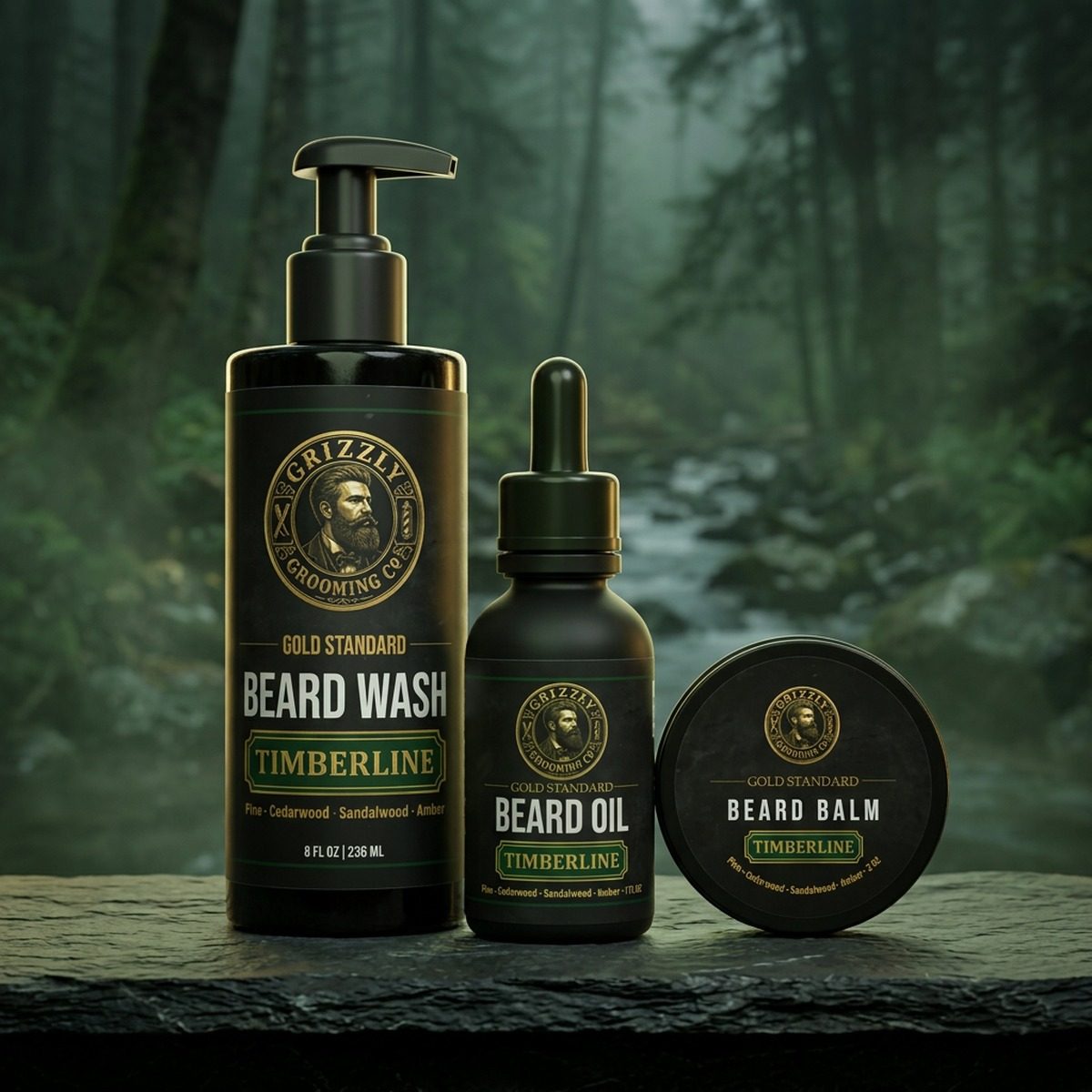
Complete Beard Kit — Midnight River: designed for the itch phase and the recovery from early ritual mistakes; skin-first formulation.
Mistake eleven: trimming to fix a patch
The instinct when one cheek fills in slower than the other is to trim the fuller side down to match. It works for about a week and then costs you months, because you have just reset the longer side's growth clock while the patchy side continues at its own pace. Patches almost always fill from the edges inward as surrounding hair lengthens and lies across them.
Leave it. Four months is the honest minimum before judging coverage, and many men see meaningful change between months four and eight. If a genuine bare spot remains at month eight, then choose a style that works around it rather than fighting it.
Mistake twelve: comparing your month three to someone else's year two
Beard photography online is almost entirely survivorship bias. The beards you see are the ones that grew well, photographed in good light, at maturity. Comparing a ninety-day beard to that is the single most common reason men shave right before the good part.
Track your own progress instead: same spot, same light, same angle, once a month. Progress in a beard is invisible day to day and obvious across a photo series.
Mistake thirteen: buying products before building habits
- ›Month 1: a gentle wash and a beard oil. That is the entire kit.
- ›Month 3: add a wide-tooth comb and a boar brush.
- ›Month 4: add butter or balm once the beard needs shape.
- ›Month 6: add a conditioner if the beard is past three inches.
- ›Any month: a shower filter if your water is hard — higher return than any new bottle.
Men who buy eight products in week one cannot tell which one is helping and usually abandon the routine. Add one item at a time and give each a fortnight.
Mistake fourteen: the first trim at home with the wrong tool
A beard trimmer with a guard is a length tool, not a shaping tool. Necklines, cheek lines, and moustache work all need precision — a trimmer without a guard, a straight razor, or a barber. The classic first-year disaster is a guardless trimmer taken to the neck freehand, which almost always ends too high and takes six weeks to recover.
For the first shape-up, pay a barber and watch what they do. You are buying the map as much as the trim, and it is the cheapest education available.
Mistake fifteen: expecting products to change genetics
Nothing topical creates new follicles. Density is set by genetics and largely by androgen sensitivity, and no oil, serum, or supplement changes that. What good care does is make every follicle you have produce healthier, thicker-looking, better-behaved hair — which in practice is the difference between a scraggly beard and a good one.
Set expectations there and the first year is far easier: you are optimising what you have, and the difference between a neglected beard and a well-kept one at the same genetic density is dramatic.
A realistic first-year timeline
| Stage | What happens | What to do |
|---|---|---|
| Weeks 1–3 | Itch, uneven stubble, patchiness looks worse than it is | Wash 2–3x weekly, oil daily, do not trim |
| Weeks 4–8 | Itch fades, shape starts to appear, neckline gets messy | First barber shape-up, define the neckline only |
| Months 3–4 | Length divergence, awkward stage peaks | Add comb and brush, hold the line, resist trimming |
| Months 5–8 | Patches fill from the edges, real style becomes possible | Choose a style, trim to it every 3–4 weeks |
| Months 9–12 | Maturity, ends start splitting if neglected | Add conditioner, dust the ends monthly |
Frequently Asked Questions
What if I've already made most of these mistakes?+
Reset the ritual (see above), commit to a shape, and give it 90 days. Beards are highly forgiving to pattern changes — most damage is behavior, not permanent.
How do I know if my beard problem is technique or genetics?+
Genetics set density and thickness caps. Everything else — condition, shine, skin comfort, whether you're maximizing what you have — is ritual and technique. If you fixed the technique and it still doesn't look how you want, it's a genetics conversation. Most of the time it's technique.
Is it too late to fix my beard if I've been growing it wrong for years?+
No. The active growth cycle is 2–6 months for beard hair. Fix the ritual now, and within one full cycle the beard reflects the new inputs. Even multi-year damage recovers.
What's the single biggest fix if I only change one thing?+
Stop washing daily. If you wash daily, cutting back to 2–3x per week is the single change that improves the most beards for the least effort. Skin and hair recover within 2–3 weeks.
Should I trim my beard in the first month?+
Only the neckline, and preferably by a barber. Trimming the length in month one removes the growth you need to see how the beard will actually shape up.
How long before patches fill in?+
Give it four months minimum, and many men see change up to month eight as surrounding hair lengthens and covers thinner areas.
What products do I actually need as a beginner?+
A gentle sulfate-free wash and a beard oil. Add a comb and brush at month three, and butter or balm when the beard needs shape.
Is the itchy stage permanent?+
No. It usually peaks in weeks two and three and resolves once the hair passes the stubble stage and you are oiling the skin daily.
"Bought the kit after reading this. First product line that actually did what it said. I'm on subscribe now, never going back."
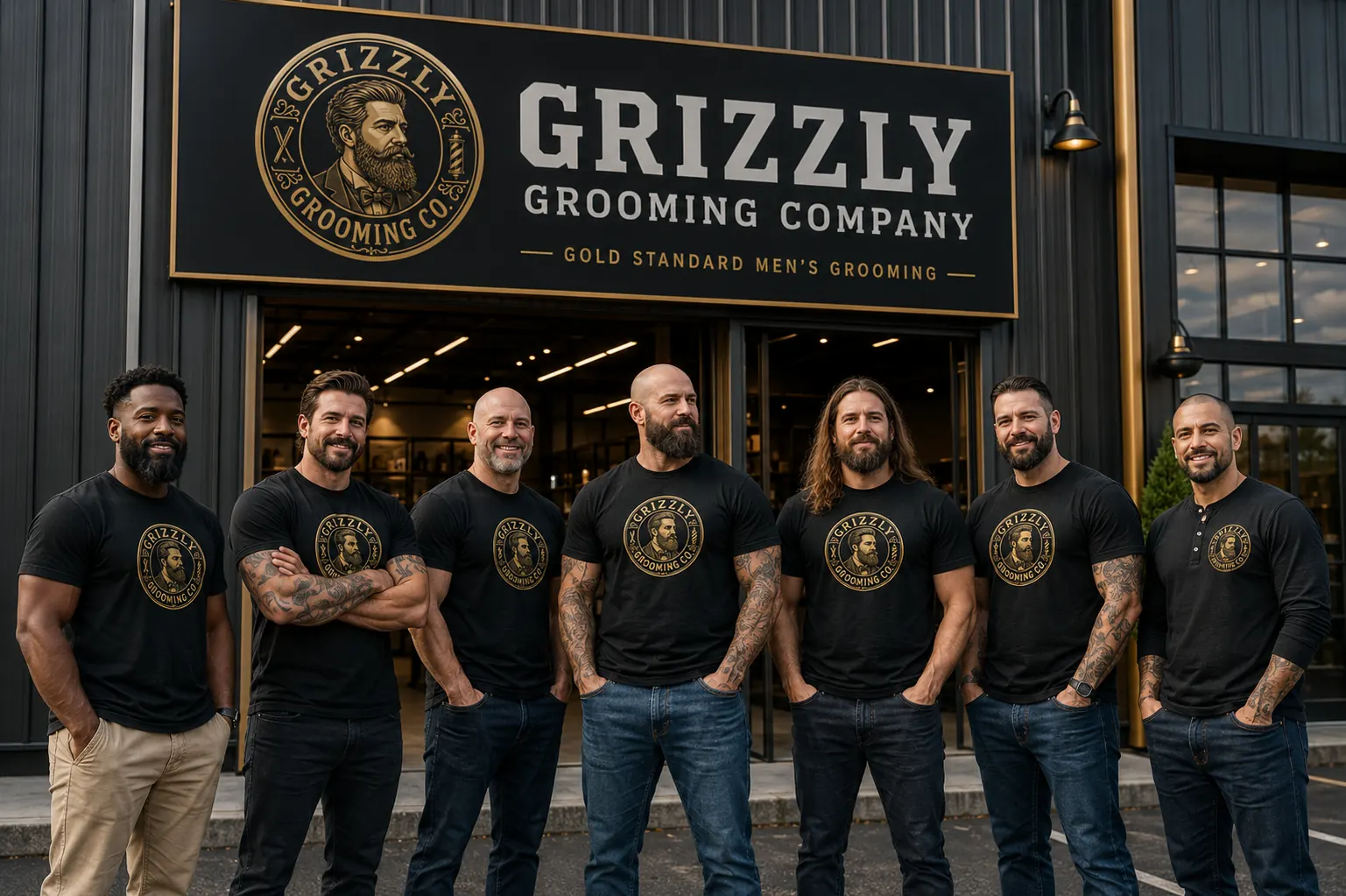
Join The Grizzly Brotherhood
Scent guides, grooming tips, and early access to new drops. No discount bait — just the good stuff.
Unsubscribe anytime · No spam
Get Gold Standard Complete Beard Kit
- Everything in this article, one click.
- Built for a complete daily ritual.
- 30-day money-back guarantee.
Related Guides
Morning, evening, and weekly — in the right order.
Nine-oil breakdown, what to avoid on a label, and how to judge a formula.
Butter-forward vs wax-forward, hold levels, and the layering test.
The wash, condition, and oil sequence that changes coarse hair.
Neckline, cheekline, and the cleanup that keeps length.
What actually moves the needle across a full growth cycle.
Every oil we use, why it's in there, and how we compare.
Assemble a kit around your beard length and skin type.
Sources & Research
- International Journal of Molecular Sciences — Anti-Inflammatory and Skin Barrier Repair Effects of Topical Application of Some Plant Oils
- Indian Journal of Dermatology — Moisturizers: The Slippery Road
- American Academy of Dermatology — Face Washing 101
- American Academy of Dermatology — Dermatologists' Tips for Relieving Dry Skin
- Grizzly Grooming Co. formulation notes and batch testing records