The Realistic Beard Growth Timeline (Month By Month, With What To Do At Each Stage)
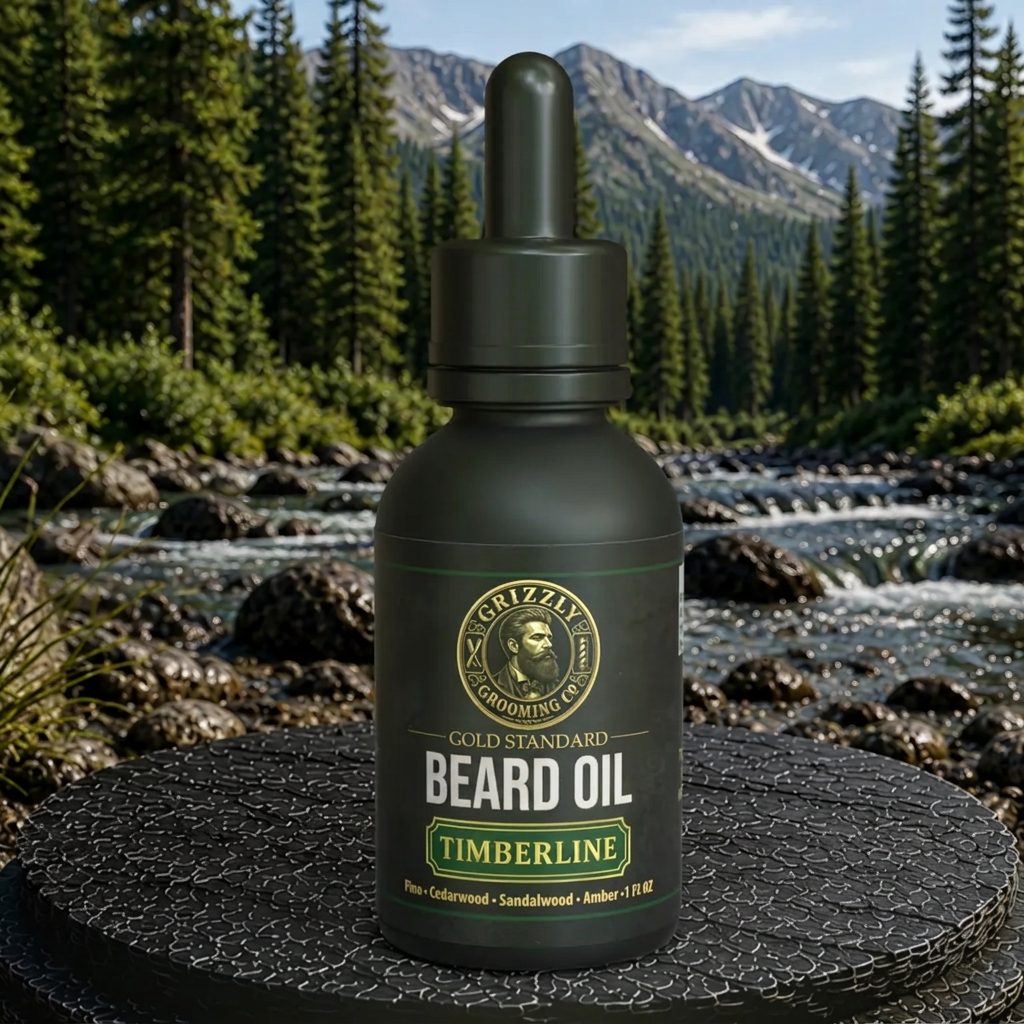
- ›Month 1: itch phase — oil twice a day, do not touch scissors.
- ›Month 2: the ugly month — do not shave it off, this is when 80% of guys quit.
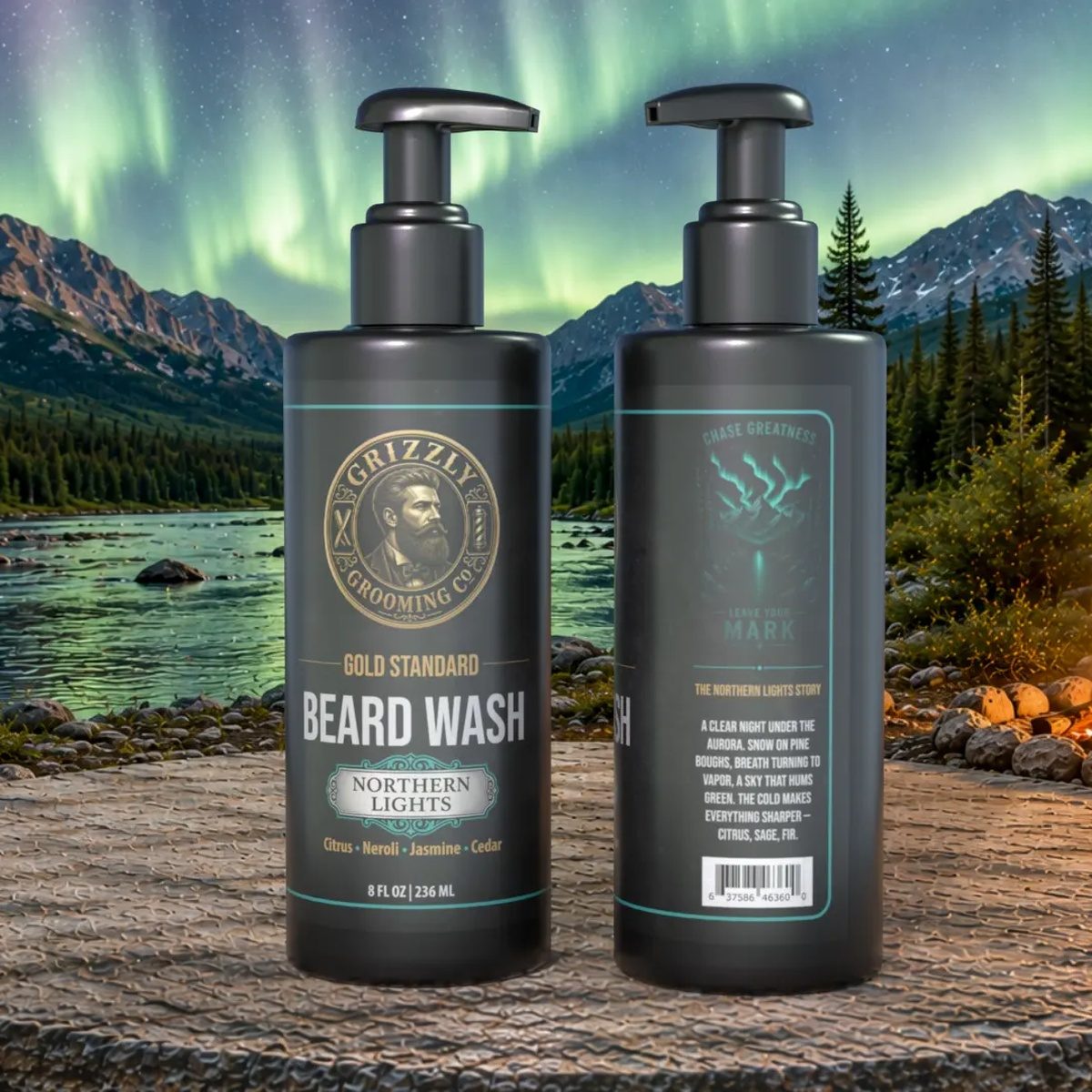
- ›Month 3: shape emerges — first neckline trim, add wash and conditioner.
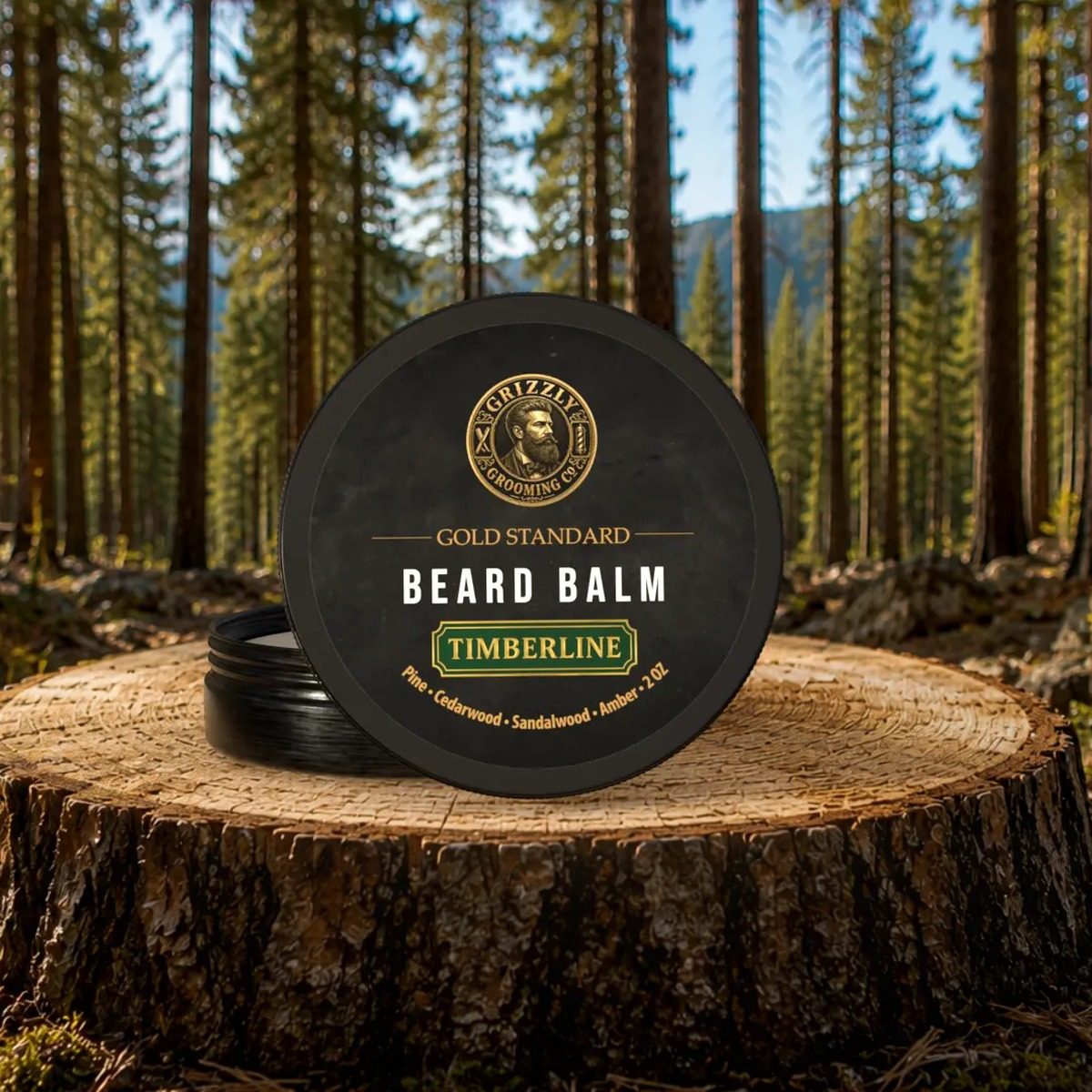
- ›Months 4–6: fill-in phase — add balm for shape control.
- ›Months 6–12: length phase — add butter, comb daily, first professional shape-up.
Beard growth is not linear. It comes in three-week bursts followed by weeks that feel like nothing is happening, and every stage looks different enough that guys unfamiliar with the timeline convince themselves they cannot grow a beard right around the moment they were about to break through. Here is the actual month-by-month, plus the ritual that fits each stage.
Month 1: the itch phase
New beard hair grows in coarse and curls back into follicles that are not used to it. The result is the famous three-week itch. This is the single biggest reason new beards get shaved off — guys assume itch means something is wrong, when it means the beard is doing exactly what it is supposed to. The fix is beard oil twice a day, applied directly to the skin under the beard (not the hair). Do not trim, do not shape, do not touch scissors. Let it grow in unshaped for a full 30 days.
Month 2: the ugly month
Weeks four through eight are the visual low point. The beard has enough length to look messy but not enough to have shape, patchiness is at its most obvious, and cheek lines and neckline are undefined. This is when the highest percentage of guys quit — and it is the exact stage where quitting is the worst call. The beard has not yet grown enough for you to know what you have. Keep the oil going, add a light beard wash twice a week, and stay away from mirrors for the middle two weeks of this month.
Month 3: shape emerges
By day 90, most beards have a discernible shape and enough length (roughly half an inch to an inch depending on genetics) to hold a form. This is when the first real ritual kicks in: beard wash two or three times a week, beard conditioner every wash, beard oil daily. If you have not touched a razor yet, now is when you define a neckline — one finger above the Adam's apple, curving up to just behind the earlobe. Cheek line stays natural unless it grows in visibly stray.
Months 4–6: the fill-in phase
The beard thickens as new hairs fill previously sparse spots. Patchiness that felt permanent at month two often resolves by month five. Add beard balm to the ritual for shape control and to lay stray hairs. Trim only the neckline and any obvious strays — do not touch the overall length yet, because you are still discovering what your beard wants to be.
Months 6–12: the length phase
At six months you have a real beard — probably two to four inches depending on your growth rate. Add beard butter for nighttime conditioning, comb daily, and book your first professional beard shape-up with a barber. A good barber at month six saves you from making beginner shaping mistakes on a beard that is finally worth shaping.
Year one and beyond
By month twelve, the beard has settled into its adult density and growth pattern. Anything you thought was patchy at month two either filled in or is now clearly permanent — and the guys who accept the permanent version usually find their beard looks better at its natural shape than at the shape they were trying to force. From here, ritual stays consistent: wash, conditioner, oil, balm or butter, comb, trim monthly.
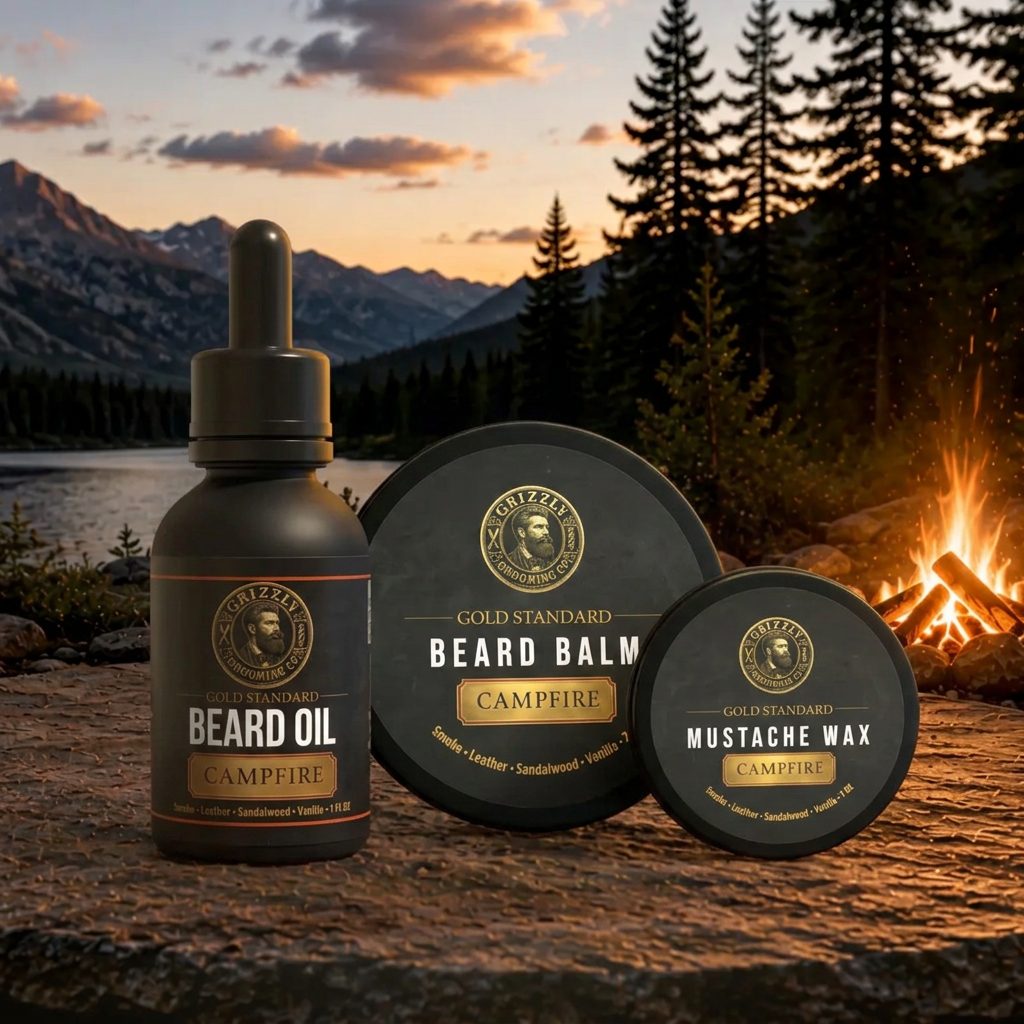
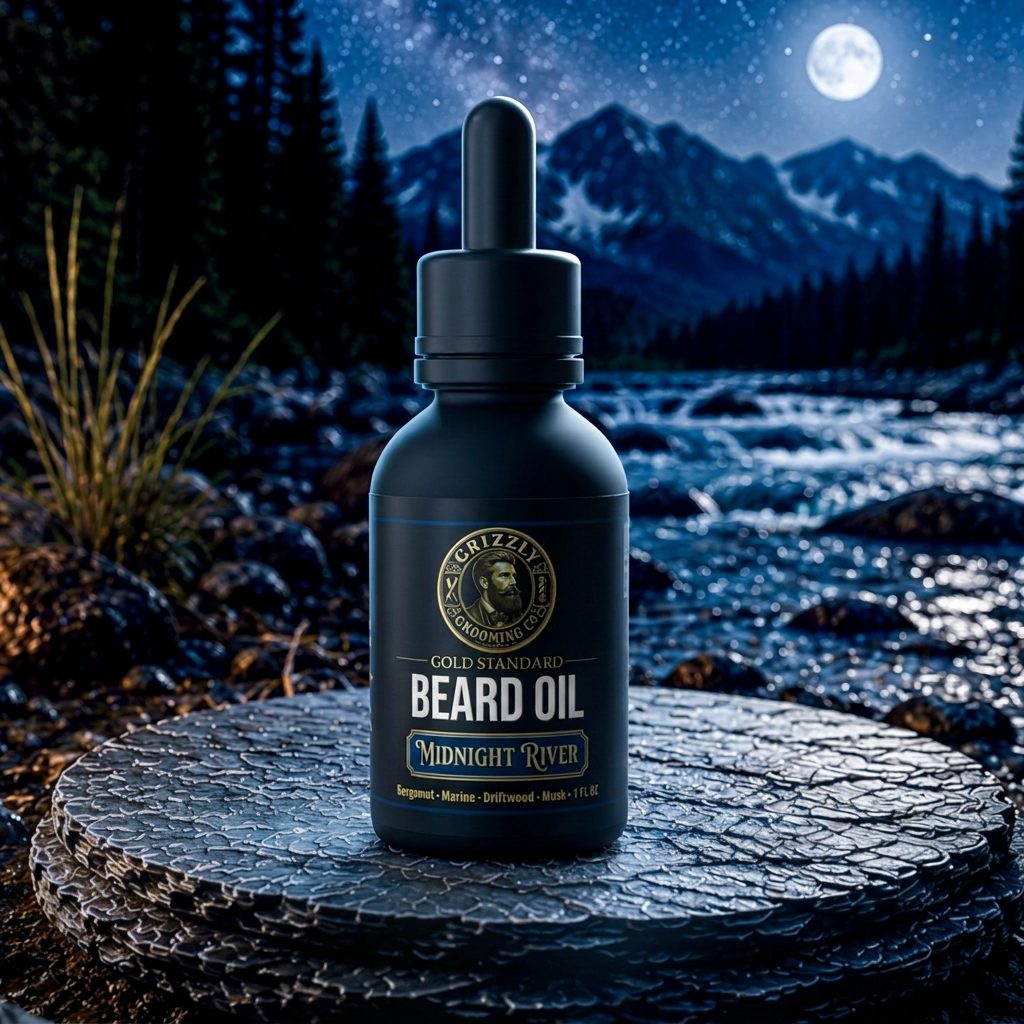
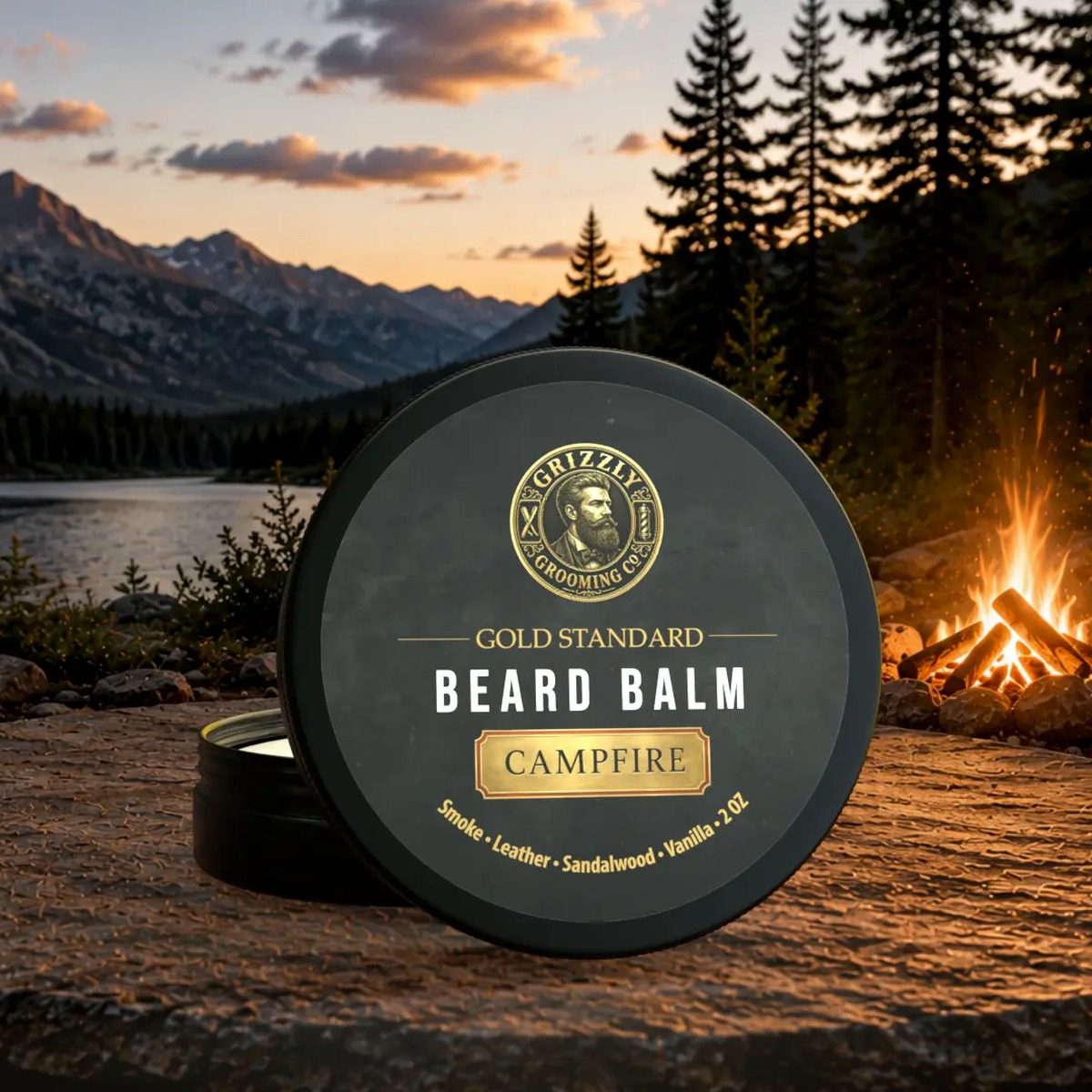
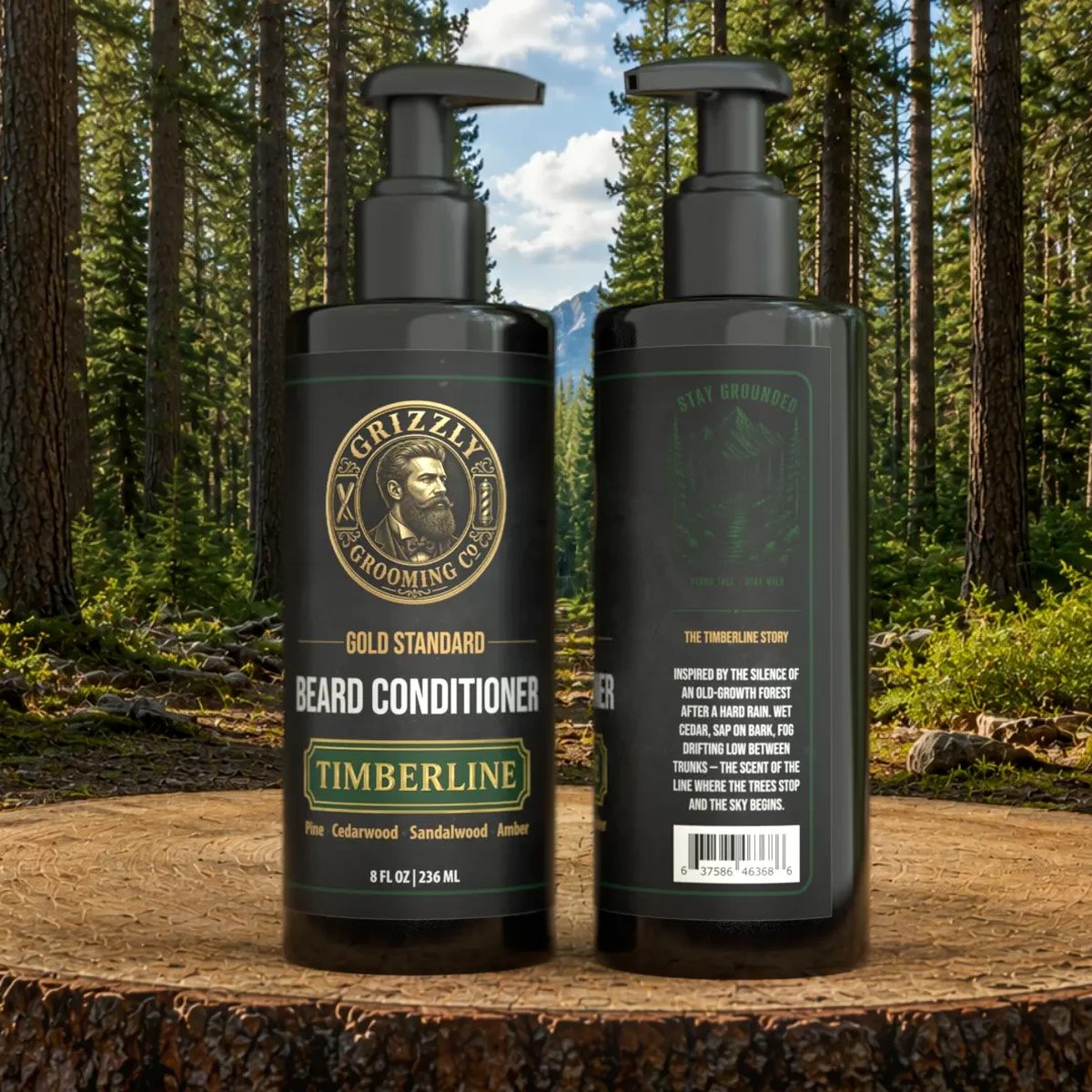
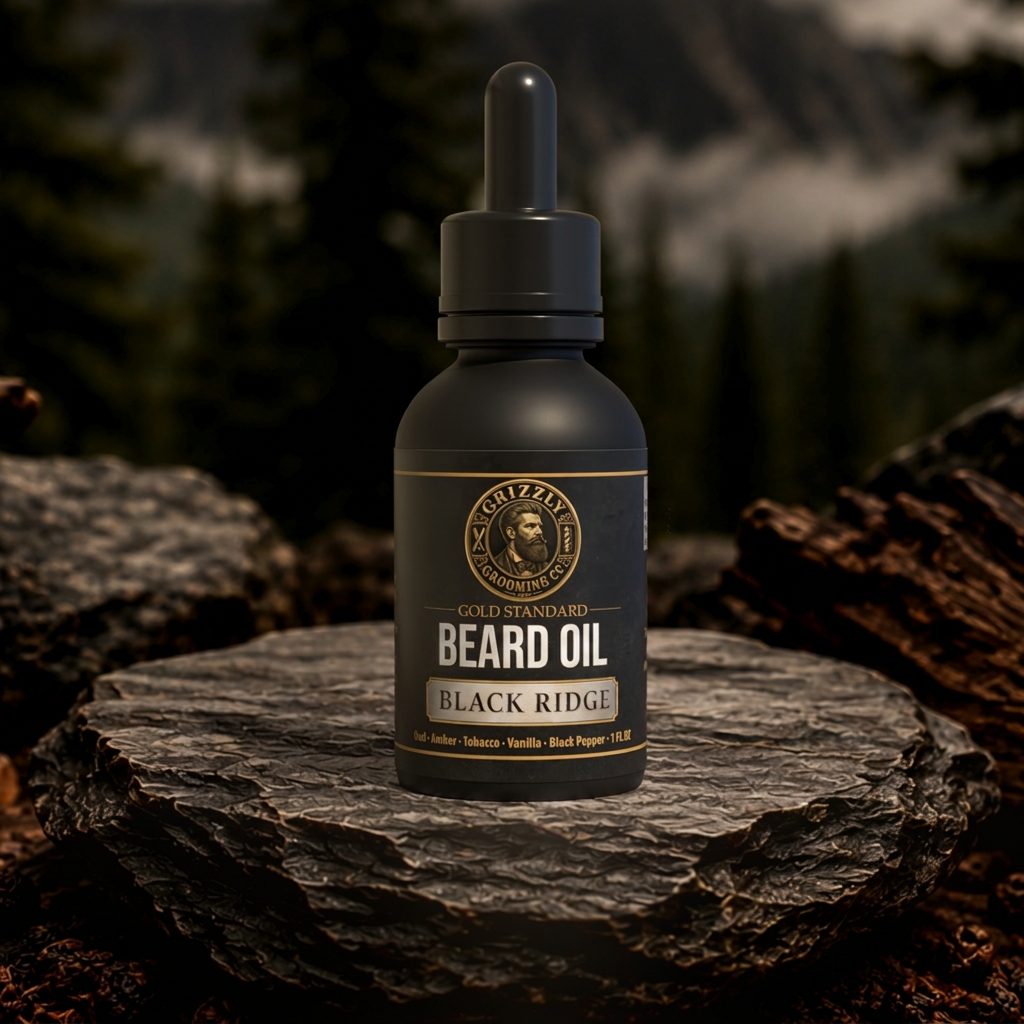
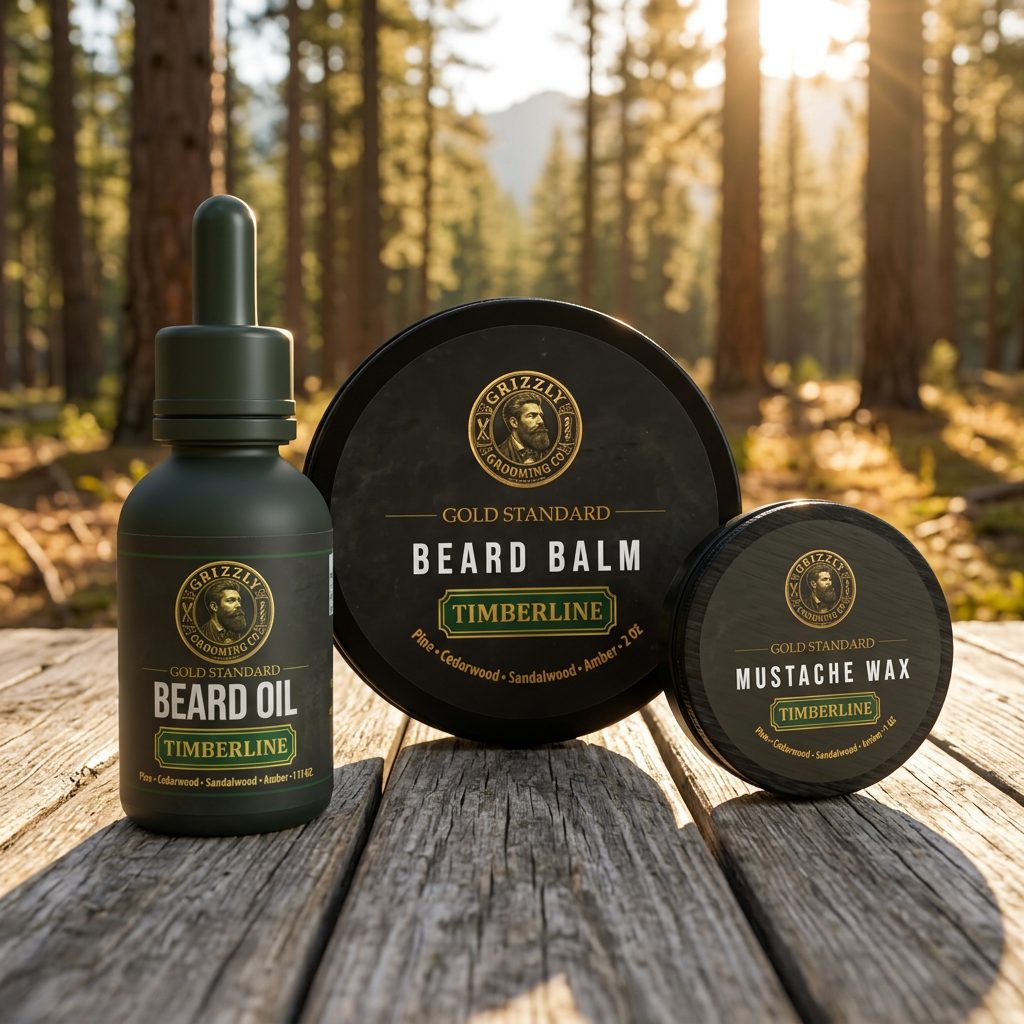
Essential Beard Kit — beard wash, oil, and balm scaled for months 3 through 12 of the timeline above.
Why growth appears to stall
Each hair has a terminal length determined by how long its growth phase runs, and that varies by region of the face. When a beard seems to stop growing, it usually has not — the oldest hairs have reached terminal length and are shedding at the same rate that new length is added.
Breakage produces the identical appearance and is the fixable half. A beard that plateaus while feeling dry and split at the ends is losing length to damage, and conditioning plus gentler detangling will push that ceiling further out than any supplement.
Tracking progress without going crazy
Growth is invisible day to day, which is why the mirror is the worst measuring tool available. Photograph every two weeks in the same light, at the same distance and angle, on a plain background, and compare month to month rather than week to week.
Track texture alongside length. How the ends feel by mid-afternoon responds within two to three weeks and is the earliest signal that a routine is working, well before any density change is visible.
What a growth spurt actually feels like
Beard growth does not arrive as a steady daily inch by inch increase. Most men describe a distinct three-to-five day window every few weeks where the beard visibly changes, followed by a plateau that can last two weeks. That burst pattern is normal follicle cycling, not a sign that your routine suddenly started or stopped working.
The plateau weeks are when men make the worst decisions about their beard, because nothing appears to be happening and frustration sets in. Resist the urge to change products or add supplements during a plateau. Track by photo, not by the daily mirror check, and the burst pattern becomes obvious rather than alarming.
The role of sleep and stress in visible progress
Facial hair follicles are sensitive to cortisol and to sleep quality in ways that are easy to underestimate. A stretch of poor sleep or a stressful month can visibly slow the rate hair pushes through, and men sometimes mistake this for a routine failure when the actual cause is six weeks of five-hour nights.
You cannot fix this with a beard product. Consistent sleep and lower stress show up in beard quality within three to four weeks, usually as improved texture before any change in length. If your growth stalls hard for over a month with no other explanation, look at sleep and stress before you look at your shelf of oils.
Handling asymmetric growth as the beard fills in
Almost no beard grows evenly across the face. One cheek routinely fills faster than the other, and the chin often outpaces the sides for the first four months before catching up. This asymmetry is genetic and shows up on nearly everyone, though it is more visible on men who check daily rather than monthly.
Resist trimming the faster side to match the slower one during the first three months. That habit permanently caps your beard at the length of its slowest-growing zone. Let the asymmetry run its course through month four or five, and most faces even out on their own well before the one-year mark.
Comparing Your Timeline to Photos Instead of Memory
Memory consistently distorts beard progress in both directions — some men remember their beard as further along than it was, others assume no progress happened during a plateau month that photos later show was real growth. A single photo taken in the same light and angle every four weeks resolves this argument permanently and is worth the thirty seconds it takes.
Comparing month-to-month photos side by side also reveals which regions are actually lagging versus which just look slower because you check them daily. Cheeks checked in a bathroom mirror every morning feel eternally behind; the same cheeks in a four-week photo comparison usually show clear, if modest, progress.
What Changes About the Ritual Between Attempts
A man growing his second or third beard already knows roughly which months matter for which product introductions, and the biggest practical change is confidence during month two — the ugly month feels less alarming once you have already lived through it and come out the other side with a beard you liked.
The other change worth planning for is faster shape decisions. First-time growers often wait until month four or five to define a neckline out of uncertainty; repeat growers can usually make that call at month three with confidence, since they already know roughly what their beard's mature shape will look like.
Handling a Beard That Grows Unevenly Between Regions
It is normal for the chin and moustache to be visibly ahead of the cheeks through months two and three, sometimes by what feels like a full stage of the timeline. This gap typically narrows on its own by month five or six as the cheek follicles' slower growth cycle catches up, rather than requiring any specific product intervention.
The mistake to avoid is compensating for uneven growth by over-trimming the ahead regions to match the behind ones — that just erases progress you already made without helping the slower region catch up any faster. Let the fast regions run and be patient with the slow ones instead.
Frequently Asked Questions
Why does my beard seem to stop growing after a few months?+
The oldest hairs have reached their terminal length and shed as new length is added. Breakage from dryness produces the same plateau and is fixable.
How should I track beard growth?+
Photograph every two weeks in identical light, distance, and angle, and compare across months. Texture improves first and is the earliest sign a routine works.
How long does it take to grow a full beard?+
Four to six months for a beard that reads as 'a beard' to strangers. Twelve months for a full, settled, adult-density beard. Two years for anyone chasing genuine length.
Is the itch normal?+
Yes, and it peaks around week three. Beard oil twice a day resolves it for most guys within a week. If itch continues past six weeks with oil, it is beardruff or contact dermatitis, not growth itch.
What if my beard looks patchy at month two?+
Wait. Patchiness at month two is not the same as patchiness at month five — most spots fill in as the beard thickens. Judge patchiness only after month six.
When should I first trim my beard?+
Neckline: month three. Overall length: month six at the earliest, and ideally with a barber the first time.
Can I grow a beard in a month?+
You can grow a short beard in a month. You cannot grow a beard that looks like a beard from a distance in a month — that takes three months minimum.
Why does my beard grow in bursts instead of steadily?+
Follicles cycle through active growth and rest phases at slightly different times, which produces visible three-to-five day bursts followed by plateau weeks. This is normal and does not mean your routine stopped working.
Can stress or bad sleep slow beard growth?+
Yes. Cortisol and poor sleep quality can measurably slow how quickly hair pushes through, usually visible as a texture change first. Fixing sleep and stress often does more than any product change.
Is it normal for one side of my beard to grow faster?+
Very normal. Asymmetric growth between cheeks or between chin and sides is genetic and usually evens out by month four or five. Avoid trimming the faster side to match — it caps your final length unnecessarily.
Should I take photos to track beard growth instead of just checking in the mirror?+
Yes. Daily mirror checks distort progress in both directions because memory is unreliable over weeks. A single photo in consistent light and angle every four weeks gives an accurate record and often reveals real progress that felt invisible day to day, particularly in slower-growing regions like the cheeks.
Is a second beard's timeline different from the first one?+
The stages are the same, but confidence changes the experience. Repeat growers usually feel less alarmed during the ugly second month since they have been through it before, and they often make neckline and shape decisions a month or so earlier than first-time growers, since they already have a sense of their beard's mature shape.
My cheeks are noticeably behind my chin and moustache — should I trim the rest to match?+
No. This gap is normal through months two and three and typically narrows on its own by month five or six as cheek follicles, which cycle more slowly, catch up. Trimming the faster regions to match erases real progress without helping the slower region grow in any quicker.
"The step-by-step here made it stupid simple. Ordered the bundle, four weeks in the compliments haven't stopped."

Join The Grizzly Brotherhood
Scent guides, grooming tips, and early access to new drops. No discount bait — just the good stuff.
Unsubscribe anytime · No spam
Get Gold Standard Beard Essential Kit
- Everything in this article, one click.
- Built for a complete daily ritual.
- 30-day money-back guarantee.
Related Guides
Morning, evening, and weekly — in the right order.
Nine-oil breakdown, what to avoid on a label, and how to judge a formula.
Butter-forward vs wax-forward, hold levels, and the layering test.
The wash, condition, and oil sequence that changes coarse hair.
Neckline, cheekline, and the cleanup that keeps length.
What actually moves the needle across a full growth cycle.
Every oil we use, why it's in there, and how we compare.
Assemble a kit around your beard length and skin type.
Sources & Research
- International Journal of Molecular Sciences — Anti-Inflammatory and Skin Barrier Repair Effects of Topical Application of Some Plant Oils
- Indian Journal of Dermatology — Moisturizers: The Slippery Road
- American Academy of Dermatology — Face Washing 101
- American Academy of Dermatology — Dermatologists' Tips for Relieving Dry Skin
- Grizzly Grooming Co. formulation notes and batch testing records