Comb vs Brush: Which One Your Beard Actually Needs (By Length)
- ›Under one inch: skip the brush, use fingers only.
- ›One to three inches: boar-bristle brush distributes oil and trains growth direction.
- ›Three to six inches: brush plus wide-tooth wooden comb, in that order.
- ›Six inches and up: comb primarily, brush sparingly (or you snap hairs).
- ›Never plastic. Never metal-fine-tooth. Never against the grain.
There is no single 'best beard tool' — there is the right tool for the length you have right now. Using a stiff boar-bristle brush on a stubble beard is pointless; using it on a foot-long beard is destructive. The rule of thumb: brushes for distribution and training, combs for detangling and shaping.
Under one inch: fingers only
At stubble-to-short length, there is nothing for a comb to grab and nothing for a brush to move. Rub oil in with your fingertips, work it against and then with the grain, and stop there. Brushing this early can actually inflame follicles that are still adjusting to growing in coated with sebum and product.
One to three inches: the boar-bristle brush earns its place
This is the length where a boar-bristle brush becomes the most useful tool in a beard-care kit. Natural boar bristle mimics the diameter and stiffness of beard hair, distributes sebum and oil down the length of every strand, and — crucially — trains the growth direction. Two minutes of brushing a day at this length is what separates a beard that grows in with a defined shape from one that goes seven different directions.
Three to six inches: brush first, then comb
The middle length is the peak-tool zone: use both. Brush first to distribute oil and lay the hair in the direction you want. Then use a wide-tooth wooden or horn comb to detangle from the tips down (never from the roots — that snags and snaps hairs). Style with a balm if the day calls for it.
Six inches and up: comb dominant, brush sparingly
At long-beard length, brushing daily starts to break hairs at the mid-shaft. Move to comb-primary maintenance and use the brush only on freshly conditioned, still-damp beards where the bristles glide instead of drag. Detangle in sections, always from the tips backward toward the roots.
What to actually buy
Boar bristle brush with a wooden handle — plastic-bristle brushes generate static and do not distribute oil the same way. Wide-tooth wooden or horn comb — hand-cut or laser-cut, never injection-molded plastic with sharp seams that snag hair. Skip metal fine-tooth combs entirely; they belong in a barbershop, not a beard-care kit.
Direction rules that never change
Always comb with the grain (in the direction of growth) as your finishing pass, even if you brush against the grain briefly to lift and distribute oil at the roots. And always start from the tips and work up on longer beards — going root-to-tip on a tangled beard is the number-one cause of avoidable split ends.
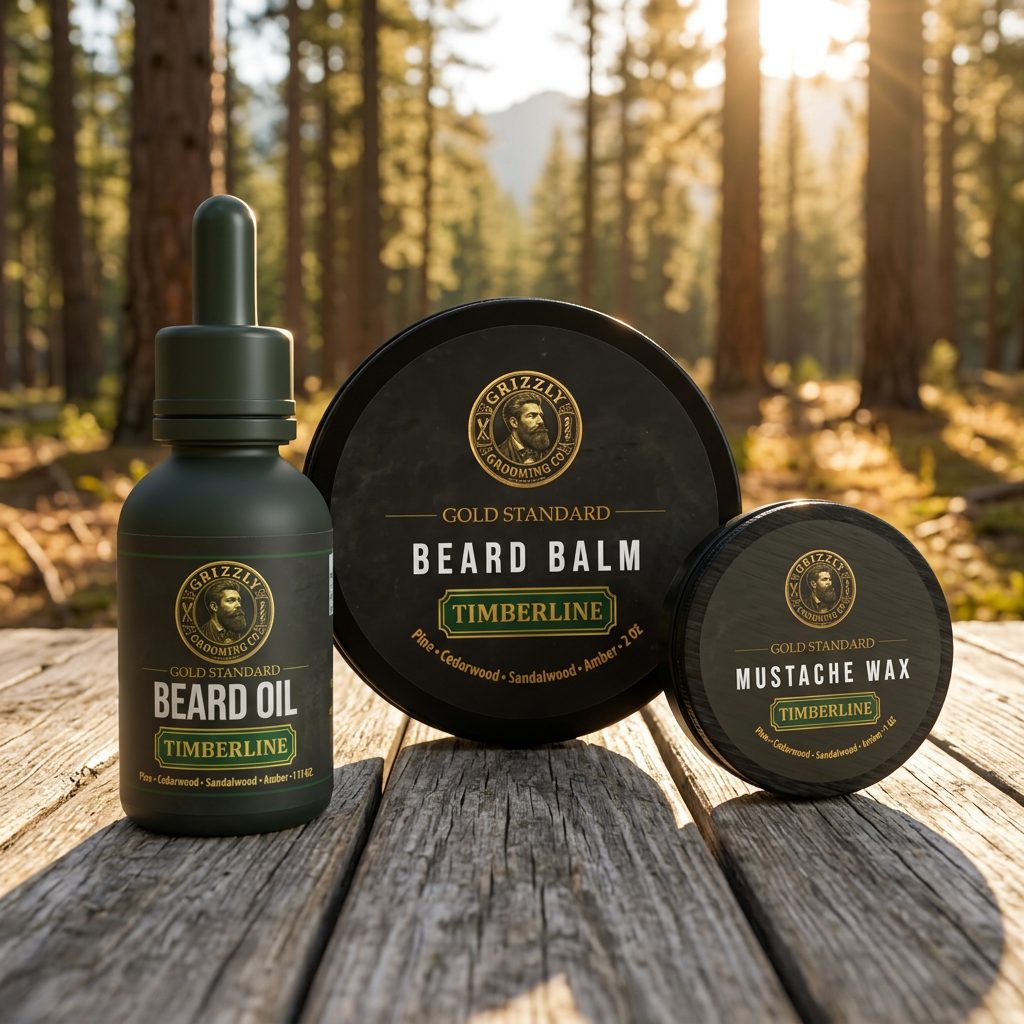
Gold Standard Beard Balm — apply after brushing and combing so it sets the shape you just built rather than the shape the beard had before you started.
What each tool is physically doing
A comb separates. Its teeth pass between hairs, break tangles apart, and place the beard in a chosen direction — which is why it is the styling and detangling tool. A brush distributes. Boar bristles are keratin, like hair, and they drag sebum and product from the roots along the shaft while lightly exfoliating the skin underneath. Neither replaces the other, and the mistake most men make is picking one and using it for both jobs.
That distinction explains the length rule. Short beards have almost nothing to detangle and a lot of skin to condition, so brushing dominates. Long beards tangle constantly and need gentle separation, so combing dominates and brushing becomes a finishing step.
Materials matter more than the brand on the handle
- ›Wooden or horn combs: no static, smooth edges, slight oil retention — the default choice.
- ›Sawcut over moulded plastic: moulded combs have a seam ridge that shreds the cuticle.
- ›Boar bristle over synthetic: boar moves sebum, synthetic mostly pushes hair around.
- ›Firm bristles for coarse or long beards, soft for stubble and sensitive skin.
- ›Metal combs: avoid entirely — they conduct heat and chip the cuticle.
Run a fingernail along the teeth of any comb before you buy it. If you feel a ridge or a burr, it will be tearing hair every single day. A twelve-dollar sawcut pearwood comb outperforms most expensive moulded ones for this reason alone.
Frequency, and when brushing becomes counterproductive
Brushing is exfoliation, and exfoliation has a ceiling. Once or twice a day is beneficial; four aggressive sessions cause redness, irritation, and in some men a low-grade folliculitis along the jaw. Comb as often as you like, provided the beard is slightly damp or oiled and you are working from the ends upward.
| Length | Primary tool | Frequency | Technique |
|---|---|---|---|
| Stubble to 0.5 in | Soft boar brush | Once daily | Small circles, then downward |
| 0.5–2 in | Brush, comb to finish | Brush daily, comb as needed | Brush to distribute, comb to set the line |
| 2–5 in | Comb, brush to finish | Comb twice daily | Comb ends first, work upward, brush lightly to polish |
| 5 in and beyond | Wide-tooth comb only | Twice daily minimum | Section it, ends upward, never force a knot |
| Any length, wet | Wide-tooth comb | After every wash | Detangle before drying, never brush soaking hair |
The right order in a full routine
Sequence beats equipment. Detangle with a comb before anything else, apply oil to damp hair, work it into the skin, then comb again to distribute it through the length, and finish with a brush to lay the outer layer flat and give the beard a defined shape. Reversing the order — brushing a tangled beard, then oiling — is how breakage accumulates.
Never brush a soaking-wet beard. Wet hair stretches up to thirty percent before it snaps, and bristle drag on a swollen shaft is one of the fastest ways to create split ends. Comb wet, brush dry.
Cleaning and replacing your tools
A brush loaded with old sebum stops distributing and starts redepositing. Pull the shed hair out weekly, and wash the bristles monthly in warm water with a drop of beard wash, then dry bristle-side down. Combs get wiped after each use and washed weekly; wooden combs should be re-oiled a few times a year with a drop of the beard oil you already own.
Replace a comb the moment a tooth chips, and a brush when the bristles splay permanently or stop springing back — usually two to three years of daily use.
Tool choice for curly or tightly coiled beard hair
Curly and coily beard textures behave differently from straight hair at every length, since curl pattern resists a brush's flattening action more and tends to hold shape better with wide-tooth combs even at shorter lengths than the general guidelines suggest. A fine-tooth comb on tightly coiled hair, at any length, tends to snag and create frizz rather than smoothing.
For curly beards, a wide-tooth comb used while the beard is still slightly damp with product, rather than fully dry, detangles more gently and preserves curl definition instead of forcing it flat the way a brush would. This is worth knowing regardless of overall beard length, since curl pattern matters more than length for tool choice in this hair type.
Cleaning and maintaining beard combs and brushes over time
A boar-bristle brush accumulates oil, balm, and skin cells over weeks of daily use, and a dirty brush redistributes old buildup onto freshly washed hair rather than just styling it. Cleaning bristles monthly with a mild shampoo, then air-drying bristle-side down, keeps the tool doing its job instead of undoing a fresh wash.
Wood and plastic combs need less frequent cleaning but should be checked periodically for bent or broken teeth, which can scratch skin under the beard without you noticing until irritation shows up. Replacing a comb every year or two, especially a daily-use one, is a small cost against the skin irritation a damaged tooth can cause.
Using tools to train a beard's growth direction over time
Consistent daily combing or brushing in one direction, over several weeks, genuinely trains hair to lie that way even before product goes in, similar to how a scalp cowlick can be trained with consistent parting. This matters most in the one-to-three-inch range, where hair is still finding its lay and hasn't set into a long-term growth pattern yet.
Past six inches, this training effect diminishes because longer hair's own weight increasingly determines its direction regardless of daily brushing. This is one more reason the comb becomes the dominant tool at longer lengths — it's shaping weight-driven hair rather than training growth direction.
Frequently Asked Questions
Can I use a hair brush on my beard?+
Not the same one. Scalp brushes have bristles built for scalp hair diameter and often carry scalp oils and residue you do not want deposited on your face. Buy a dedicated beard brush.
How often should I brush my beard?+
Once or twice a day at short-to-medium lengths, once a day at long lengths. More than that is friction damage without added benefit.
Should I brush my beard wet or dry?+
Damp is ideal — bristles glide, cuticle is receptive to oil distribution. Soaking wet is worse than dry because hair is at its most fragile when fully saturated.
What is the difference between boar bristle and synthetic?+
Boar bristle is closer in diameter and structure to human hair, distributes sebum evenly, and does not generate static. Synthetic bristles are cheaper but drag and pill on longer beards.
Do I really need both a brush and a comb?+
For anything past three inches, yes. They do different jobs — brush distributes and trains, comb detangles and shapes. Skipping the comb creates snags; skipping the brush leaves oil unevenly distributed.
Should I use a comb or a brush on a short beard?+
A brush. Under two inches there is little to detangle and a lot of skin to condition, so a soft boar brush distributing sebum is the higher-value tool. Add a comb once you pass two inches.
Can I brush a long beard?+
Lightly, as a finishing step on dry hair. Detangling a long beard belongs to a wide-tooth comb; brushing through knots causes real breakage.
Is a wooden comb better than plastic?+
Sawcut wood or horn is better than moulded plastic, which has a seam ridge that damages the cuticle. A sawcut, polished plastic comb is fine; moulded is not.
How often should I clean my beard brush?+
Pull shed hair out weekly and wash the bristles monthly with warm water and a drop of beard wash, drying it bristle-side down.
Should curly beard hair follow the same comb-vs-brush rules by length?+
Not exactly. Curly and coily textures generally do better with a wide-tooth comb even at shorter lengths than the general guideline suggests, since a fine-tooth comb or brush tends to create frizz rather than smoothing curl pattern.
How often should I clean my beard brush or comb?+
Clean a boar-bristle brush monthly with mild shampoo and air-dry it bristle-down, since it accumulates oil and skin cells that redistribute onto a freshly washed beard. Check wood or plastic combs periodically for damaged teeth that could scratch skin.
Can brushing actually train my beard's growth direction?+
Yes, to a point. Consistent daily combing or brushing in one direction over several weeks trains hair to lie that way, especially in the one-to-three-inch range. Past six inches, hair's own weight takes over and the training effect fades.
"Followed the ritual in this article for 6 weeks — beard is thicker, softer, and the itch is gone. My wife keeps stealing my Timberline oil for the smell."

Join The Grizzly Brotherhood
Scent guides, grooming tips, and early access to new drops. No discount bait — just the good stuff.
Unsubscribe anytime · No spam
Get Gold Standard Beard Balm
- Everything in this article, one click.
- Built for a complete daily ritual.
- 30-day money-back guarantee.
Related Guides
Nine-oil breakdown, what to avoid on a label, and how to judge a formula.
Butter-forward vs wax-forward, hold levels, and the layering test.
When butter beats balm, and how to use it without greasiness.
Cadence and dose by beard length and climate.
What each carrier oil does once it hits skin and hair.
Morning, evening, and weekly — in the right order.
Every oil we use, why it's in there, and how we compare.
Assemble a kit around your beard length and skin type.
Sources & Research
- International Journal of Molecular Sciences — Anti-Inflammatory and Skin Barrier Repair Effects of Topical Application of Some Plant Oils
- Indian Journal of Dermatology — Moisturizers: The Slippery Road
- American Academy of Dermatology — Face Washing 101
- American Academy of Dermatology — Dermatologists' Tips for Relieving Dry Skin
- Grizzly Grooming Co. formulation notes and batch testing records