Hard Water Is Wrecking Your Beard: Signs, Fixes, And Why Your Products Stopped Working
- ›Hard water deposits calcium and magnesium on beard hair, coating strands and blocking product absorption.
- ›Signs: beard feels rough right after washing, products don't lather or absorb like they used to, color looks dull.
- ›A clarifying wash 1–2× per month strips mineral buildup and restores product performance.
- ›A shower filter is the long-term fix — cheaper than replacing products that 'stopped working.'
You changed nothing about your ritual, but your beard suddenly feels drier, rougher, and less responsive to product. Before blaming the formula, check the water. Roughly 85% of U.S. households have hard water, and hard water is one of the most under-diagnosed causes of beard problems.
What hard water actually does
Hard water carries dissolved calcium, magnesium, and sometimes iron. Every time you wash, these minerals deposit onto the beard hair and skin. Over weeks, they build a mineral film that coats each strand. That film blocks conditioners from penetrating, dulls color, and makes hair feel rough because you're literally feeling mineral residue, not hair.
Signs it's your water, not your product
Your shampoo or wash suddenly doesn't lather like it used to. Products sit on top of the beard instead of absorbing. Beard feels squeaky and stiff right after rinsing (that squeak is mineral binding, not 'clean'). Color looks flatter, less rich. Skin under the beard is drier and possibly itchier. Any two of these = suspect the water.
The clarifying wash fix
A clarifying wash — done 1–2× per month — uses chelating agents that bind to minerals and rinse them away. It resets the beard so regular products work again. Don't do it more often than every two weeks, or you'll strip natural oils. On clarifying wash day, follow with a deep conditioner or beard butter to rebuild moisture.
The long-term fix: shower filter
A basic shower head filter runs $30–60 and reduces mineral load significantly. It won't make water perfectly soft, but it removes enough to change how your beard and skin feel within a week. Replace the filter cartridge every 6 months. This is the highest-return upgrade most men with beards can make and almost nobody talks about it.
What to do today if you can't filter yet
Final rinse with bottled or filtered water on wash days makes a noticeable difference. Sounds excessive; isn't. A gallon of distilled water costs a dollar and lasts multiple washes. Poured slowly over the beard after your normal rinse, it flushes mineral-loaded tap water off the hair before it can deposit.
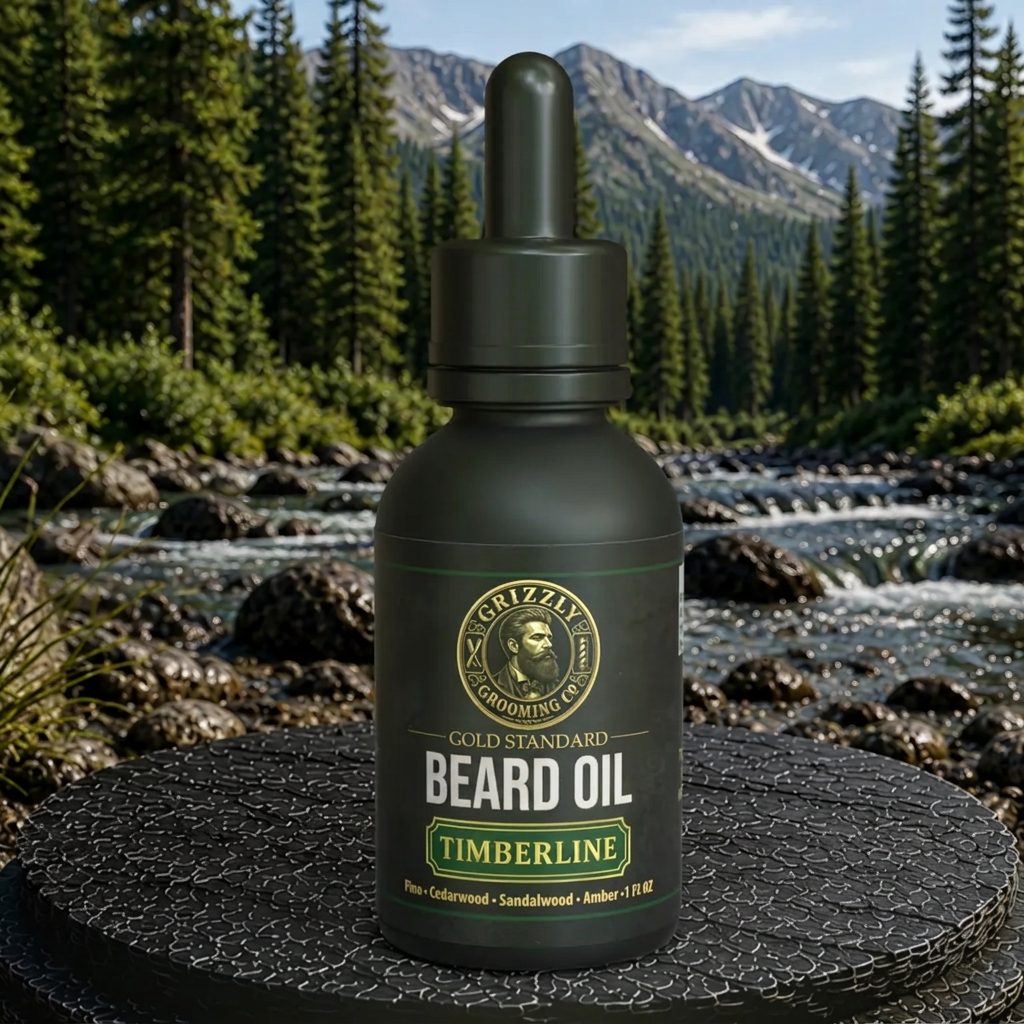
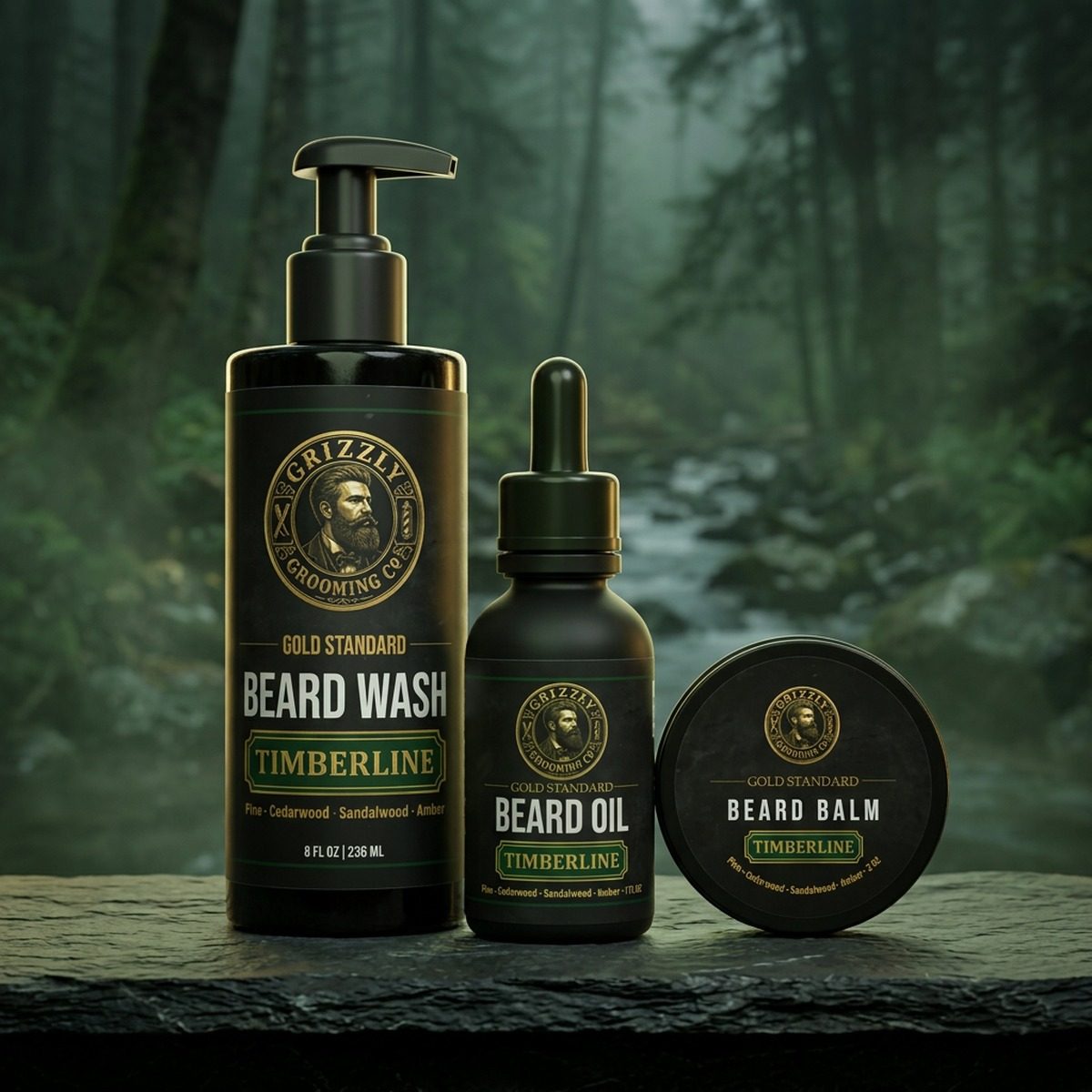
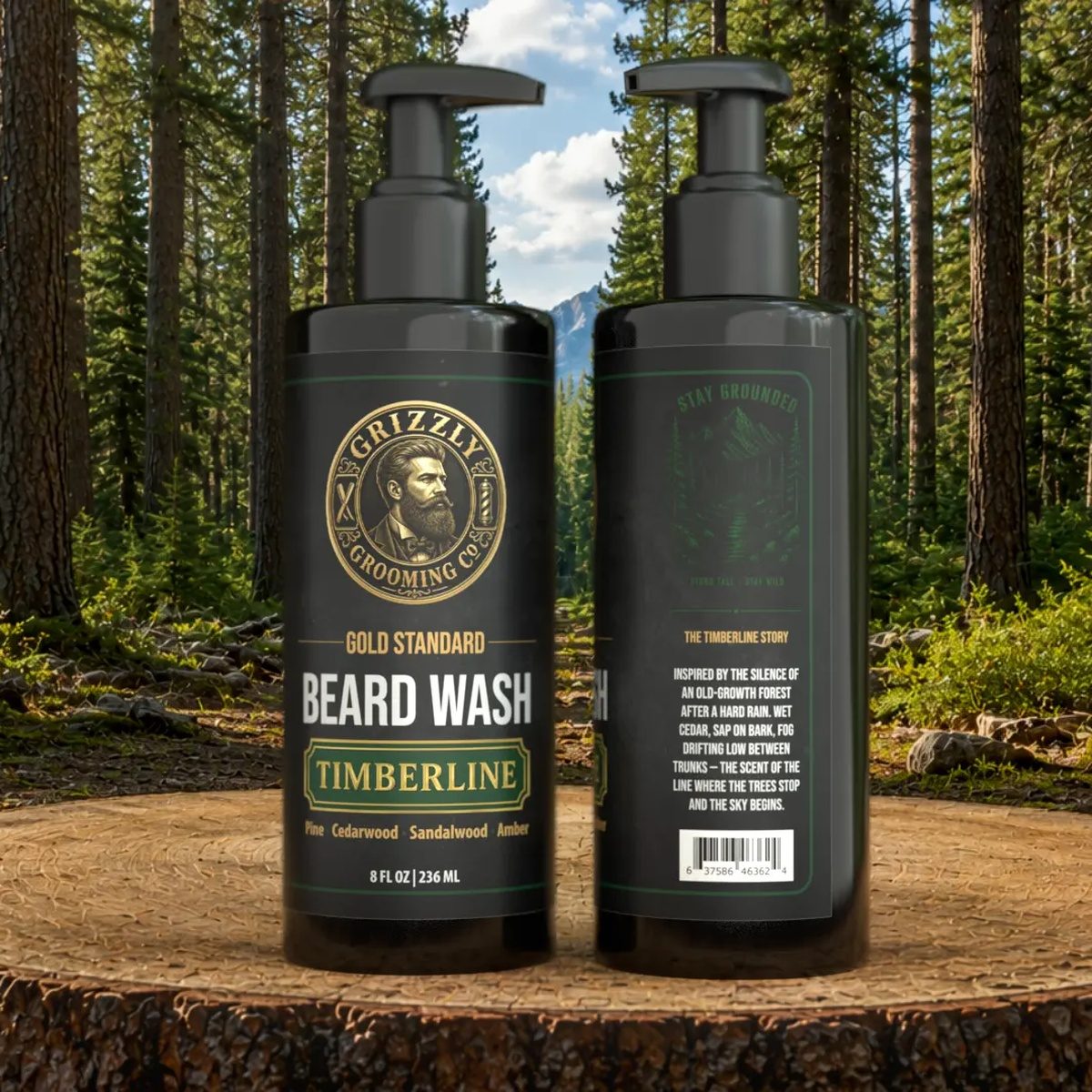
Beard Wash — Timberline: sulfate-free formula that lathers and rinses cleanly even in hard water, without stripping oils.
How to confirm hard water before you buy anything
Hard water is dissolved calcium and magnesium, measured in grains per gallon or parts per million. Above roughly seven grains per gallon, most men with beards start noticing it. You do not need a lab: your utility publishes an annual water quality report online, and a ten-dollar test strip gives a usable number in thirty seconds.
- ›White scale inside the kettle within a few weeks.
- ›Spotting on shower glass that returns a day after cleaning.
- ›Soap and beard wash that will not lather without a large dose.
- ›A squeaky, tight feeling on the skin right after rinsing.
- ›Products that used to work now sitting on top of the beard instead of absorbing.
What minerals actually do to a beard
Calcium binds to the negatively charged surface of the hair shaft and forms a microscopic crust. That crust does three things at once: it makes the hair feel gritty, it raises the cuticle so light scatters and the beard looks dull, and it physically blocks conditioner and oil from reaching the cortex. It also reacts with the fatty acids in soap to leave a curd-like residue on the skin, which is a common cause of persistent itch that no amount of oil fixes.
The compounding problem is that men respond by adding product. More oil on a mineral-coated shaft simply sits on top of the crust, which is why hard water cases often present as a beard that is simultaneously greasy and dry.
The three-part fix, in order of cost
| Fix | Cost | Effect | How often |
|---|---|---|---|
| Chelating or clarifying wash | Low | Strips existing mineral buildup | Every 2 weeks |
| Final rinse with filtered or bottled water | Low | Prevents fresh deposits on the beard | Every wash |
| Diluted apple cider vinegar rinse | Very low | Dissolves light scale, flattens cuticle | Monthly |
| Shower head filter | Moderate | Reduces minerals at the source | Cartridge every 3–6 months |
| Whole-house softener | High | Eliminates the problem entirely | One-time install |
Start with the clarifying wash and the filtered final rinse. Together they resolve the majority of complaints within two to three weeks, and they cost less than a single premium product. Escalate to a shower filter if the problem returns whenever you skip a step.
How to run a vinegar rinse without wrecking your beard
Diluted acid dissolves mineral scale, which is why an apple cider vinegar rinse works. It is also easy to overdo. Mix one tablespoon of vinegar into a cup of cool water, pour it through the beard after washing, leave it sixty seconds, and rinse thoroughly with clean water. Once a month is plenty; weekly use dries the hair and irritates the skin.
Follow immediately with conditioner and oil on damp hair. The point of removing scale is to let those products finally work, so do not skip the step that makes the whole exercise worthwhile.
Travel, gyms, and the places hard water sneaks in
Men who fix their home shower sometimes stay stuck because they wash at a gym or travel constantly. If your beard degrades on the road, carry a small bottle of clarifying wash and rinse with bottled water at the end of a shower — half a litre poured slowly through the beard is enough to displace the mineral-laden water sitting on it.
Frequently Asked Questions
How do I know if my water is hard?+
Check with your local utility — most publish water hardness reports. Or buy a $10 hardness test strip. Above 7 grains per gallon (120 mg/L) is hard; above 10.5 is very hard. If you see white crust on faucets or shower heads, you have hard water.
Will a water softener help my beard?+
Yes, whole-house softeners solve the problem entirely — but they're a major install. A shower filter gets you 70% of the benefit for 5% of the cost.
Can I use apple cider vinegar as a clarifying rinse?+
Diluted ACV (1 tbsp per cup of water) works as a mild clarifier and mineral chelator. Use monthly max. Rinse thoroughly, condition after. Don't do this if you have irritated or broken skin under the beard.
Does hard water affect beard growth?+
Indirectly. It doesn't stop follicles from producing hair, but if it dries and irritates the skin underneath, that inflammation can slow growth cycles. Fixing the water often improves both hair condition and growth quality within 6–8 weeks.
How do I know if hard water is affecting my beard?+
Check for kettle scale, shower glass spotting, poor lather, and products that stopped absorbing. A cheap test strip or your utility's water report confirms it in minutes.
Does a shower filter really help a beard?+
Yes, for most men. It reduces the minerals depositing on the shaft at every wash, which is what causes the gritty, dull texture. Cartridges need changing every three to six months to keep working.
How often should I use a clarifying wash?+
Every two weeks in a hard-water area. More often than that strips the beard's natural oils and creates a different problem.
Is a vinegar rinse safe for beards?+
Diluted — one tablespoon in a cup of water, left for a minute, then rinsed out — and no more than monthly. Undiluted or frequent use dries hair and irritates skin.
"Followed the ritual in this article for 6 weeks — beard is thicker, softer, and the itch is gone. My wife keeps stealing my Timberline oil for the smell."

Join The Grizzly Brotherhood
Scent guides, grooming tips, and early access to new drops. No discount bait — just the good stuff.
Unsubscribe anytime · No spam
Get Gold Standard Beard Wash
- Everything in this article, one click.
- Built for a complete daily ritual.
- 30-day money-back guarantee.
Related Guides
Morning, evening, and weekly — in the right order.
Nine-oil breakdown, what to avoid on a label, and how to judge a formula.
Butter-forward vs wax-forward, hold levels, and the layering test.
The wash, condition, and oil sequence that changes coarse hair.
Neckline, cheekline, and the cleanup that keeps length.
What actually moves the needle across a full growth cycle.
Every oil we use, why it's in there, and how we compare.
Assemble a kit around your beard length and skin type.
Sources & Research
- International Journal of Molecular Sciences — Anti-Inflammatory and Skin Barrier Repair Effects of Topical Application of Some Plant Oils
- Indian Journal of Dermatology — Moisturizers: The Slippery Road
- American Academy of Dermatology — Face Washing 101
- American Academy of Dermatology — Dermatologists' Tips for Relieving Dry Skin
- Grizzly Grooming Co. formulation notes and batch testing records