The Science of Beard Growth: Genetics, Hormones, and Habits
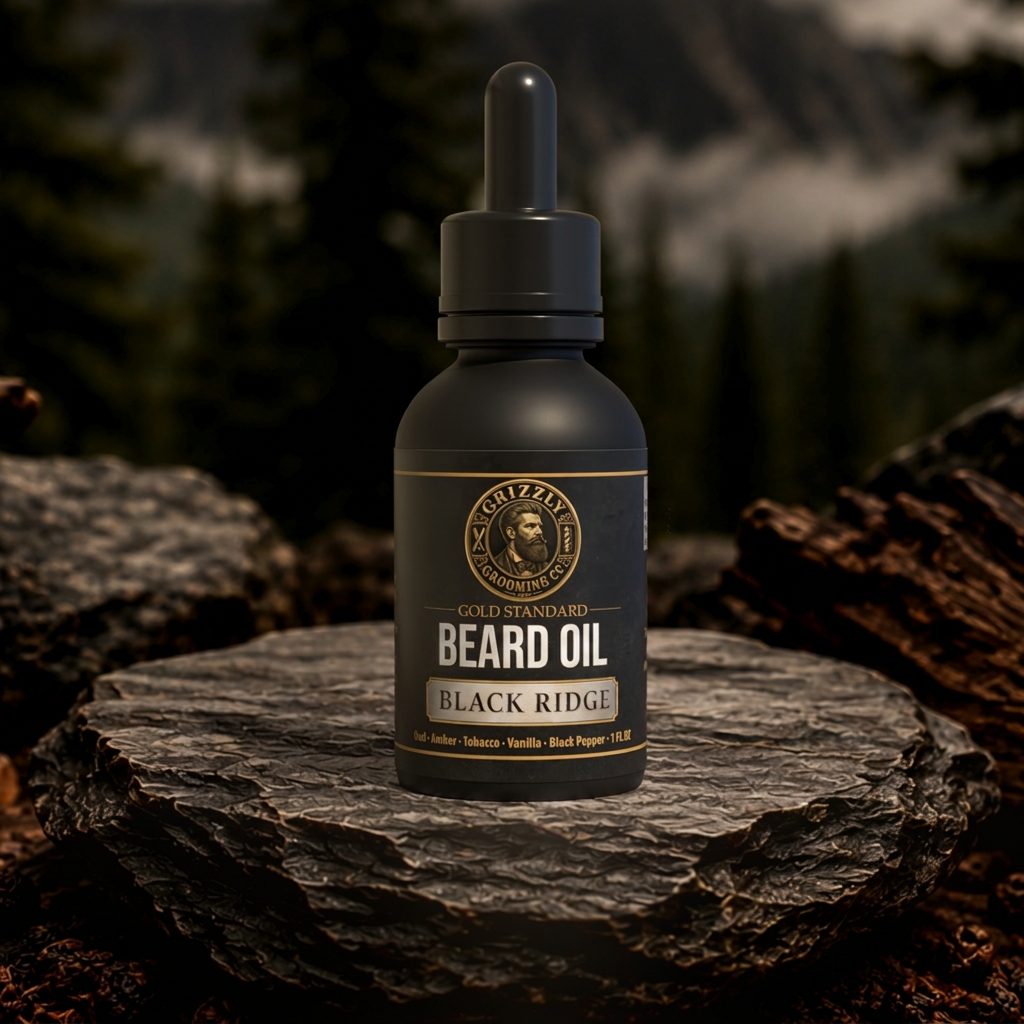
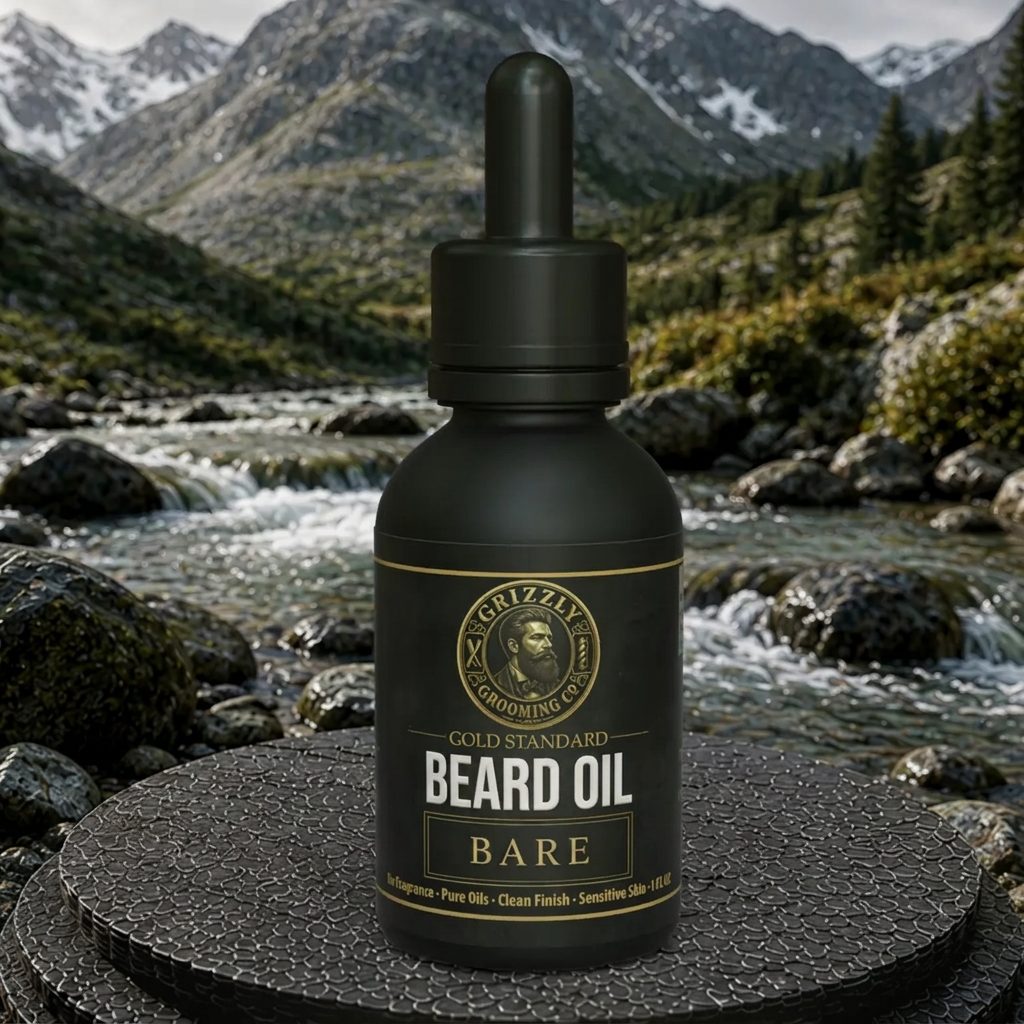
Beard growth marketing is dominated by supplements, oils, and devices that promise density transformations they cannot deliver. The reality is more useful: beard growth is controlled by a small number of biological factors, only some of which you can influence. This guide is what the science actually says — what determines beard density, what does not, and which real levers you can pull. Our reference product for this article is Gold Standard Beard Oil in Black Ridge, chosen because a proper conditioning ritual is the one lever that consistently maximises the beard your genetics allow.
- ›Beard density is roughly 80% genetic. Ritual determines how close you get to your ceiling.
- ›Testosterone matters, but DHT sensitivity in the follicle matters more.
- ›Hair grows in cycles. What looks patchy at week 6 often fills by week 14.
- ›Nutrition, sleep, and daily ritual are the three real levers.
- ›Supplements only help if you were deficient. Test first, do not guess.
The Genetics: Follicle Distribution
Every follicle you will ever have was determined before you were born. Density, distribution, and pattern are set genetically. Some men have complete facial follicle coverage; others have sparse cheeks with dense chins; a small minority produce virtually no facial hair regardless of what they do.
This is the ceiling. No product, supplement, or ritual can create follicles that do not exist. But almost every man is producing well below his ceiling, and the gap between where you are and where you could be is the entire game.
The Hormones: Testosterone and DHT
Facial hair growth is driven by androgens — primarily testosterone and its more potent derivative, dihydrotestosterone (DHT). But total testosterone levels are only weakly correlated with beard density. What matters more is the sensitivity of your facial follicles to DHT, which is again largely genetic.
This is why identical twin brothers can share testosterone levels and yet grow very different beards, and why men with clinically low testosterone often grow perfectly normal facial hair. Chasing testosterone as a beard-growth lever is almost always the wrong game.
The Hair Growth Cycle
Every terminal hair on your body cycles through three phases: anagen (active growth, two to six months for beard hair), catagen (transitional, a few weeks), and telogen (rest, about three months). At any moment, different follicles are in different phases.
Different facial regions cycle on different clocks. Cheek hairs often lag the moustache and chin by four to eight weeks in a new beard. This is why weeks six through twelve show the most dramatic fill-in — regions that were resting at week six enter growth by week ten and become visible by week twelve.
The Real Levers: Nutrition
Hair is roughly 88% protein by dry weight. Chronic low protein intake caps growth. Aim for 0.7 grams per pound of body weight — 125 grams for a 180-pound man. Eggs, red meat, salmon, and Greek yogurt provide the amino acids keratin actually needs.
Vitamin D3, zinc, and omega-3 fatty acids all have research support for hair-cycle health. Aim for 2,000–4,000 IU vitamin D3, 15–30 mg zinc, and 2 g EPA/DHA fish oil daily. These three are the only supplements with meaningful evidence behind them for facial hair.
The Real Levers: Sleep
The bulk of growth-hormone release happens in the first three hours of deep sleep. Chronic five-hour nights depress the entire hair-cycle timeline. Seven to eight hours in a dark, cool room is the boring, correct answer.
This one lever is the largest hidden differentiator between men who look like their beards are on the fast track and men who look stuck at week eight indefinitely.
The Real Levers: Daily Ritual
You cannot grow more follicles, but you can maximise the output of the follicles you have. Daily beard oil worked into the skin at the base of the hair keeps the follicle environment healthy. Twice-daily brushing distributes sebum and lifts hairs off the face. Correct wash cadence (two to three times a week) preserves the sebum that gives the hair body.
The men who look like they hit the genetic lottery are almost always the men doing all three habits consistently. The men who blame their genetics are almost always skipping at least two.
What the Science Does Not Support
Biotin supplementation for men not deficient in biotin — no effect on beard growth. Almost no one who eats normally is deficient.
Derma-rolling as a standalone treatment — very weak evidence. Some evidence when combined with topical minoxidil under medical supervision.
"Beard growth" oils that claim to activate follicles — no ingredient in any topical oil has been shown to create new follicles. Oils condition. They do not grow.
Testosterone supplementation for the sake of beard growth — usually ineffective, always accompanied by side-effect risk.
Why Beard Growth Rates Vary Between Men
Average terminal beard growth is roughly half an inch per month, but the spread between individuals is wide and almost entirely genetic. Two variables drive it: follicle density in each facial region, and androgen receptor sensitivity in those follicles. Neither is modifiable, which is why identical routines produce different results between two men.
Ethnic background correlates with density patterns — Mediterranean and South Asian populations tend toward higher facial follicle density, East Asian populations toward lower — but individual variation within any group is larger than the average difference between groups. The practical takeaway is to benchmark against your own six-month photo, not against anyone else.
Age, Testosterone, and the Beard Timeline
Facial hair development follows a long arc. Most men see initial growth between 14 and 18, meaningful density between 18 and 25, and full terminal coverage anywhere from 25 to 35. Cheek coverage in particular is the last region to complete, which is why patchy cheeks at 21 are frequently not patchy at 28.
Testosterone drives the initiation of terminal hair, and DHT — converted from testosterone by 5-alpha reductase — drives thickness and coarseness. Beyond clinical deficiency, higher testosterone within the normal range does not produce a better beard; receptor sensitivity is the limiting factor, and that is fixed. This is also why 5-alpha reductase inhibitors prescribed for hair loss can thin a beard over time.
Nutrients With Actual Evidence Behind Them
Hair is keratin, a protein, so adequate protein intake — roughly 0.7 to 1 gram per pound of body weight for active men — is the base requirement. Below that, the body deprioritizes hair before anything else. Iron and zinc deficiency both produce documented hair shedding, and correcting a real deficiency restores growth; supplementing beyond sufficiency does nothing.
Vitamin D status correlates with follicle cycling, and deficiency is common in northern latitudes. Biotin, the headline ingredient in most beard supplements, has evidence only in genuine biotin deficiency, which is rare in men eating a normal diet. The honest summary: fix deficiencies, ignore megadoses.
How to Measure Real Progress
Growth is too slow to perceive day to day, which is why men abandon routines that were working. Photograph in the same light, same angle, same distance, once every two weeks, ideally on a plain background. Compare month three to month one, never this week to last.
Track two things beyond length: coverage in previously sparse regions, and how the beard feels at the ends by midday. The second is the fastest-moving indicator of whether a conditioning routine is working — texture responds in two to three weeks, while density changes take months. Give any new routine a full 90 days before judging it.
Why Patchiness in One Region Can Persist Longer Than Others
Follicle density is not uniform across the face even within one man's genetic ceiling, and cheeks are consistently the last region to catch up to the chin and moustache. This is not a sign of a growth problem — it is a difference in how many follicles exist in that specific patch of skin, plus a hair cycle that often runs a few weeks behind the rest of the face.
Patchiness that has not resolved by month four or five in an otherwise growing beard is worth waiting out through at least the first full year before concluding it is permanent. A meaningful share of cheek patchiness that looks stubborn at month four fills in measurably by month nine, simply because the slower-cycling follicles in that region are catching up on their own schedule.
How Illness and Medication Affect Beard Growth
Beard growth is metabolically expensive tissue production, and the body deprioritizes it during illness, surgery recovery, or periods of significant caloric restriction. A short illness rarely shows up in the beard, but a prolonged one — weeks of fever, a hospital stay, a crash diet — can push a visible percentage of hairs into the resting phase at once, producing a shed two to three months later.
Certain medications, particularly some blood pressure drugs, retinoids, and chemotherapy agents, have documented effects on hair growth cycles generally, beard included. If you start a new prescription and notice a change in beard density within a few months, mention it to the prescribing doctor rather than assuming it is unrelated — hair effects are a known and reportable side effect for several drug classes.
The Role of Local Blood Flow and Skin Health
Follicles are fed by small blood vessels immediately beneath the skin, and anything that chronically restricts that local circulation can blunt a follicle's output even when the underlying genetics are fine. Chronic skin conditions, scarring from old acne, and tight face coverings worn for hours daily can all play a minor role here, though none of them explain more than a small fraction of any individual's growth pattern.
This is also the actual mechanism behind why massaging beard oil into the skin — rather than just running it through the hair — has a real, if modest, physiological rationale beyond conditioning. The friction and warmth from a thirty-second massage increases local blood flow briefly, which is a plausible if unproven contributor to follicle health over months of consistent practice.
Reading Your Own Growth Data Instead of Guessing
Most men never actually measure their beard growth rate — they estimate from memory, which is unreliable because visual progress is nonlinear and easy to misjudge. Measuring from the same fixed point (say, the chin) at the same interval every month for three months gives you a real personal growth rate instead of a guess, and that number rarely changes much afterward.
Once you know your actual rate, most growth anxiety resolves itself, because you can predict roughly what a given length will look like at a given month rather than comparing your beard to someone else's timeline. A man growing three-eighths of an inch a month is not failing compared to one growing five-eighths — he is simply on a different, equally normal, curve.
Frequently Asked Questions
How much of beard density is genetic?
Roughly 80%. Ritual determines how close you get to your genetic ceiling.
Does testosterone directly determine beard density?
Loosely. DHT sensitivity in the follicle matters more than total testosterone.
Do biotin supplements work?
Only if you are deficient. Most men who eat normally are not.
Is minoxidil effective on the beard?
There is meaningful evidence for off-label beard use. Talk to a doctor before starting.
How long does a beard hair live before falling out?
Two to six months of active growth, plus a rest phase. Individual hairs cycle out and are replaced by new ones from the same follicle.
Which single habit does the most for growth?
Daily beard oil worked into the skin. It creates the follicle environment growth actually needs.
How fast does a beard grow?
Roughly half an inch per month on average, or about six inches per year, though rates vary meaningfully between individuals based on genetics.
Can beard oil make your beard grow faster?
No. Beard oil conditions skin and hair, which reduces breakage so you retain the length you grow. It does not change follicle activity or growth rate.
Does shaving make your beard grow back thicker?
No. Shaving cuts the hair at its widest point, which makes regrowth feel coarser, but it does not affect follicle count, thickness, or growth rate.
At what age does a beard stop filling in?
Most men reach full terminal coverage between 25 and 35. Cheek density is typically the last region to complete, so patchiness in the early twenties often resolves on its own.
Why does my beard have a stubborn patch on one cheek that hasn't grown in after several months?
Cheek follicles are typically fewer in number and slower-cycling than chin or moustache follicles, so that region often lags behind the rest of the face by several months rather than being permanently patchy. Give it a full year before concluding it will not fill in — genuine permanent patchiness usually shows no change at all across that period.
Can starting a new medication affect how my beard grows?
Yes, several medication classes, including some blood pressure drugs and retinoids, have documented effects on hair growth cycles that can include the beard. If you notice a density change within a few months of starting a new prescription, mention it to your doctor rather than assuming it is unrelated to the medication.
Does massaging beard oil into the skin actually do anything beyond conditioning?
There is a modest physiological rationale: massage briefly increases local blood flow to the follicles, and follicles depend on that local circulation for their output. This is not a dramatic growth lever and will not overcome genetics, but it is a real mechanism, not just a feel-good ritual step.
Build your ritual in 60 seconds.
Answer four questions and get a custom regimen built around your beard and routine.
Start The Ritual Builder