Mastering the Trim: How to Effectively Eliminate Beard Split Ends
A split end, scientifically known as trichoptilosis, is not merely a cosmetic flaw; it represents the structural failure of the hair's protective cuticle. When the overlapping scales of the cuticle are compromised by environmental stressors or mechanical friction, the inner cortex of the hair fiber unravels. This loss of integrity leads to persistent tangles, a rough texture, and visible thinning at the beard's perimeter. Because the hair on the face is structurally distinct from scalp hair—possessing a flatter, more elliptical cross-section—it is uniquely susceptible to longitudinal fractures. Effectively managing split ends requires a dual approach: the surgical removal of damaged fibers and the implementation of a lipid-based maintenance routine designed to preserve the hair's internal moisture and elasticity.
- ›Perform a 'search and destroy' trim every 14 days using high-carbon steel shears to remove individual split ends without sacrificing overall length.
- ›Limit blow drying to the medium-low heat setting (below 150°F) and always maintain a six-inch distance to prevent thermal evaporation of internal moisture.
- ›Apply Gold Standard Beard Oil daily to wet hair to lock in hydration, focusing heavily on the ends which are the oldest and driest parts of the beard.
- ›Replace plastic molded combs with saw-cut cellulose acetate or sandalwood tools to eliminate the microscopic burrs that cause cuticle tearing.
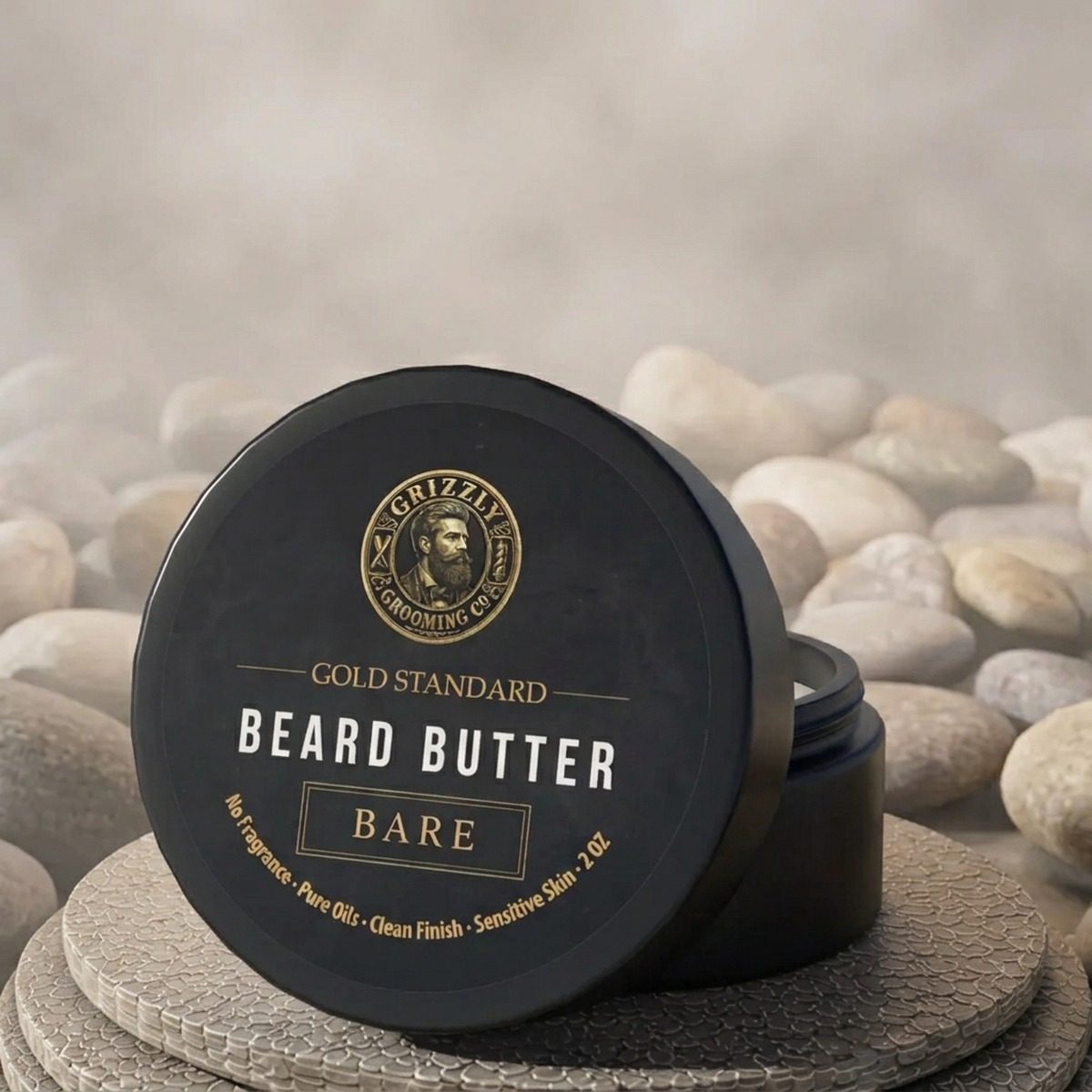
- ›Incorporate a night-time beard butter ritual to provide a slow-release protective barrier against pillowcase friction and overnight dehydration.
- ›Switch from generic soaps to a sulfate-free Beard Wash to preserve the natural sebum layer essential for maintaining hair shaft flexibility.
Identifying the Categories of Beard Hair Damage
To effectively treat split ends, you must first recognize the different stages of hair degradation. The most common is the 'Basic Split,' where the hair tip divides into two distinct branches, resembling a 'Y'. This indicates a primary loss of the cuticle at the very end of the shaft. More advanced is the 'Tree Split,' where multiple fractures occur along one side of the fiber, suggesting significant structural depletion, often caused by chemical exposure or excessive heat. Identifying these early is critical because once a split begins, it travels upward toward the root, weakening the entire hair.
Beyond standard splits, look for the 'Candle' or 'Tapered' end. This occurs when the cuticle is completely worn away, leaving a thin, translucent core. While it hasn't split yet, the structural integrity is gone, and the hair will soon snap. Another common sign of damage is the 'Knot'—specifically a single strand knot (trichonodosis). These are common in curly beards where the hair loops and ties itself; these knots create a weak point that inevitably leads to a fracture. Identifying these requires high-intensity, neutral-spectrum light and a dark background for contrast.
Seasonal changes significantly impact how these damages manifest. During winter care, the drop in humidity causes the hair to become more brittle, leading to 'Crackle' splits where the hair breaks horizontally rather than vertically. Conversely, high summer humidity can cause the hair shaft to swell and contract rapidly, leading to 'Weathering,' where the cuticle scales lift and become prone to snagging. Monitoring your beard's reaction to these environmental shifts allows you to adjust your hydration levels using products like Beard Balm to provide a heavier protective seal when the air is dry.
For a thorough inspection, use a fine-tooth comb to gently isolate sections of the beard. Run your fingers down the length; healthy hair feels smooth, while damaged hair will feel 'catchy' or sand-papery toward the tips. If you notice white specks at the ends of your hair, these are not dandruff but rather the exposed cortex of a severed hair. These areas are beyond repair and must be addressed through a precise trimming protocol to prevent the damage from migrating further up the beard.
The Search and Destroy Trimming Protocol
The 'Search and Destroy' method is the most efficient way to maintain a long beard while eliminating damage. Unlike a global trim that shortens the entire profile, this technique targets only the compromised fibers. You should perform this every 10 to 14 days in a room with ample natural light. Use a professional-grade shear with a convex edge; these blades are designed to slice through the hair cleanly. Avoid household scissors, which have a beveled edge that crushes the hair, creating a flat, jagged surface that will split again within days.
To begin, comb your beard thoroughly to remove any tangles. Take a one-inch section of hair and twist it slightly between your fingers. The damaged ends and split fibers will naturally pop out from the main bundle. Carefully snip these individual hairs approximately 5mm above the visible split. Cutting into the healthy, intact part of the shaft is the only way to ensure the split does not immediately reappear. Repeat this process across all sections of the beard, paying specific attention to the neckline and the areas around the mouth where friction is highest.
Managing the neckline requires particular care during this process. This area is subject to constant friction against shirt collars, leading to localized split ends. When trimming this zone, look for 'Bird's Nest' tangles—clusters of split ends that have hooked together. Do not pull these apart, as the tension will cause further snapping. Instead, use your shears to cut the cluster out. This preserves the overall density of your beard while removing the source of the tangles that make daily combing difficult.
Consistency is more important than volume when it comes to this trimming method. If you are growing for length, removing 1/8th of an inch of damaged hair every two weeks is more effective than cutting off two inches every six months. Regular micro-trims prevent the 'Split-End Creep,' where a small fracture travels three inches up the shaft. By keeping the ends 'fresh,' you ensure the beard remains thick and full rather than appearing wispy and see-through at the bottom.
Advanced Lipid Supplementation with Gold Standard Oils
Beard hair is inherently hydrophobic but requires a specific balance of internal moisture and external lipids to remain flexible. As the beard grows longer, the natural sebum produced by the sebaceous glands at the root cannot travel the full length of the hair. This leaves the tips vulnerable to drying out and fracturing. Daily application of Gold Standard Beard Oil is necessary to replace these missing lipids. The best time to apply is immediately after a shower when the hair is damp; the water expands the cuticle slightly, allowing the oil to penetrate deeper into the cortex.
The choice of carrier oils in your grooming routine is vital. Light oils like grapeseed or sweet almond provide immediate shine and surface smoothing, while heavier lipids like jojoba and argan oil mimic the skin's natural sebum, providing long-term structural support. When applying, use 4 to 8 drops depending on length. Distribute the oil between your palms and work it upward from the neck, ensuring you reach the skin. The final pass should be focused entirely on the ends, 'scrunching' the oil into the tips to ensure maximum absorption where the hair is oldest.
For men with sensitive skin or those prone to beardruff, the oil serves a dual purpose. It moisturizes the skin to prevent flaking while coating the hair to reduce the 'itch' associated with new growth. If you have an exceptionally coarse beard, you may need a midday 'refresh.' A small amount of oil applied in the afternoon can prevent the hair from becoming brittle during the workday, especially in office environments with recycled, dry air. This constant lipid barrier is your first line of defense against the mechanical stress of daily life.
It is important to distinguish between hydration and greasiness. A high-quality oil should absorb within 15 to 20 minutes. If the beard remains oily to the touch, you are likely over-applying or using a product with low-quality synthetic fillers. Gold Standard products are formulated to integrate with the hair's natural structure. By maintaining a consistent lipid layer, you increase the 'slip' of the hair, meaning individual strands will glide past each other rather than catching and tearing, which is the primary mechanical cause of split ends.
Thermal Protection and Blow Drying Best Practices
Heat styling is a double-edged sword; it provides the control needed for a professional finish but can easily destroy the hair's keratin structure. When water inside the hair shaft is heated too quickly, it can turn to steam and expand, causing 'bubble hair'—internal cavities that lead to immediate fracturing. To avoid this, never use a blow dryer on the highest heat setting. Always opt for the medium or cool setting, and never hold the nozzle closer than six inches from the hair. Movement is also key; keep the dryer in constant motion to avoid heat concentration.
Before applying any heat, you must use a buffer. A small amount of Beard Balm or Beard Butter can act as a thermal protectant. The beeswax and fats in these products create a sacrificial layer that absorbs the initial heat energy, protecting the delicate cuticle underneath. Work the product through the beard while it is still damp, then use a round brush or a wide-tooth comb to direct the hair as you dry. This technique seals the cuticle in a flat, downward position, which enhances shine and prevents future snagging.
If your beard feels 'crunchy' or stiff after drying, you have likely used too much heat or insufficient protection. This stiffness is a sign of flash-dehydration. To correct this, immediately apply two drops of beard oil to the dry beard to restore flexibility. For those with particularly long beards, consider 'air drying' to 80% and only using the dryer for the final 20% of styling. This significantly reduces the total thermal load on the hair, preserving the integrity of the oldest parts of your beard.
The tools used during blow drying are just as important as the temperature. Avoid brushes with metal bristles or barrels, as these heat up significantly and can scorch the hair. A boar bristle brush is the ideal companion for heat styling; the natural bristles help distribute the protective oils across the entire hair shaft while providing the tension necessary for straightening. By managing your thermal exposure, you significantly reduce the rate at which your beard develops split ends and 'flyaways'.
Mechanical Stress and Tool Selection
Mechanical damage is often the result of using inferior grooming tools. Standard plastic combs are made in two-part molds, leaving a microscopic ridge or 'seam' along the inside of every tooth. As you pull this comb through your beard, these seams act like tiny saws, scraping away the cuticle and creating micro-tears. To eliminate this, you must use saw-cut cellulose acetate or hand-polished wooden combs. These tools are smooth at a microscopic level, allowing them to glide between hairs without causing the friction that leads to split ends.
Brushing technique also plays a role in hair health. Many men make the mistake of starting at the root and pulling down through tangles. This puts immense tension on the hair, causing it to stretch and snap. Instead, always start at the tips of your beard and work your way up to the root in short, gentle strokes. This 'bottom-up' approach detangles the hair without putting unnecessary strain on the follicles. A boar bristle brush should be used for finishing and oil distribution, but a wide-tooth comb is the tool for initial detangling.
External friction is an overlooked cause of split ends. If you wear a heavy coat or scarf in the winter, the coarse fabric rubbing against your beard can cause significant damage. Similarly, the way you sleep matters. Cotton pillowcases are highly absorbent and create high friction. Switching to a silk or satin pillowcase allows the beard to slide smoothly during the night, preventing the 'morning tangles' that lead to breakage. Alternatively, applying a lipid-rich Beard Butter before bed provides a protective coating that mitigates this overnight friction.
Beard stroking, or 'trichotillomania-lite,' is a common habit that leads to localized thinning and split ends. Repeatedly tugging or twisting specific sections of the beard weakens the hair at the same point, eventually leading to a fracture. If you find yourself doing this, keep your hands occupied or apply a small amount of Mustache Wax to your mustache to redirect your grooming focus. Breaking the habit of mechanical pulling is just as important as the products you apply.
The Role of Cleansing and Chemical Integrity
Standard shampoos and body washes are formulated to strip away heavy oils and grime, but they are far too aggressive for the face. They contain high concentrations of sodium lauryl sulfate, which dissolves the natural lipid barrier of the beard hair. When this barrier is removed, the cuticle becomes dry and brittle, leading to immediate splitting. You should only use a dedicated Beard Wash, which is pH-balanced for facial skin and utilizes milder surfactants that cleanse without dehydrating the hair shaft.
Washing frequency is another critical factor. Unless you work in a high-dust environment or use heavy styling products daily, you do not need to wash your beard with soap every day. Most men find that two to three times per week is sufficient. On off-days, simply rinse the beard with lukewarm water to remove surface debris while leaving the protective oils intact. This 'low-poo' approach ensures that your beard maintains its natural resilience and reduces the frequency of split ends significantly.
Conditioning is not optional. A dedicated Beard Conditioner should follow every wash. While oil provides lipids, a conditioner often contains proteins and humectants that help temporarily fill in small gaps in the cuticle and rebalance the hair's pH. Leave the conditioner in for at least two to three minutes to allow it to penetrate the hair. This step is especially important for men with hard water, as mineral buildup can make beard hair feel stiff and prone to snapping. The conditioner helps neutralize these minerals and restores softness.
Be wary of 'beard dyes' or chemical straighteners. These products work by breaking the disulfide bonds within the hair to change its color or shape. This process inherently weakens the hair. If you choose to use these, you must double your hydration efforts. Use a weekly 'deep conditioning' treatment where you apply a generous amount of Beard Butter or a specialty mask, leaving it on for 20 minutes before rinsing. This extra care helps mitigate the chemical damage that inevitably leads to a higher frequency of split ends.
Common Mistakes and How to Correct Them
The most common mistake men make when they discover split ends is 'picking' at them. Peeling a split hair apart feels satisfying but it actually pulls the cuticle scales off the healthy part of the hair, ensuring that the split will travel much faster and higher than it would have otherwise. If you see a split, leave it alone until you have your shears in hand. The only way to stop a split is a clean, perpendicular cut. Never pull, peel, or tear a damaged hair fiber.
Another error is using dull tools. If your shears are more than a few years old and haven't been sharpened, they are likely folding the hair rather than cutting it. You can test your shears by trying to cut a single piece of thread; if it snags or pushes the thread, the blades are too dull for your beard. Dull blades create 'crush splits,' where the hair is flattened at the tip, leading to a new split end within 48 hours. Invest in high-quality shears and store them in a protective case to keep the edges sharp.
Over-oiling is a frequent mistake for beginners. While oil is essential, applying too much can lead to a 'heavy' beard that attracts dust and debris. This grit acts as an abrasive, grinding against the hair fibers and causing cuticle damage. Start with a small amount and only add more if the hair feels dry to the touch four hours later. The goal is a healthy sheen, not a dripping wet look. If you have over-applied, use a dry towel to gently pat the excess oil off the surface of the beard.
Finally, many men neglect the 'internal' aspect of beard health. While products treat the existing hair, the strength of the hair you grow is determined by your biology. Dehydration and poor nutrition lead to weaker keratin production, resulting in hair that is prone to splitting before it even leaves the follicle. Ensuring you drink enough water and maintain a diet rich in biotin, zinc, and healthy fats will result in a more resilient beard that requires less intensive maintenance to stay split-free.
Adapting Care for Different Beard Lengths and Textures
Short beards (under one inch) rarely suffer from split ends because the hair is young and close to the skin's oil supply. At this stage, your focus should be on skin health and preventing ingrown hairs using Goat Soap Bar. However, as the beard transitions into the 'medium' phase (one to three inches), the tips begin to lose contact with the skin. This is when you must transition from a 'skin-first' routine to a 'hair-first' routine, introducing Gold Standard Beard Oil to protect the developing ends.
Long beards (over four inches) require a multi-layered approach to prevent split ends. The bottom two inches of a long beard can be several years old. This hair has been through hundreds of washes and thousands of brush strokes. For these veterans of the beard world, oil alone may not be enough. Incorporating Beard Balm is essential for the structural support provided by the beeswax. The balm acts like a light 'cast,' holding the older, more fragile fibers together and protecting them from the elements.
Texture also dictates your strategy. Coarse, curly hair is naturally drier because the oils have a harder time traveling down the spiral shape of the shaft. Curly beards are also more prone to 'tangle splits.' If you have a curly beard, you should use a wider-tooth comb and prioritize 'slip' by using more oil. Straight-haired beards, while easier to comb, are more prone to showing split ends visually. For straight beards, the 'search and destroy' method is vital for maintaining a clean, sharp silhouette.
Skin type also influences your choice of products. If you have oily skin, you might think you don't need beard oil, but your facial sebum is often not enough to reach the ends of a long beard. In this case, use a lighter application of oil focused strictly on the bottom half of the beard. If you have dry skin, you are at the highest risk for split ends and should use a combination of Beard Oil during the day and Beard Butter at night to ensure the hair never has a chance to become brittle.
Frequently Asked Questions
Can I use a regular hair trimmer to fix split ends?
It is not recommended. Electric trimmers use a high-speed shearing action that can often crush or 'chew' the hair rather than slicing it cleanly. For the precision required to stop a split end from traveling, manual high-carbon steel shears are the superior choice.
How can I tell the difference between a split end and new growth?
New growth typically has a naturally tapered, pointed tip that feels soft. A split end will look jagged, frayed, or appear as two distinct branches at the tip. If the end of the hair feels rough or catches on your skin, it is likely a split or damaged end.
Does beard butter actually 'heal' the hair?
No product can biologically heal a dead hair fiber. However, Beard Butter contains fats and esters that fill in the damaged areas of the cuticle, providing temporary structural integrity and preventing the split from worsening. It functions as a protective sealant rather than a permanent cure.
Why do I get more split ends in the winter?
Cold air holds less moisture, and indoor heating systems further dehydrate the air. This causes the water within your hair shaft to evaporate, making the keratin brittle and prone to cracking. Increasing your use of Beard Balm during winter care provides a thicker barrier against this dehydration.
Will trimming split ends make my beard grow faster?
Trimming does not affect the rate of growth at the follicle. However, it prevents breakage at the ends. If your hair is splitting and breaking off at the same rate it grows, it will seem like your beard has stopped growing. Trimming allows you to retain more length over time.
Should I trim my beard when it is wet or dry?
Always trim your beard when it is dry and styled as you usually wear it. Hair expands and stretches when wet; if you trim it while damp, you may find that the hair retracts and looks uneven or shorter than intended once it dries. Dry trimming ensures the most accurate results.
Is it okay to use a hair dryer every day?
Daily blow drying is acceptable only if you use a low-heat setting and a thermal protectant like Beard Balm or Oil. Constant high-heat exposure will eventually lead to 'bubble hair' and chronic split ends. Whenever possible, let your beard air dry partially before finishing with a dryer.
What is the 'candle' split end?
A 'candle' split is a stage of damage where the outer cuticle has been entirely stripped away, leaving only the inner core (the medulla/cortex). It looks like a thin, worn-down point. While it hasn't divided yet, it is extremely weak and will break or split into a 'Y' shape very soon if not trimmed.
Build your ritual in 60 seconds.
Answer four questions and get a custom regimen built around your beard and routine.
Start The Ritual Builder