How to Repair a Damaged Beard: A 90-Day Recovery Plan
A damaged beard has a recognisable signature: it feels rough against the palm, the ends look lighter than the roots, it will not hold a shape, and it frizzes within an hour of drying. The causes vary — bleach or dye, heat styling, chlorine, hard water, or simply years of dry combing — but the recovery is broadly the same, because you are always doing three things: stopping the damage, restoring the cuticle's behaviour, and cutting away the hair that is beyond help. Ninety days is a realistic timeline for a visible turnaround.
- ›Find and stop the cause first — no product outruns ongoing damage.
- ›Days 1 to 30: gentle cleansing, weekly deep conditioning, no heat, no dry combing.
- ›Days 31 to 60: staged tip trims to remove unrecoverable ends.
- ›Days 61 to 90: protein and moisture balance, then maintenance.
- ›Expect roughly half an inch of new, undamaged growth per month.
Diagnose the cause before you treat the symptom
Damage is cumulative and almost always mechanical or chemical. Run through the list honestly. Do you comb dry and from the root down? Do you rub your beard dry with a terry towel? Do you blow dry on high heat, or use a hot shower right on the face? Have you bleached, dyed, or used a beard straightener? Do you swim in chlorinated pools? Is your water hard? Do you sleep on cotton?
Whatever you find, that is the first thing to change, because no conditioning routine outruns a daily source of damage. Men often spend months on products while continuing the one habit that caused the problem. Fix the input first; the products then have something to work with.
Days 1 to 30: stop the bleeding
Cut washing back to twice a week with a sulfate-free beard wash. Rinse with warm, not hot, water and finish cool. Stop all heat: no blow dryer, no straightener, no hot showers directly on the face. Replace terry towels with microfibre, and pat instead of rubbing.
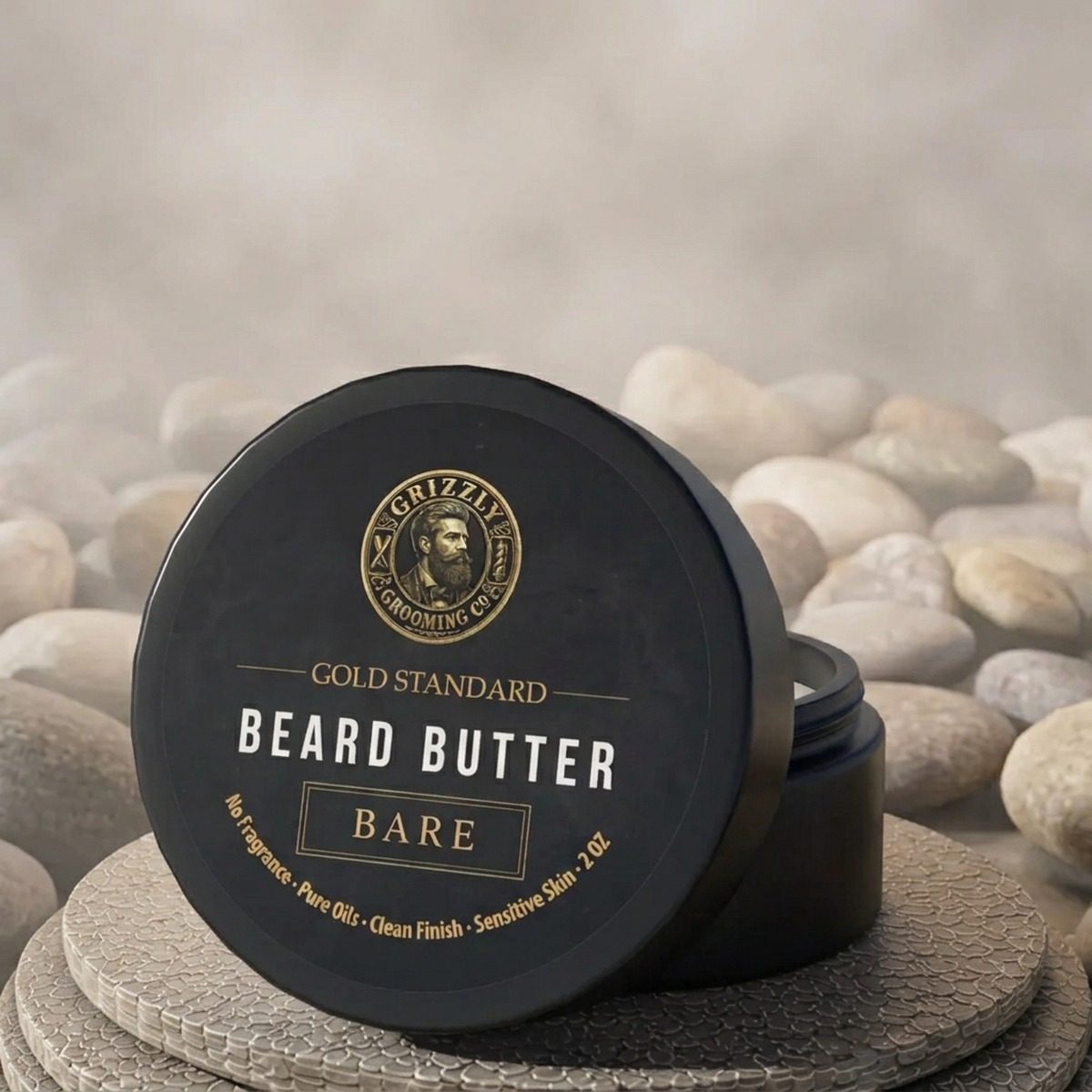
Add a rinse-out conditioner at both washes, left on three minutes, and a deep treatment once a week — a generous layer of beard butter or a conditioning mask left ten minutes, combed through with a wide-tooth comb, then rinsed cool. Every day, apply oil to a damp beard, into the skin first and then through the hair, with one extra drop for the last inch. Detangle from the tips upward only, never from the root down.
Days 31 to 60: cut what cannot be saved
Hair does not heal. The most damaged portion — usually the last half inch to inch — will never behave properly again, and every day it stays it continues to fray and tangle, which damages the healthy hair above it. Staged trimming is how you remove it without losing the beard's shape all at once.
Take three to five millimetres every two weeks across this month, dry, combed, with sharp scissors. Between trims, keep the routine from month one running. Most men find that after two staged trims, combing force drops noticeably and the frizz halo shrinks, because the catching ends are gone.
Protein and moisture: getting the balance right
Damaged hair loses both lipids and structural protein, and the two need different treatments. Moisture treatments — oils, butters, panthenol, glycerin — restore softness and elasticity. Protein treatments — hydrolysed wheat, keratin, silk amino acids — temporarily fill gaps in the cuticle and restore strength.
Too much protein makes hair stiff and brittle. Too much moisture makes it limp and mushy. During recovery, use a protein treatment once every two to three weeks and moisture-focused care in between. If the beard feels straw-like after a treatment, you have overdone protein; if it feels lifeless and will not hold shape, you need protein rather than more oil.
Days 61 to 90: rebuild and reinforce
By month three, roughly an inch of entirely new, undamaged hair has grown in. The job now is protecting it. Keep two washes a week, conditioner at both, one weekly deep treatment, and daily damp oiling. Reintroduce balm for shape if you want it, applied palm-warmed to the mid-length and ends.
Add the protective habits permanently: satin pillowcase, no dry combing, cool final rinse, microfibre towel, and a tip trim every three to four weeks. If your water is hard, a clarifying wash every two weeks. If you swim, wet the beard with clean water and apply oil before entering the pool, then rinse immediately after.
Special case: bleach and dye damage
Chemical processing is the most severe form of beard damage, because it disrupts the cuticle and the internal protein structure at once. If your beard has been bleached, extend the timeline: expect four to six months rather than three, and lean harder on protein treatments, since real structural loss has occurred.
Do not re-process during recovery. If you must maintain colour, switch to a deposit-only or demi-permanent product and stretch the interval as far as possible. A bleached beard also needs UV protection, because processed hair oxidises quickly in sunlight.
Special case: hard water and chlorine
Hard water leaves calcium and magnesium on the hair, which makes it feel coarse and prevents products from performing. A chelating wash every one to two weeks removes it; a shower filter prevents it. Men who move to a hard-water city often think their beard has suddenly changed texture, and in a sense it has — but the cause is external.
Chlorine strips lipids and can lighten colour. Pre-oiling before swimming creates a partial barrier, and rinsing with clean water immediately afterwards prevents the chlorine from sitting on the hair for hours. A clarifying wash after pool sessions clears what remains.
What realistic progress looks like
Beard hair grows roughly half an inch a month, though it varies. That means visible recovery is slow in month one, obvious in month two once staged trimming has begun, and clear in month three. The first change most men notice is not appearance but feel: the beard stops catching the comb.
Photograph the beard at day one, thirty, sixty, and ninety, in the same light and from the same angle. Progress at this pace is invisible day to day, and the photos are the only honest record. If ninety days of consistent care produces no change, look again at the cause list — something in the routine is still doing damage.
A diagnostic test you can run in two minutes
Before building a plan, establish which kind of damage you have. Pluck one hair from the mid-length and stretch it slowly between two fingers. Hair with adequate moisture and intact protein stretches a little and springs back. Hair that snaps immediately with no stretch is protein-deficient. Hair that stretches a long way and then stays limp without recovering is over-moisturised and under-strengthened.
Then do a porosity check: drop the same hair into a glass of water. Floating for several minutes indicates a closed, healthy cuticle. Sinking quickly indicates high porosity — a lifted, damaged cuticle that absorbs water fast and loses it just as fast. High porosity plus a snap test means the beard needs protein first and sealing second, and that combination tells you more about which products to buy than any label does.
Weekly treatment calendar for the first month
Structure prevents the two classic recovery errors: doing everything at once, and doing nothing consistently. Week one, wash twice with a gentle sulfate-free wash, condition at both washes, and do one deep moisture treatment. Week two, add one protein treatment mid-week, keeping the moisture treatment at the weekend so the two never land on the same day.
Week three, repeat week one — protein does not need to be weekly, and overusing it is the most common self-inflicted setback. Week four, repeat week two and take your first staged tip trim at the end of it. Through all four weeks, the daily layer never changes: damp beard, oil into skin and hair, extra drop on the last inch, detangle from tips upward, cool final rinse.
Why the first two weeks feel like nothing is happening
Recovery is invisible early, and this is where most men abandon the plan. Nothing you do changes the damaged hair itself, so the only real improvements available in weeks one and two are reduced combing force and slightly better shine. Length is unchanged, ends still look pale, frizz is still present because the frayed hair causing it is still attached.
Set expectations accordingly and measure the right thing. Instead of judging appearance, count how many times the comb catches during your daily pass. That number should fall noticeably within ten days. It is the earliest honest signal that the routine is working, and it arrives weeks before anything is visible in a photograph.
Preventing the relapse
Most repaired beards get damaged again, because the recovery routine gets abandoned once the beard looks fine and the original habit returns. Identify which single habit caused the damage — dry combing, terry towels, heat, hard water, chemical processing — and make its replacement permanent rather than temporary.
Four habits carry almost all the protective value long term: apply product to a damp beard, detangle from the tips upward, finish the rinse cool, and take a light tip trim every three to four weeks. Add a satin pillowcase and a clarifying wash every two weeks in hard-water areas. Those six things cost about four minutes a day and are the difference between a one-time recovery and a permanent one.
Frequently Asked Questions
Can damaged beard hair be repaired?
The hair itself cannot be healed, but its behaviour can be improved substantially with conditioning and protein treatments, and the worst sections can be cut away. Real recovery is a mix of better care and staged trimming.
How long does it take to fix a damaged beard?
About 90 days for most men, and four to six months if bleach or dye is involved. Beard hair grows roughly half an inch a month, so new healthy length arrives on that schedule.
Do I have to shave and start over?
Almost never. Staged trims of three to five millimetres every two weeks remove the unrecoverable ends while preserving the shape. Shaving only makes sense if the damage runs the full length.
How do I know if I need protein or moisture?
Straw-like and stiff means too much protein — go moisture-focused. Limp, mushy, and shapeless means too little protein — add a protein treatment every two to three weeks.
Is hard water really enough to damage a beard?
It is enough to make it feel coarse, dull, and unresponsive to products, and that roughness accelerates cuticle damage. A chelating wash every one to two weeks, or a shower filter, resolves it.
How can I tell if my beard needs protein or moisture?
Stretch a single hair. Snaps immediately with no give means protein. Stretches far and stays limp means it has plenty of moisture and needs strengthening. Springs back means the balance is fine.
How soon will I see results from a beard recovery plan?
Feel improves within ten days — the comb catches less. Visible change usually starts in week four or five, after the first staged trims, and is clear by day ninety.
Build your ritual in 60 seconds.
Answer four questions and get a custom regimen built around your beard and routine.
Start The Ritual Builder