12 Best Beard Styles for Every Face Shape
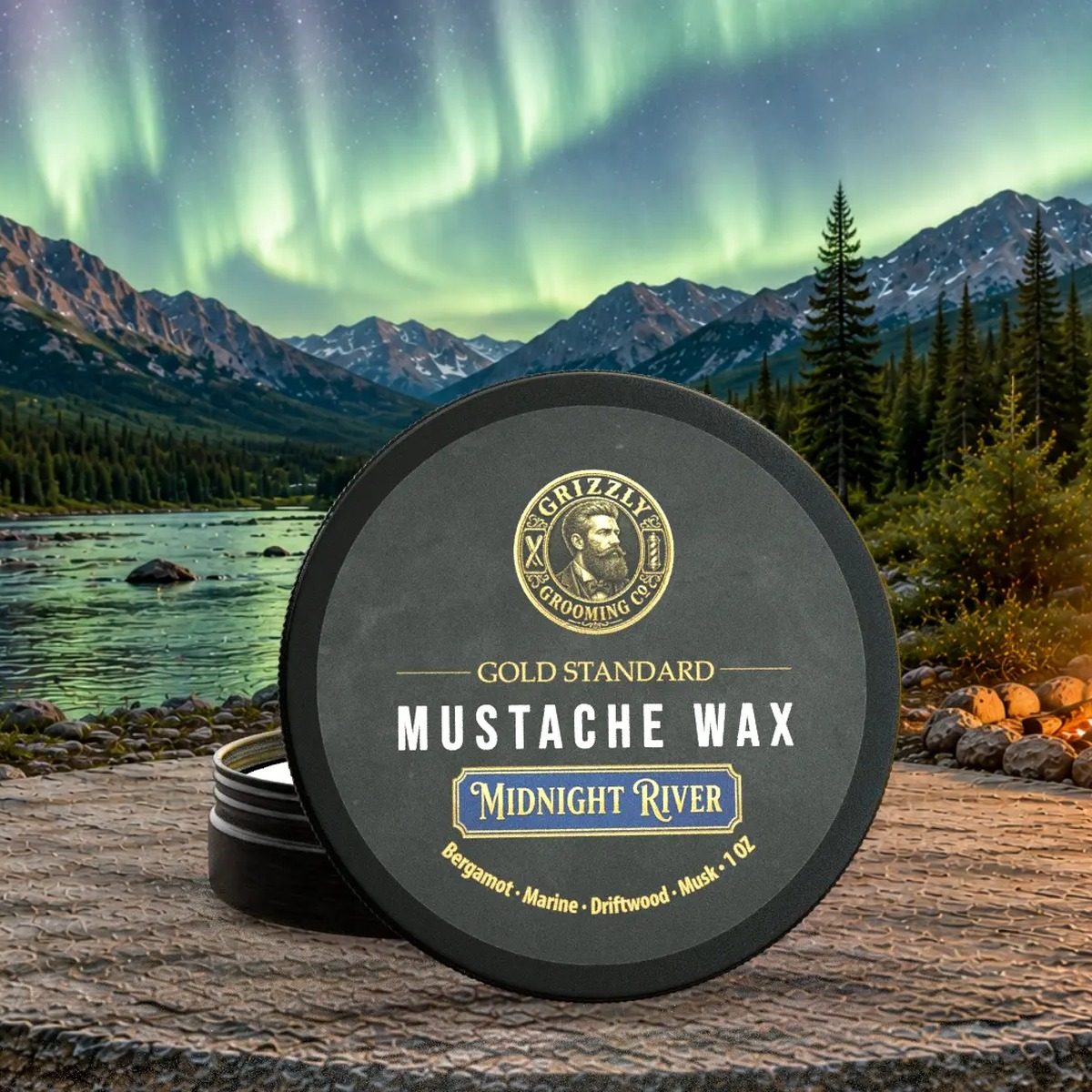
Every beard style flatters some face shapes and fights others. A rectangular face lengthened by a long chin beard looks even more rectangular. A round face made rounder by a full-cheek beard looks even rounder. The right style balances your natural proportions — it does not add to the strongest dimension. This guide walks through twelve styles and the face shapes they were built for, with honest notes on the maintenance each one demands. Our reference product is Gold Standard Moustache Wax in Black Ridge, because the moustache is the single detail that separates a great beard from a good one — and every one of these styles is elevated by a properly shaped moustache.
- ›Round faces want length, not width. Go longer at the chin.
- ›Square faces want softness. Round out the corners with a shorter, contoured beard.
- ›Oval faces are the lottery ticket — almost any style works.
- ›Long faces want width, not length. Fuller cheeks, minimal chin length.
- ›Every style benefits from a defined moustache. Wax it.
First: Identify Your Face Shape
Wet your hair back off your forehead, stand a foot from the mirror, and measure four things with a soft tape: forehead width, cheekbone width, jaw width, and face length (hairline to chin). Round: length is roughly equal to width, jaw is soft. Square: length is roughly equal to width, jaw is angular. Oval: length is greater than width, jaw softly curved. Long/oblong: length is significantly greater than width. Heart: forehead is widest, chin narrows. Diamond: cheekbones are the widest point.
Get this identification wrong and you will pick a style that fights your face for the next two years. Get it right and every one of the twelve styles below sorts itself.
For Round Faces: Add Length, Not Width
Best pick: the boxed beard with a longer chin. Keep the sides tight (roughly one-third to one-half of the chin length) and let the chin grow to build vertical line. Second choice: the goatee with a defined moustache, which draws the eye down the centre of the face.
Avoid: the mutton chops and any style that thickens the cheeks. You do not want a horizontal frame.
For Square Faces: Soften the Corners
Best pick: the short boxed beard with rounded corners at the jaw. Length between one-half and one inch. The goal is a beard that follows the face rather than exaggerating its angles. Second choice: the circle beard (moustache connected to a rounded chin patch), which softens the jaw line entirely.
Avoid: sharp, chiseled beard lines. Your face already has angles — the beard should not add more.
For Oval Faces: Almost Anything Works
Oval faces are the most balanced starting point. Full beard, boxed beard, garibaldi, van dyke — all sit well. The one weak point of an oval face is excessive length, which can tip it into looking long. Keep the beard shorter than four inches for the best proportions.
Recommendation if you cannot pick: the classic full beard trimmed to two-and-a-half inches, with a defined moustache.
For Long / Oblong Faces: Build Width
Best pick: mutton chops or a chin curtain — beards that build lateral volume without adding length. Second choice: a full beard kept short (under one inch) and combed outward at the sides.
Avoid: goatees, long chin beards, and the classic long full beard. All of them lengthen the face further.
For Heart-Shaped Faces: Balance the Chin
Best pick: a full beard that is fuller at the chin than at the sides. This adds visual weight to a naturally narrow chin, balancing the wider forehead. The garibaldi (full, rounded, medium length) is the classic call.
Avoid: goatees and van dykes, which pull the eye down to the already-narrow chin.
For Diamond Faces: Fill the Chin and Jaw
Best pick: a full beard trimmed to build fullness at the jaw and chin, which balances the wider cheekbones. A classic full beard with defined edges works beautifully.
Avoid: pencil beards and thin chin straps, which shrink the jaw further.
The Moustache Is Not Optional
Whichever style you pick, the moustache is the detail that raises the whole face. An unshaped, drooping moustache turns any beard scruffy; a properly shaped, waxed moustache turns any beard intentional. Use a small amount of Gold Standard Moustache Wax daily to control the middle section and, if you want it, curl the tips upward. This one habit costs 30 seconds a day and changes photographs entirely.
Maintenance Reality Check
Every style requires trimming. The rule of thumb: full beards go to a barber every four to six weeks for a shape; shorter styles go every three weeks. Between appointments you handle strays with beard scissors, never with clippers — clippers are what cause the classic "I ruined my beard" moment.
Wash two to three times a week, oil daily, brush twice a day. Every one of these styles depends on that base ritual.
Neck Length, Height, and Proportion
Face shape is not the only geometry that matters. A short neck is overwhelmed by a long beard, which erases the jaw-to-collar transition entirely; keep the bottom edge higher and taper the sides. A long neck can carry more length without looking compressed.
Overall height matters too. On a shorter frame, a very long beard reads as disproportionate from a distance because it occupies a larger share of the visible silhouette. Scale the beard to the body, not just to the face.
Glasses, Hairstyle, and the Whole Silhouette
Frames and beards compete for the same visual weight. Heavy frames pair well with a shorter, cleaner beard; light rimless frames can carry more beard without crowding the face. If both are bold, one has to yield.
Hair volume sets the balance from above. A tight fade with a long beard is a deliberate, top-heavy-inverted look and works because the contrast is intentional. Long hair with a long beard needs both kept well-defined, or the face disappears into a single mass. Judge the beard in a full-length mirror, not a bathroom close-up.
Getting the Shape You Want From a Barber
Bring two or three photos of the same style rather than describing it — 'medium beard, squared off' means different things to different barbers. Say the words that matter: where you want the cheek line, how high the neckline sits, and whether you want a taper at the corners.
Ask them to leave more than you think on the first visit. You can always take more off next week, and a barber who removes too much has cost you a month. Then keep the shape yourself between visits with a weekly neckline pass.
Adjusting a Style as Your Beard Grows Longer
A style chosen at the three-month mark often needs revisiting at six months, because length changes the proportions a style was built around. A boxed beard that balanced a round face nicely at three inches can start to look bulky and shapeless if it's allowed to keep growing without adjusting the taper along the sides.
Check your reflection against the same face-shape guidance every couple of months as the beard grows, not just once at the start. What flatters a given face shape at a short length and at a long length is often a different specific cut, even if the general principle — add length, add width, soften corners — stays the same.
Styling Mistakes That Undo a Good Face-Shape Match
Even a well-chosen style can look wrong if the outline doesn't match the intent — a boxed beard meant to add vertical length to a round face loses that benefit entirely if the neckline is cut too high, since a high neckline visually shortens the beard regardless of overall length. Match your neckline and cheek line decisions to the goal of the style, not just to generic outline rules.
Another common mistake is choosing a style for face shape but ignoring density. A style that calls for fuller cheeks to add width to a long face won't achieve that effect if the cheek hair is naturally patchy or thin — in that case, a different style that works with your actual density, even if it's not the textbook pick for your face shape, will look better in practice.
Combining Face Shape Advice With Hair Type
Curlier, coarser beard hair reads visually fuller than straight hair at the same length, which means face-shape recommendations calling for a specific length to achieve width or fullness may need adjusting down slightly for curlier textures, since they'll hit that visual fullness sooner. Straighter, finer hair often needs a bit more length than the general guidance suggests to achieve the same visual effect.
This is why two men with the same face shape following the same style recommendation can end up with different results — hair type is doing as much visual work as the length and shape decisions themselves. Use the face-shape guide as a starting point, then adjust length in either direction based on how your specific hair behaves.
Frequently Asked Questions
How do I know my face shape for sure?
The four-measurement method above is the most reliable. If two shapes are equally close, ask a barber — they identify shapes daily.
Can I try multiple styles in a year?
Yes, but each transition takes eight to twelve weeks. Commit to each one long enough to actually see it.
How long should the moustache be?
For most styles, the moustache should sit just above the top lip. For a handlebar, longer at the tips. Never let the moustache flop into the mouth.
Does beard colour affect what style works?
Darker beards read denser and can be worn shorter. Blond and red beards often benefit from an extra half-inch of length to build visual weight.
What if my beard grows patchy?
Pick a style that works with patchiness rather than against it. A short boxed beard is more forgiving than a full beard for the first year.
How often should I book a barber for beard shape?
Every four to six weeks for medium and long beards; every three weeks for short styles.
Does face shape really matter for beard style?
Yes. The goal for most men is an oval silhouette — add length where the face is short and remove width where it is wide — and face shape tells you which lever to pull.
What beard suits a round face?
One that adds vertical length and keeps the sides tight: a boxed beard with a defined chin, a ducktail, or a Van Dyke. Avoid round, full shapes at the cheeks.
How do I explain the beard shape I want to a barber?
Bring photos and specify three things: cheek line height, neckline height, and whether the corners are squared or tapered. Ask them to leave extra on the first visit.
Can a beard style flatter a face shape at short lengths but not longer ones?
Yes, this is common. A short, contoured beard that softens a square jaw at two inches can lose that softening effect if allowed to grow past four or five inches without maintaining the contour, since length adds its own visual weight that can overwhelm the original shaping intent.
Should I pick a style based on face shape or based on what's currently trending?
Face shape first, trend second. A trending style that fights your proportions will look off no matter how well it's executed, while a style matched to your face shape looks intentional even if it's not the most talked-about cut of the moment. Trends are a reasonable tiebreaker once you've narrowed to styles that actually suit you.
Do glasses change which beard style works for my face shape?
They can, especially for round and square faces, since heavy frames add horizontal width to the upper face that a beard style then needs to balance against, not add to. If you wear glasses daily, factor frame width into the same length-versus-width logic used for face shape before settling on a style.
Build your ritual in 60 seconds.
Answer four questions and get a custom regimen built around your beard and routine.
Start The Ritual Builder