The Benefits of Goat Milk Soap for Men's Skin
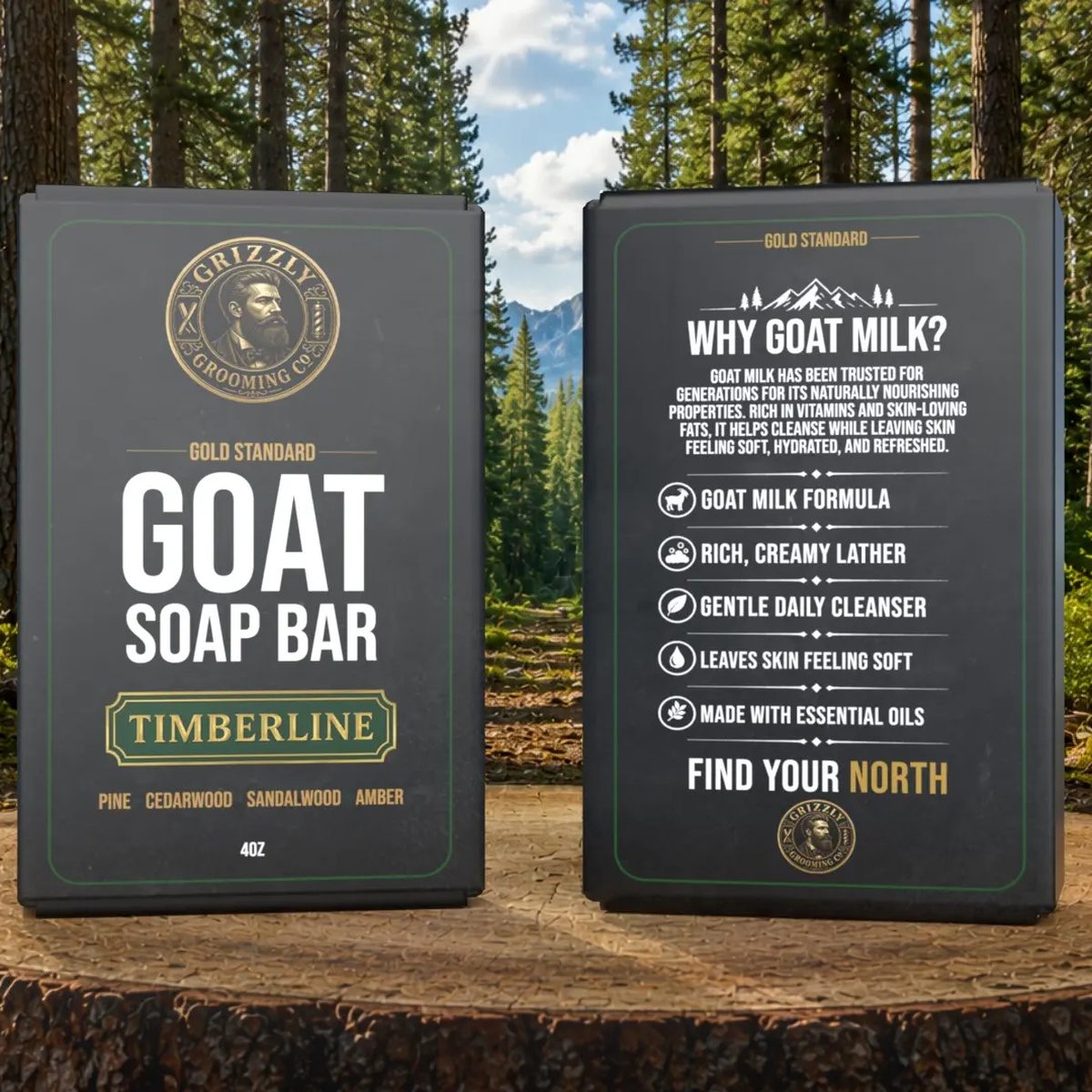
Goat milk soap has been in continuous use for over 2,000 years for one reason: it works. It cleans without stripping, conditions without weighing down, and is well tolerated even by men with sensitive skin. This guide covers the actual chemistry of why goat milk performs the way it does, and how to make the switch from body wash or synthetic bar soap. Our reference product is the Grizzly Goat Soap Bar — cold-processed goat milk for gentle cleansing depth.
- ›Goat milk is naturally close to human skin pH — around 5.5.
- ›The milk fats and glycerin condition as they clean.
- ›Alpha hydroxy acids (lactic acid) in the milk exfoliate gently.
- ›Cold-processed bars retain more of the beneficial compounds than hot-processed.
- ›Store on a draining dish. Standing water shortens bar life dramatically.
- ›Lather in a washcloth, not straight onto skin — you use less bar and get more foam.
- ›Switching from a sulfate wash takes about two weeks before skin stops overproducing oil.
Why Goat Milk Works
Goat milk contains roughly 4% naturally occurring lactic acid — a gentle alpha hydroxy acid that exfoliates dead skin cells without irritation. It also contains vitamins A, D, and B-complex, plus fatty acids and triglycerides that condition the skin as the bar cleans.
The pH of a properly formulated goat milk bar sits at 5.0 to 6.0 — very close to the natural pH of human skin. Traditional bar soap sits at pH 9 to 10, which is why traditional bar soap dries skin out. Goat milk does not.
Cold Process vs Hot Process
Cold-processed soap is made below 100°F, preserving more of the beneficial compounds in the goat milk — the vitamins, the enzymes, the fatty acids. Hot-processed soap is faster to make but breaks down some of those compounds.
The Grizzly Goat Soap Bar is cold-processed and cured for a minimum of six weeks. Longer cure produces a harder bar that lasts longer and lathers more consistently.
The Charcoal Addition
Activated charcoal in the bar pulls oil, sweat, and impurities from pores without adding harsh surfactants. It's especially useful for the back, chest, and shoulders — areas that produce more sebum and see more sweat.
The charcoal does not stain skin or fabric. It rinses cleanly with the rest of the lather.
How to Use It
Wet the bar and work it directly onto a washcloth or shower cloth. Lather across the body. The bar itself does not need to touch the skin — the washcloth carries the lather.
Rinse fully. Store the bar on a draining dish out of the direct water stream. Standing water dissolves the outer layer and cuts bar life by 50%.
Who Benefits Most
Men with sensitive skin, eczema, or general reactivity to synthetic body washes see the fastest improvement — often within a week of switching. Men with acne-prone body skin benefit from the exfoliation and charcoal. Men with dry skin benefit from the built-in fats and glycerin.
The only men who don't see a clear benefit are those with heavily oily skin who prefer the tight-clean feel of a sulfate wash. That feeling is stripping, not cleaning — but if it's what you like, a synthetic wash will deliver it more aggressively than goat milk will.
Goat Milk Soap vs Body Wash
Most body wash cleans with sulfates — surfactants efficient enough to strip the skin's entire lipid layer in one shower. That's the tight, squeaky feeling men often read as clean. Skin responds by overproducing sebum, which is why heavy body-wash users frequently have oily backs and dry shins at the same time.
A goat milk bar cleans with saponified fats and leaves the glycerin behind instead of removing it. The skin never signals that it's been stripped, so oil production stays level. The trade-off is honest: less foam, and no squeak.
Cost per wash also favours the bar. A cured bar lasts four to six weeks of daily use against roughly two to three weeks for a comparable bottle, with no plastic to throw out.
What to Expect in the First Two Weeks
Week one usually feels underwhelming if you're coming off a sulfate wash. The skin is still overproducing oil on the old schedule, so you may feel oilier by evening. This is rebound, not the soap failing.
By the end of week two, oil production settles and the difference shows up in the places body wash was punishing: shins, forearms, and the skin under the beard stop flaking. Body acne on the back and shoulders typically improves in the same window.
If irritation appears rather than resolves, the culprit is almost always fragrance load or water temperature, not the goat milk. Drop to a lightly scented bar and wash in warm rather than hot water for a week before ruling the bar out.
Using It on the Face and Beard
A goat milk bar is mild enough for the face, which is unusual for a bar soap. At pH 5 to 6 it won't strip the beard the way a pH 9 traditional bar does, and the lactic acid helps with the dead skin that collects under a dense beard.
Lather in your hands or a cloth first and apply the lather, not the bar. Rubbing a bar directly across a beard drags the hair and pushes soap into the roots where it's hard to rinse out.
Rinse thoroughly and oil the beard while it's still damp. Any cleanse removes some sebum, so the oil that follows is what closes the loop — this is true for goat milk soap and dedicated beard wash alike.
Making a Bar Last
Water is the enemy. A bar sitting in the direct spray or in a puddle dissolves from the outside and loses roughly half its life. A slotted or draining dish outside the stream fixes this completely.
Let it dry fully between uses. If two people share a shower, two bars in rotation outlast one bar used twice a day, because each gets a full day to harden.
Keep the final sliver rather than binning it: press it onto the face of a fresh bar while both are damp and it fuses within a couple of uses.
How Goat Milk Soap Compares to a Beard Wash
Goat milk soap is formulated for the whole body and face, while a dedicated beard wash is formulated specifically for coarser facial hair and the skin underneath it. Both share the gentle, low-pH profile that avoids stripping natural oils, but a beard wash typically includes conditioning agents targeted at hair texture that a body-focused goat milk bar does not prioritize.
Many men use goat milk soap for the body and face and a separate beard wash for the beard itself, rather than one product for everything. If you want to simplify to a single bar, goat milk soap works reasonably well on a beard too, just expect slightly less conditioning benefit for the hair specifically compared to a beard-formulated wash.
Storage and Bar Longevity
A cold-processed goat milk bar left sitting in standing water in a closed shower dish can lose noticeable life within a couple of weeks, softening and dissolving far faster than the same bar stored on a draining surface. A slotted or ridged soap dish that lets water run off between uses can more than double how long a bar lasts.
Humidity in the bathroom matters too — a bar stored in a steamy, poorly ventilated shower breaks down faster regardless of the dish it sits in. If your bathroom runs humid, consider storing the bar outside the shower between uses and only bringing it in when you're actually washing.
Who Should Be Cautious With Goat Milk Soap
Goat milk soap is genuinely gentle, but men with a diagnosed dairy or lanolin allergy should check the full ingredient list carefully, since some formulations include additional animal-derived ingredients beyond the milk itself. This is a rare consideration, but worth a quick label check before switching, particularly if you have a history of reacting to dairy-adjacent skincare products.
Men with active acne-prone skin should also introduce it gradually rather than switching cold turkey — the milk fats that make goat milk soap conditioning can feel rich to skin that's used to a stripping, high-sulfate cleanser, and a short adjustment period of slightly oilier-feeling skin in the first week is normal before things balance out.
Frequently Asked Questions
Is goat milk soap good for sensitive skin?
Yes. The pH is close to skin's natural pH and the fatty acids condition as the bar cleans.
Does it smell like goat?
No. Properly made goat milk soap is essentially odorless before scenting. Ours carries the same Grizzly scent families as the rest of the line.
How long does a bar last?
Four to six weeks of daily use if stored on a draining dish.
Can I use it on my face?
Yes, but sparingly. It's gentler than most bars but the skin on the face is more reactive than the body.
Is it safe if I'm lactose intolerant?
Yes. Topical goat milk is not absorbed the way ingested milk is.
Is goat milk soap better than body wash?
For skin that gets dry or reactive, yes — it cleans without stripping the lipid layer and leaves glycerin behind. Body wash foams more and feels squeakier, but that squeak is stripping.
Why does my skin feel oilier after switching?
Rebound. Skin is still overproducing oil on the schedule a sulfate wash set. It typically levels out by the end of the second week.
Can I use goat milk soap on my face and beard?
Yes. At pH 5–6 it won't strip the beard the way traditional bar soap does. Apply the lather rather than the bar, rinse well, and oil the beard while damp.
How do I stop the bar from turning to mush?
Keep it out of the direct spray on a draining dish and let it dry fully between uses. Standing water can cut bar life in half.
Can I use goat milk soap on my face every day?
Yes, its gentle pH profile is well suited to daily facial use, which is part of why it works for men with sensitive or easily irritated skin. If you notice any dryness after switching, it's more likely related to hot water or over-washing frequency than the soap itself, since the formulation is designed to be non-stripping.
Does goat milk soap work well for shaving prep?
It can, since the lather is rich and the milk fats leave skin slightly conditioned, which helps a razor glide more smoothly than on skin cleaned with a harsh, stripping soap. It's not a substitute for a dedicated shave oil or cream if you want maximum glide, but it's a solid pre-shave cleanse.
How can I tell if a goat milk bar is genuinely cold-processed?
Check the label or product description for an explicit cold-process claim and a cure time, typically four to six weeks minimum. Bars that don't mention a cure time or process method are more likely hot-processed or a lower-quality blend, even if goat milk appears on the ingredient list.
Build your ritual in 60 seconds.
Answer four questions and get a custom regimen built around your beard and routine.
Start The Ritual Builder