The Discerning Man's Guide to Quality: Buying Beard Oil That Works
- ›Prioritize cold-pressed carrier oils like Jojoba and Argan over synthetic silicones.
- ›Avoid clear glass bottles which allow UV light to degrade natural botanical ingredients.
- ›High-quality beard oil should absorb quickly without leaving a greasy, heavy residue.
- ›Natural essential oils offer complex scent profiles compared to harsh artificial fragrances.
The Red Flags of Mass-Market Production
The grooming industry is unfortunately flooded with white-labeled products that prioritize profit margins over follicular health. When browsing, the first thing to inspect is the ingredient list for silicones like dimethicone, which provide a temporary sheen but eventually choke the hair follicle and lead to breakage.
True quality begins with cold-pressed oils that retain their nutrient density. If a brand hides behind a proprietary blend without disclosing individual ingredients, it is usually an indication that they are cutting costs with cheap fillers like sunflower oil or low-grade mineral oil.
The Science of the Carrier Oil
A premium beard oil is only as effective as its carrier base. Look for Jojoba, which closely mimics the natural sebum produced by your skin, and Argan oil, which provides the necessary vitamin E and fatty acids to soften coarse facial hair.
At Grizzly, we believe the Gold Standard requires a balanced viscosity. An oil that feels overly thin likely lacks the concentration needed to hydrate the skin underneath your beard, while one that feels sticky will trap dirt and pollutants throughout your day.
Packaging is More Than Just Aesthetics
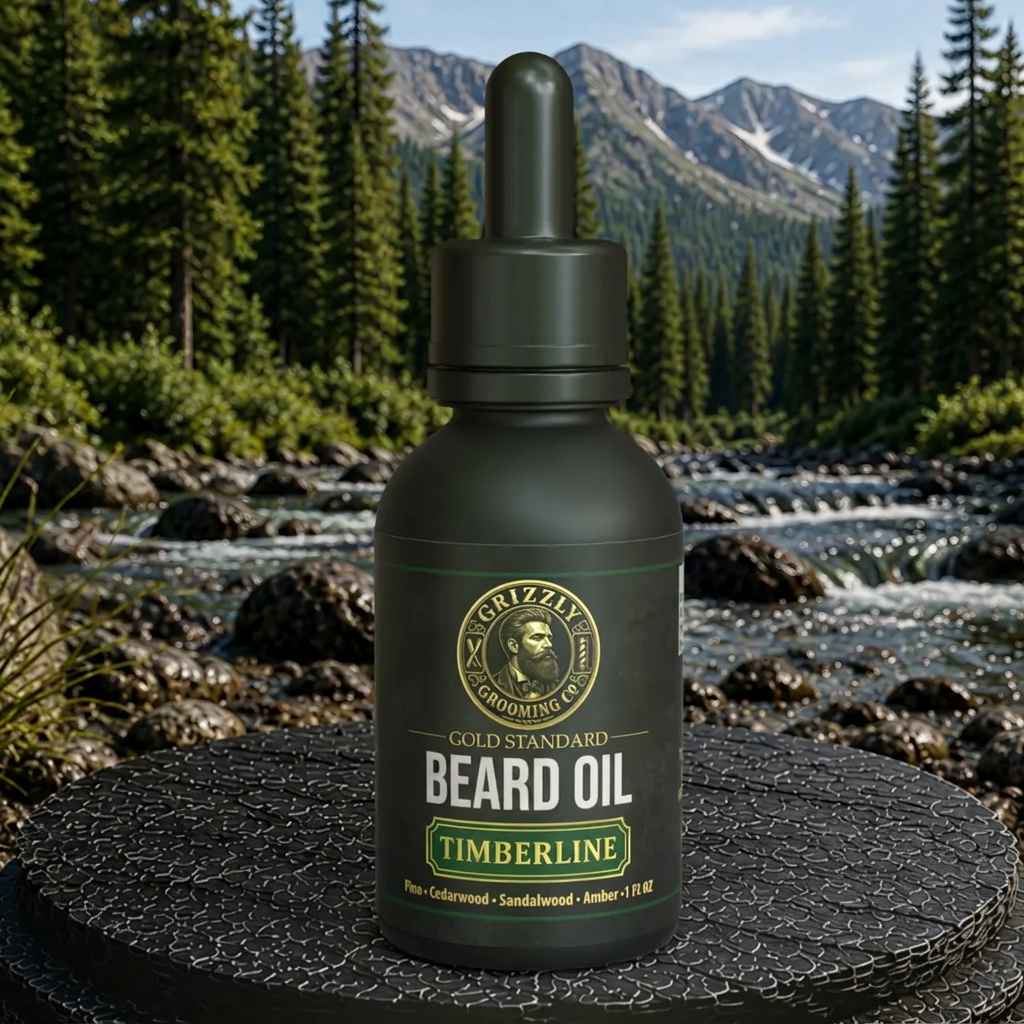
Transparency is essential in branding, but it is detrimental to the product itself. Natural oils are photosensitive, meaning they oxidize and lose their potency when exposed to direct sunlight.
If a brand sells their oil in clear glass or plastic bottles, they are prioritizing shelf appeal over product integrity. Dark amber or cobalt blue glass is the industry standard for protecting the delicate chemical balance of high-end botanical ingredients.
Deciphering Scent and Synthetic Fragrance
There is a significant difference between a scent designed by a perfumer and a fragrance concocted in a laboratory. Synthetic fragrances are often high in phthalates, which can cause skin irritation and disrupt the natural moisture barrier.
Seek out oils that utilize essential oils and natural resins. These provide a sophisticated, evolving scent profile that wears closely to the skin rather than an overpowering chemical aroma that precedes you into a room. The result is a subtle, masculine presence rather than an olfactory assault.
Experience the difference that intentional sourcing and premium ingredients make by upgrading your grooming ritual with Grizzly.
Frequently Asked Questions
How can I tell if a beard oil is low quality just by the feel?+
Apply a few drops to your palm; a high-quality oil should absorb into your skin within five to ten minutes. If your hands remain greasy or the oil sits on top of your beard without sinking in, it is likely loaded with heavy synthetic fillers.
Are expensive beard oils always better?+
Price is not a guarantee of quality, but extremely cheap oils are a red flag as premium ingredients like Argan and Sandalwood are costly to source. Focus on the ingredient list rather than the price tag to ensure you are getting value for your investment.
Why does my beard feel itchier after using some oils?+
This is often caused by synthetic fragrances or cheap carrier oils like isopropyl myristate which can clog pores. Switching to a formula with natural, skin-mimicking ingredients like Jojoba will usually resolve this irritation immediately.
"The step-by-step here made it stupid simple. Ordered the bundle, four weeks in the compliments haven't stopped."
Join The Grizzly Brotherhood
Scent guides, grooming tips, and early access to new drops. No discount bait — just the good stuff.
Unsubscribe anytime · No spam