Professional Techniques to Increase Visible Beard Density and Volume
True beard density is often more about architectural management than raw follicle count. By manipulating light and texture, any man can refine his facial hair to appear more substantial and well-defined. This guide focuses on the technical adjustments and product applications that provide immediate structural improvement.
- ›Clean up the neckline and cheek lines to create high-contrast boundaries.
- ›Use matte-finish products like beard butter to avoid light reflection that reveals thin spots.
- ›Blow-dry on low heat to expand the hair shaft and add physical volume.
- ›Keep the length uniform to prevent wispy ends from making the beard look sparse.
- ›Apply beard oil to the skin to ensure underlying health without weighing hair down.
The Power of High-Contrast Outlining
The quickest way to make a thin beard look intentional and full is to define the borders with surgical precision. When cheek lines are fuzzy and the neck growth drifts toward the chest, the eye sees a lack of density; by creating a sharp line with a straight razor or high-quality trimmer, you frame the beard, making the hair within those borders appear darker and more concentrated.
Focus on dropping the neckline just above the Adam's apple and keeping the cheek lines as high as naturally possible. This structural framing forces the viewer's perspective to focus on the bulk of the hair rather than the uneven edges where growth is naturally sparser.
Matte Textures vs. High-Shine Finishes
Light is the enemy of a thin beard. Products that provide a high shine or greasy finish, such as heavy waxes or poorly formulated oils, allow light to pass through the hair and reflect off the skin underneath, highlighting gaps in your growth. To counter this, professional barbers recommend products that offer a matte or low-sheen finish.
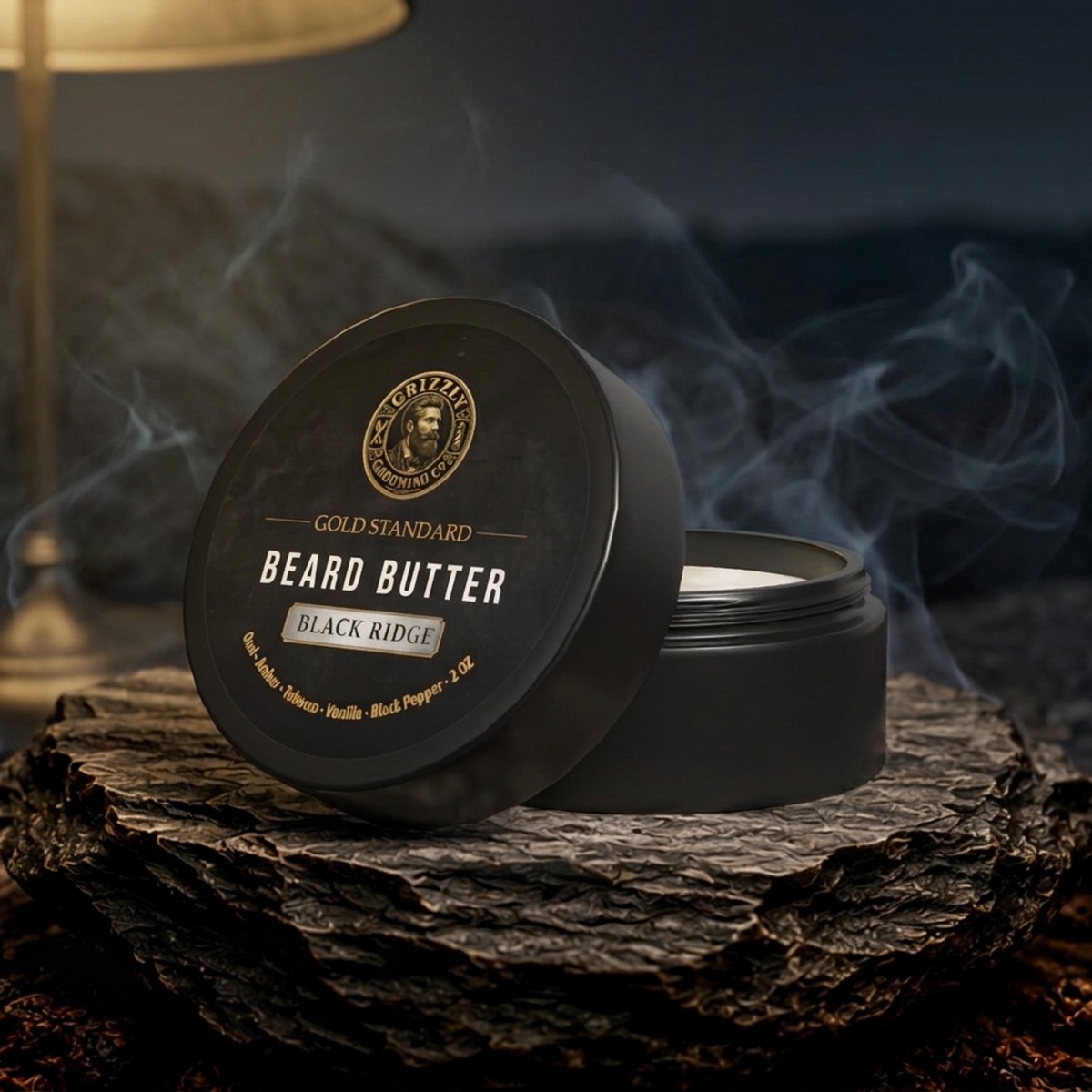
Grizzly Gold Standard beard butter is ideal for this purpose. Its blend of natural butters provides a soft, voluminous texture that coats individual hairs, making them appear thicker without the reflective properties of a high-shine balm. This physical coating adds diameter to each strand, resulting in a denser overall look.
Thermal Styling for Maximum Volume
Just as the hair on your head can be volumized, facial hair responds to heat and tension. Using a blow dryer on a medium-low setting while brushing the hair upward and outward will separate the individual strands and 'set' them in a way that occupies more space. This technique effectively doubles the visual footprint of your beard.
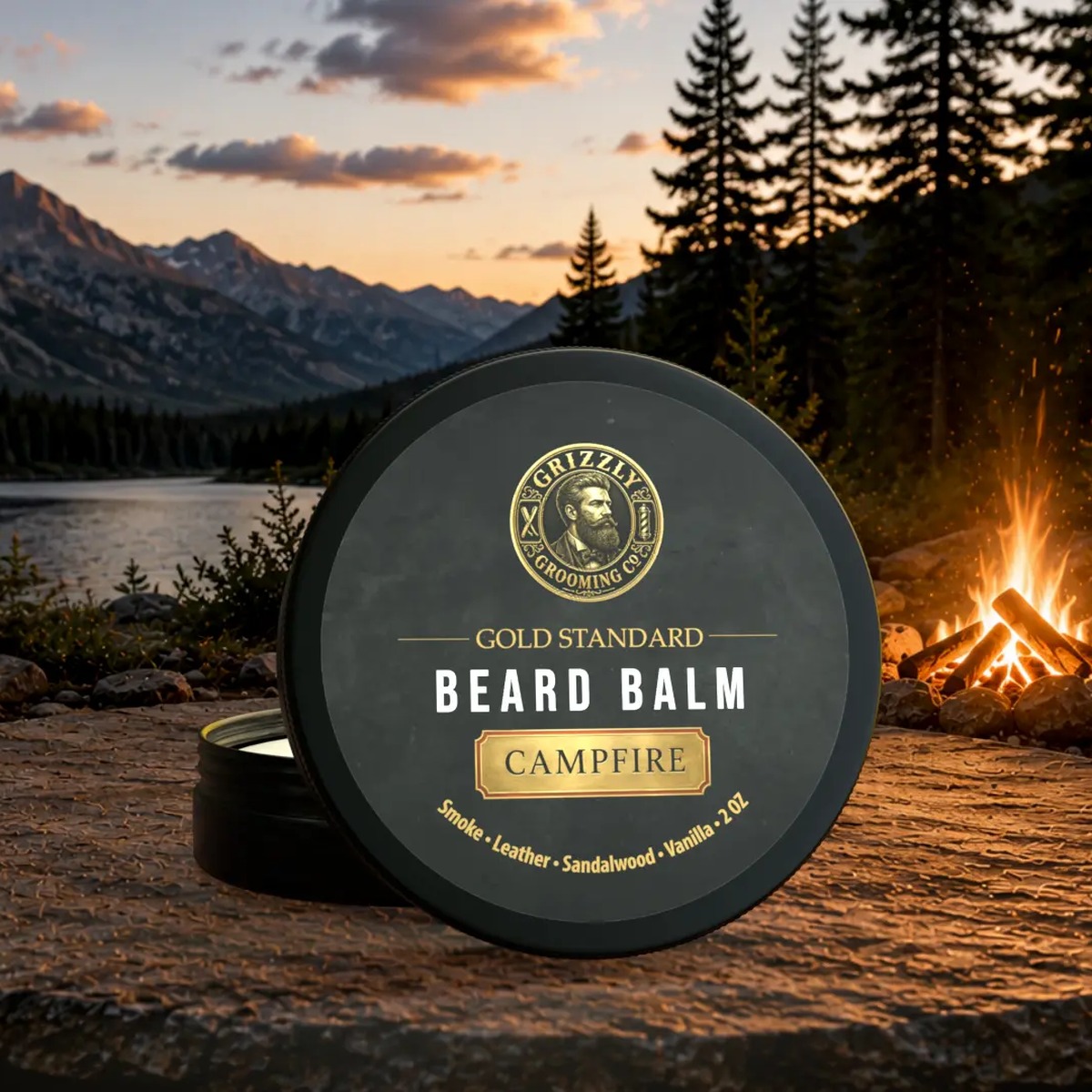
Once the hair is dry and voluminous, use a cold shot of air to lock the cuticle in place. Follow this immediately with a light application of beard balm to provide enough hold to keep that volume from collapsing throughout the day. This mechanical expansion is the most effective non-chemical way to increase beard presence.
The Uniform Length Principle
Many men make the mistake of letting their beard grow long in hopes that the length will cover thin spots. In reality, longer hair often becomes wispy and transparent at the ends, which actually makes the beard look thinner. A shorter, uniform length is almost always superior for creating an appearance of thickness.
Regularly trimming the stray hairs that grow faster than the rest ensures that the 'bulk' of the beard remains consistent. By keeping the hair at a length where the density is still high, you maintain a solid silhouette that looks significantly more masculine and well-maintained than a long, see-through beard.
Frequently Asked Questions
Does beard oil actually help a beard look thicker?
Beard oil primarily hydrates the skin and the hair to prevent breakage. While it doesn't add physical bulk like a balm or butter, a healthy hair follicle produces a stronger, more resilient strand that is less likely to snap, preserving your natural density over time.
Should I use a brush or a comb for volume?
A boar hair brush is superior for creating thickness. The dense bristles lift the hair away from the skin and distribute natural oils, whereas a comb tends to pull the hair flat against the face, which can make the beard look thinner and more segmented.
Can cold water help with beard density?
Rinsing your beard with cold water at the end of a shower helps close the hair cuticles. While it won't grow new hair, it makes the hair shaft lie flatter and smoother, which can contribute to a neater, more organized look that appears fuller than frizzy, damaged hair.
Build your ritual in 60 seconds.
Answer four questions and get a custom regimen — plus a 15% bundle discount.
Start The Ritual Builder